

























































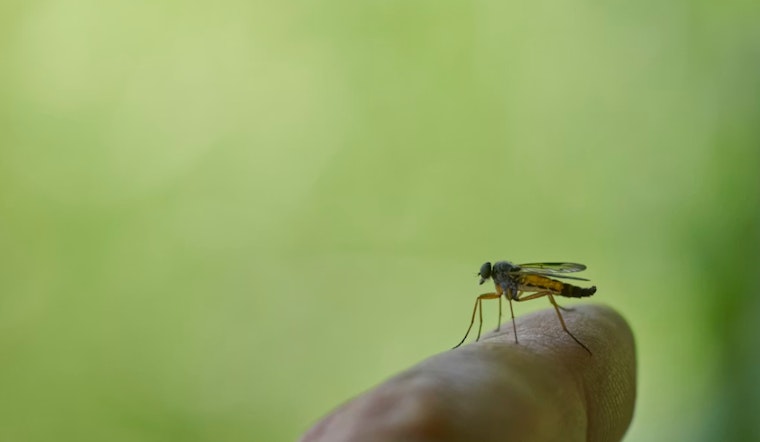
Las Vegas is getting buzzed a lot earlier than usual this year. After a record-warm March, mosquitoes are already out in force, and local scientists warn the valley’s mosquito population could “explode” if the heat sticks around. Traps are pulling in numbers more typical of mid-summer, pest-control companies are slammed with calls, and public health officials are racing to test bugs for viruses while telling residents to get serious about basic prevention.
The Southern Nevada Health District started setting mosquito traps in March about a month ahead of schedule in response to the warmer-than-average temperatures and recent rain. “Starting mosquito surveillance one month early gives us a critical head start,” District Health Officer Dr. Cassius Lockett said. Staff are sorting field samples and sending them to the Southern Nevada Public Health Laboratory for arbovirus testing. Residents can report mosquito activity, request an overnight trap at (702) 759-1633, and are urged to remove standing water and use EPA-approved repellent, according to the Southern Nevada Health District.
So far, local trap counts already look like what technicians usually see in June and July. The health district has submitted roughly 7,785 specimens for testing, and early results have not turned up positives for West Nile virus or related arboviruses. Officials and researchers are pointing at March’s heat as a big driver of the surge. “We’re definitely off to a running start with the heat in March,” SNHD environmental health specialist Christian de Haan told reporters, as reported by the Las Vegas Review-Journal.
Pest-control outfits are feeling it in their phones and their calendars. JS Pest Control operations manager John Longhurst told local TV that his phone has been “ringing off the hook,” with roughly 20 to 30 mosquito service calls a day, as crews drop traps and carry out targeted treatments. Homeowners are reminded that Aedes aegypti can breed in tiny bits of water in plant saucers, toys or even bottle caps, which helps explain the sudden wave of complaints, according to KTNV.
How To Protect Yourself Now
Public health officials are sticking with the basics: dump standing water, fix torn window and door screens, and use an EPA-registered insect repellent when you head outside. The Centers for Disease Control and Prevention lists DEET, picaridin, IR3535 and oil of lemon eucalyptus as effective options and advises limiting outdoor time during peak mosquito activity, according to the Centers for Disease Control and Prevention. Those simple backyard habits can cut down on bites and help shrink local breeding spots.
Why Researchers Are Watching
At UNLV, scientists say the way Las Vegas is built and watered is reshaping mosquito habitat. Urban irrigation, decorative water features and warmer springs are giving both nuisance mosquitoes and disease-carrying species more room to thrive. Environmental health researcher Louisa Messenger warned that populations could “explode” if warm conditions continue, a worry that is amplified by signs of growing insecticide resistance and the massive number of travelers moving through the city. The university’s Parasitology and Vector Biology lab has already collected larger-than-usual mosquito counts for this point in the year, according to UNLV.
What To Watch Next
The health district posts weekly arbovirus updates and will issue public notices if any mosquito pools test positive, so residents are urged to keep an eye on trap results and advisories as they come out. For the latest trap data, to request an overnight trap or to report a green pool, visit the Arbovirus Updates page from the Southern Nevada Health District or call SNHD’s environmental health line. If warm, wet weather continues, officials say residents should be ready for higher trap counts, more testing and more reminders about source control and using repellent.



