

























































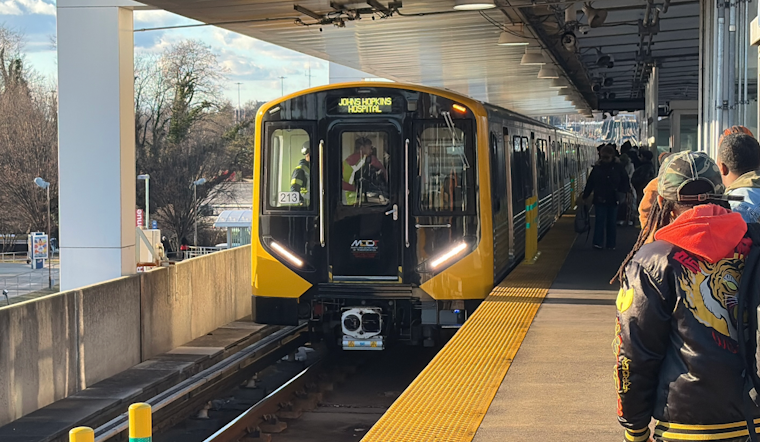
Maryland leaders are gearing up to remake life around Baltimore's subway and light-rail stops, with Gov. Wes Moore and top Maryland Department of Transportation officials set to roll out a fresh strategy on Monday. The Baltimore Region Transit-Oriented Development Strategy centers on a request for qualifications to redevelop state-owned land around the Rogers Avenue Metro Subway Station and is designed to link new housing to transit in hopes of boosting ridership. The plan zeroes in on underused pieces of state property, including surface parking lots and vacant land, to build denser, more walkable communities at station doors. The timing lines up with a broader push to modernize the Metro system as new railcars start rolling out this year.
What officials are unveiling
The package spells out a roadmap for turning state-controlled land in and around stations into a mix of housing, retail, and better station access, while formally opening the door for developers to respond to an RFQ for the Rogers Avenue property, according to CBS Baltimore. The pitch is straightforward: put land the state already owns to work, build more transit-friendly neighborhoods, and cut back on car dependence. Design standards in the RFQ, officials say, will prioritize walkability and strong, direct links to the station platform rather than forcing riders to navigate seas of parking. The administration plans to use the RFQ to identify private partners that can carry projects from early concepts all the way through construction.
Ridership and timing
For state planners, ridership is the north star. The American Public Transportation Association’s transit reports list the Baltimore subway among smaller heavy-rail systems, with about 12,500 average weekday trips, a baseline the state hopes to lift with more people living and working near stations, according to APTA. At the same time, the state is introducing new railcars that were ordered years ago and have begun showing up in testing and early service. Advocates argue that modern trains can help rebuild rider confidence and improve reliability, and that transit-oriented development can amplify those gains. The new cars are part of a long-planned fleet replacement that will be phased in through 2026. Planners say the combination of upgraded vehicles and more residents near stations is their recipe for pushing daily ridership beyond past levels.
Metro by the numbers
The Metro SubwayLink dates back to the early 1980s and currently runs from Owings Mills to Johns Hopkins Hospital, serving 14 stations over roughly 15.5 miles, according to Wikipedia. The first segment opened in 1983, with extensions built through the mid-1990s. Recent investments are aimed at updating both the fleet and station areas to reflect how riders actually use the system today. Planners see increasing the density around stations as a way to capture many of the trips that are now made by car.
Local reaction and next steps
Baltimore Mayor Brandon Scott has lined up behind the effort, calling it a move to unwind decades of neglect. “This is just one way that together we are undoing intentional disinvestment and delivering the kind of safe, quality transit options that our residents deserve,” he said in a statement to CBS Baltimore. State officials expect to issue the RFQ and begin collecting pitches from developers in the coming weeks, with Gov. Moore slated to ride one of the new railcars during the announcement. Housing advocates and neighborhood groups have welcomed the focus on station-area housing, while making clear they will be watching closely for concrete commitments on affordability and protections against displacement. How the state navigates the balance between market-rate projects and community priorities will help determine whether the strategy delivers on both ridership and equity goals.
What to watch
Observers are keyed in on several details: whether the RFQ locks in real affordability requirements, how aggressively it cuts back surface parking, and if zoning changes are paired with funding tools that actually make dense projects pencil out. Those are the levers that tend to separate successful transit-oriented development from projects that never get off the drawing board. Research from the Center for Transit-Oriented Development has found that TOD tends to work best when it comes with clear funding strategies, aligned local zoning, and investments in basic infrastructure. Analysts will also be watching to see whether the state backs the RFQ with specific timelines and financial commitments to keep projects moving. If those pieces come together, the next several years could significantly shift how and where Baltimore residents live and commute.





