

























































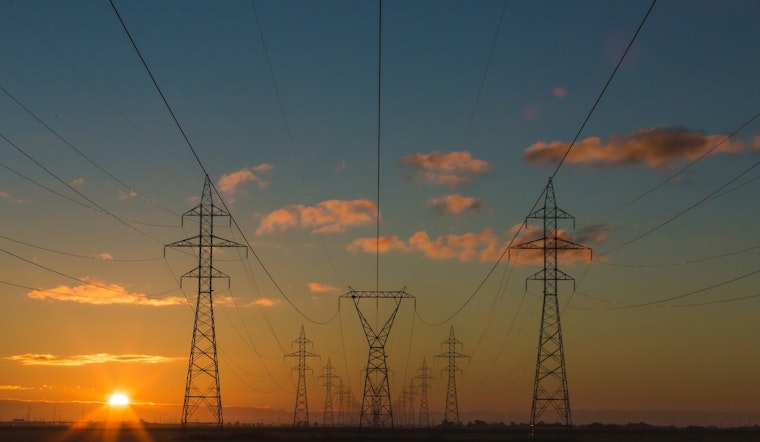
A Wisconsin contractor that usually prefers to operate out of the spotlight has been hard to miss in Minnesota this year. Crews from Michels are scattered across the state, working on a massive high-voltage transmission corridor, rebuilding utilities on a key Minneapolis bridge, and helping reshape islands and habitat on the Mississippi River. Taken together, the work is a reminder that a small circle of heavy-civil firms is effectively rebuilding both the spine of Minnesota’s electric grid and some of its busiest waterways.
Northland Reliability Project Will Stitch The Grid Together
The Northland Reliability Project is a roughly 180-mile, double-circuit 345-kilovolt transmission line slated to run through northern and central Minnesota. It will tie the Iron Range near Grand Rapids to central Minnesota near Becker and St. Cloud in order to move more renewable power and bolster grid reliability, according to Great River Energy. The utilities involved say the alignment is planned to track mostly along existing corridors, which is intended to cut down on new right-of-way impacts.
Regulatory Green Light, Timeline And Economic Scale
The Minnesota Public Utilities Commission has already signed off on the project’s certificate of need and route permit, clearing the main regulatory hurdle. Project planners say construction will roll out in phases through the late 2020s, with the line targeted to be in service by 2030. A joint release from the utilities notes that total capital costs could exceed $1 billion and that, depending on the final route and build costs, the effort carries an estimated regional economic footprint in the range of several hundred million dollars up to the billion-dollar mark. Northland Reliability Project documents the build schedule and key permitting milestones.
Michels Steps In As A Major Builder
Michels, a family-owned construction company, reports that its power division has been selected to handle foundation and transmission construction along portions of the Northland route. The firm says crews will rely on matting and similar methods to move heavy equipment over wetlands and farm fields while protecting sensitive ground during the build. Michels also notes that work will proceed in phases, with some stretches of the line coming together earlier while other segments are scheduled out toward the end of the decade.
Pipes Under A Campus Bridge
At a much more local but very noticeable scale, utility work has been reshaping the 10th Avenue Bridge in Minneapolis. Engineers there replaced aging suspended gas mains with new dual mains tucked beneath the bridge deck. The job involved installing thousands of feet of new pipe and hundreds of supports designed to handle both thermal expansion and bridge loading, according to the project design account. LHB describes the utility replacement as a core piece of the broader bridge rehabilitation.
Islands, Wetlands And Navigation Work
Out on the Mississippi River, the focus is less on wires and more on water and habitat. The U.S. Army Corps of Engineers has awarded a contract to construct a protective island upstream of Lock and Dam No. 2 near Hastings. The new feature is designed to shield an embankment from wind and wave erosion while also creating tall-grass, woody and wetland habitat and an over-winter refuge for fish. The Corps’ announcement sets a spring 2025 construction start and outlines a multi-year window to complete the island. The Corps press release details the project elements and timeline.
Contractors Are Repairing Islands, Not Just Stringing Wire
Habitat restoration in the Pool 9 and Harpers Slough reaches of the Upper Mississippi has been on the agenda for refuge managers for years. Federal planning documents call for rebuilding islands and shoals to improve fish and wetland habitat, and the Upper Mississippi refuge plan flags Harpers Slough as one of the key priority locations. Contractors with serious marine capacity are being brought in to reconstruct berms, stabilize eroded shorelines and dredge backwater channels. For example, Michels highlights island-repair work its marine crews have already completed within the Upper Mississippi system.
Scale, Ranking And What It Means Locally
None of this is small-time work. Industry materials show the Michels family of companies employing roughly 9,000 people and operating an equipment fleet counted in the tens of thousands of pieces. Those figures help explain how a single contractor can jump from long transmission corridors to isolated river islands without much pause. Independent trade coverage also underscores Michels’ standing in national contractor rankings, which is one reason utilities and agencies frequently tap the firm for both transmission and marine projects. Trade reporting cites the company’s workforce and fleet size, and industry newsletters track its Engineering News-Record ranking and national profile.
As Minnesota gears up for more renewable generation and the kind of routine utility upkeep that is anything but routine for residents living next to it, communities along the Northland route and near river restoration zones can expect multi-year construction seasons, public meetings and some short-term disruption. In return, the projects highlight where grid modernization meets river stewardship, and they put a very public spotlight on the companies that move earth, steel and river rock to make all of it happen.



