

























































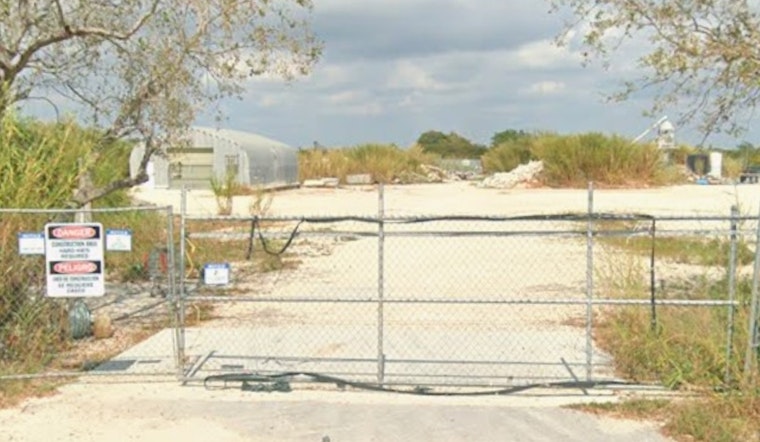
A sprawling new apartment community could be headed to South Miami-Dade, where a pre-application for the Infinity Garden Apartments is under review for a roughly 13.75-acre site in the Naranja area of unincorporated Miami-Dade County. The proposal calls for up to 773 apartments plus about 10,000 square feet of neighborhood retail at 14505 SW 260 Street, just inland of the South Dade TransitWay. A pre-application meeting with county staff is set for May 21, 2026, marking the latest visible step in a project first scoped in 2023.
What’s proposed
The latest conceptual plan breaks the community into four L-shaped residential buildings organized around a central amenity spine with a pool, playground and a two-level clubhouse totaling about 10,000 square feet. The site plan also shows two parking garages tucked along the south side of the property and two 5,000-square-foot retail pads flanking the primary entrance, giving the project a small commercial frontage along the street.
According to the filing, 30 percent of the apartments would be reserved as workforce housing under a recorded declaration. Conceptual drawings list Modis Architects and favor a garden-style, mid-rise layout rather than one dominant high-rise structure, according to Florida YIMBY.
Where it sits and zoning history
The parcel is located north of SW 260th Street and east of SW 147th Avenue, inside the county’s Naranja Community Urban Center District. The property recently went through a Comprehensive Development Master Plan amendment along with a concurrent zoning application that the Board of County Commissioners reviewed and advanced through a public hearing in late April 2025.
Those actions, along with the related application materials, are recorded in the county’s April 29, 2025 meeting packet and agenda for the Comprehensive Development Master Plan & Zoning docket, according to Miami-Dade County.
Transit and housing context
The site’s location near the South Dade TransitWay is central to the project’s pitch, fitting squarely into county policy that has been steering new housing and retail toward major transit corridors as Bus Rapid Transit infrastructure and station-area improvements roll out across South Dade.
Recent transit-oriented projects along the corridor include Quail Roost Station, a 200-unit affordable community next to a new BRT stop, which the county has highlighted as an example of pairing higher-density housing with the emerging transit network. Those events and the broader transit-oriented framing are detailed in developer and project announcements tied to the BRT rollout, as outlined by AP Companies.
Site ownership and title
Public records associated with the county application identify Infinity Gardens Apartments, LLC as the entity tied to the site, with the company’s management linked to BSB Global Enterprises, Inc. County title documents in the zoning file include an opinion of title and recorded mortgage references dating to October 2022, and these records form part of the county’s legislative file for the application.
The zoning case file and related staff materials are available through the county’s legislative docket for the April 29, 2025 hearing, as shown in the Miami-Dade County legislative file.
Next steps
The applicant is seeking administrative site-plan review under the Naranja Community Urban Center District, with the May 21, 2026 pre-application conference expected to kick off a more detailed technical review with county staff. If the proposal clears that administrative process, it could head into additional county-level reviews or public hearings, depending on the final mix of entitlements, design refinements and any requested variances.
The project filing, which includes the developer’s letter of intent and the pledge to set aside a share of units as workforce housing, is summarized in materials reported by Florida YIMBY.
What to watch next: feedback from county staff after the May 21 pre-application meeting, any updated site plans or elevations that pin down final building heights, and how the workforce-housing commitment ultimately shows up in recorded documents. Neighbors, transit advocates and housing groups are likely to follow the file closely as it moves through the administrative and permitting stages later this year.





