

























































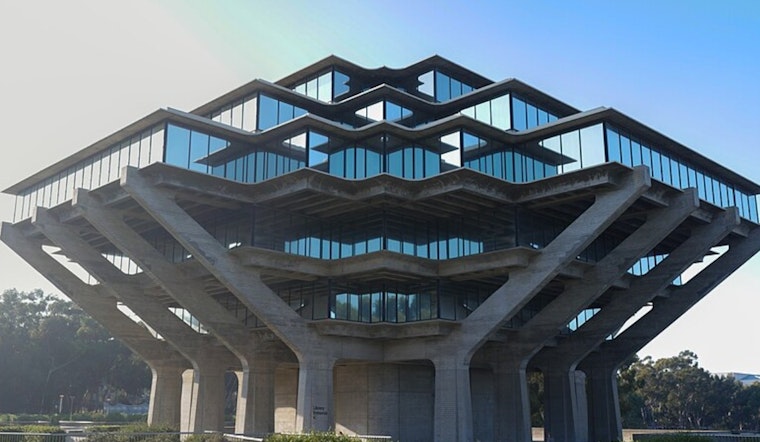
UC San Diego quietly dropped a big academic bomb this year: a standalone bachelor's degree in artificial intelligence that immediately drew an inaugural cohort of roughly 125 students. The new program arrives with two lower-division core courses and a registration system that gives admitted AI majors first dibs on key classes, a perk that has already sparked pushback from some Computer Science students. Faculty and administrators say the degree is meant to train the engineers who will build the next generation of AI systems while baking ethics and applied work directly into undergraduate training.
Freshman Christine Antonie is one of those first AI majors, according to the San Mateo Daily Journal, which reports that California campuses are starting to roll out AI-branded undergraduate programs. The paper highlights students and faculty reacting in real time as campuses test new curricula and tweak enrollment rules around the buzzy new major.
What UCSD's major actually teaches
The B.S. in Artificial Intelligence (CS29) mixes core programming and math requirements with applied AI electives and two new lower-division courses, CSE 25 and CSE 55, that are currently restricted to admitted AI majors, according to UC San Diego Computer Science and Engineering. For the 2025-26 academic year, the department has set a temporary rule that only students admitted directly into CS29 may declare the major, and AI majors get registration priority for core classes. Program materials put a spotlight on applied projects, computer vision, natural language processing and ethics as central pillars of the degree.
USC and the statewide expansion
UCSD is not alone in chasing the AI wave. USC's School of Advanced Computing is scheduled to start a B.S. in Artificial Intelligence in fall 2026 after a multiyear planning effort, with faculty describing a curriculum that spans hardware, software and ethics, according to reporting by the Daily Trojan. The program is being built across several Viterbi School departments and is expected to open with a small cohort while faculty pilot and refine the coursework. Campus leaders say the new AI degree is meant to sit alongside, not replace, longstanding Computer Science offerings.
Part of a national wave
UCSD's move is part of a broader national trend. Reporting indicates that more than 100 colleges and universities now offer degrees or formal emphases in AI and closely related fields, reflecting both employer demand and shifting student interests. Spectrum News tracks how campuses across the country have been adopting AI majors, while institutions such as Carnegie Mellon set an early template when they launched an undergraduate AI degree in 2018. Educators say these programs are designed to pair practical, industry-aligned training with coursework on safety and ethics.
Students, stigma and department politics
On the ground, the branding is not landing smoothly with everyone. Some Computer Science students complain that AI majors are doing something less "real" than traditional CS, and freshman Leena Banga described an "unspoken tension" between the two groups in reporting by the San Mateo Daily Journal. UCSD's department chair, Steven Swanson, told the paper the major's goal is to educate the programmers and software engineers of tomorrow and pointed out that the AI and CS tracks still share much of their coursework. The same reporting notes that UCSD is working with community colleges to create lower-division AI classes and transfer pathways meant to broaden access to the program.
How switching rules shape who benefits
UCSD's official materials stress that the AI major is still in an early ramp-up phase. The department states that internal switches into CS29 are restricted for 2025-26 and that the policy will be revisited in 2026, according to the university's undergraduate information. That temporary restriction, set up to stabilize the incoming cohort, has frustrated students who hoped to change majors into AI and effectively becomes a key lever in deciding who benefits from the new degree. How departments balance cohort stability, classroom capacity and transfer agreements will likely determine whether these programs widen or narrow access to AI training.
Jobs and employer demand
Universities keep pointing to the job market as their main justification. The U.S. Bureau of Labor Statistics projects above-average growth in many computer and mathematical occupations over the coming decade and notes that the spread of AI-based systems will increase demand for software developers, data scientists and related roles, according to federal projections. That outlook helps explain why campuses are building capstones and industry-aligned projects into AI majors. For students, it means more coursework and internships focused on building, evaluating and deploying AI systems, with repeated reminders to think about ethics and reliability along the way.
For now, UCSD's AI experiment is under close watch around California. If the program can scale and transfer routes open up, more students across the state may decide AI is the label they want on their diplomas. The longer-term test will be whether graduates walk away with both serious technical depth and the practical judgment to know when, how and whether to unleash the tools they have built.





