

























































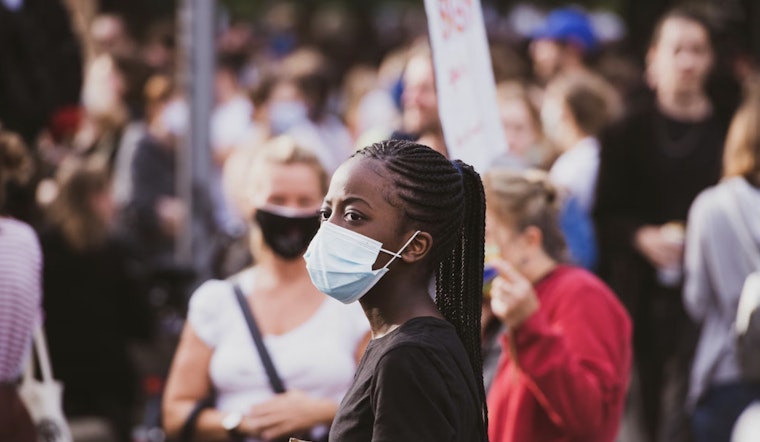
A group of Atlanta high school students spent eight months doing what a lot of adults have not: tracing how exclusionary discipline, meaning suspensions, expulsions and other removals from class, pushes Black girls out of school and toward worse outcomes. Their youth driven report does not just lean on personal stories, it lines up with state and federal data that show Black girls are punished at far higher rates than their classmates.
Student-led research lifts up lived experience
The project was led by Makiah Lyons, an attorney and legal fellow with the Intercultural Development Research Association, and was profiled by The Atlanta Journal-Constitution. The student research team spent months running data workshops and hosting listening sessions so they could connect the numbers to firsthand accounts from the girls who live this reality every day.
National picture
A 2024 report from the U.S. Government Accountability Office found that in the 2017–18 school year Black girls made up roughly 15% of girls enrolled but accounted for 45% of out of school suspensions, 37% of in school suspensions and 43% of expulsions. The analysis also noted that those gaps often persisted even when students were disciplined for similar infractions, pointing to subjective enforcement and bias as key drivers of the disparities, according to the U.S. Government Accountability Office.
Georgia numbers and local districts
The students' own report, "Listen to Us," pulled state discipline records and paired them with testimony from the listening sessions. For the 2022–23 school year, Black girls in Georgia were nearly five times more likely to be suspended, six times more likely to receive a juvenile or court referral and 2.5 times more likely to be expelled than their non Black peers, according to the Intercultural Development Research Association. The analysis also flagged several metro Atlanta districts where nearly every girl who received exclusionary discipline was Black.
In the classroom: dress codes and 'disrespect' labels
During listening sessions, students described a familiar pattern. Black girls were pulled from class for dress code violations, written up for being "too loud" or labeled "disrespectful" while white peers who behaved similarly were left alone. One student told the research team, "I feel like they don't actually really care about anything that we feel or have to say," a line that made its way into the report and captures how those daily decisions chip away at trust.
District responses and policy change
Some local districts have started to move. Atlanta Public Schools revised its dress code in 2017, DeKalb County updated its rules in 2023, and Gwinnett County has shifted toward more restorative approaches in recent years, as reported by The Atlanta Journal-Constitution. Students and advocates in the new report say those policy changes are helpful but argue that the real test is how rules are enforced in classrooms and hallways, where teacher discretion can still tilt sharply against Black girls.
Federal guidance and legal stakes
Federal officials have warned that racially disparate discipline can violate students' civil rights and in 2023 the U.S. Departments of Education and Justice released a joint resource on confronting racial discrimination in student discipline. That guidance lays out examples of unlawful practices along with remedies schools can use to fix them, according to the U.S. Department of Education. In the same spirit, the GAO analysis and the students' report call for clearer definitions of vague offenses and a wider use of responses that do not remove students from class.
The students' own recommendations stay pointed and practical: spell out what terms like "disrespect" actually mean, guarantee that students can make up work they miss when they are disciplined, train staff in de escalation and expand restorative options so one incident does not derail a girl’s academic path. The youth researchers say they plan to keep pressing districts and community partners until the written rules and the daily reality finally match.





