

























































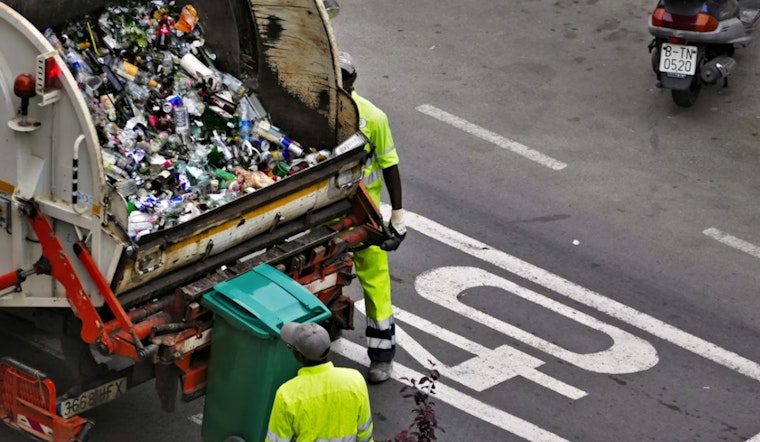
Garbage and recycling trucks across Tampa Bay are catching fire, and the culprit is riding out to the curb inside everyday trash bags: tossed rechargeable batteries.
Dozens of collection vehicles have been damaged or taken offline after loads started smoking or burst into flames inside the trucks. Crews have had to dump burning piles in the street and call in fire engines to knock down fast-moving "hot loads," the industry term for compacted lithium-ion batteries that ignite in a truck's hopper.
As reported by the Tampa Bay Times, rechargeable lithium-ion batteries are being blamed for fires in dozens of vehicles, with county photos showing firefighters dousing a truck engulfed in flames. The Times also noted that the rash of fires is reviving long-running questions about recycling rules and whether state policy should give local governments more authority over battery disposal.
Why Batteries Ignite Inside Trucks
Waste crews and safety officials call these incidents "hot loads" for a reason. When a truck’s compactor crushes a lithium-ion battery, the cell can short out, spark and quickly set nearby paper, cardboard and plastic on fire.
WMNF reported that Hillsborough County has logged about 30 battery-triggered fires in the last three years, including 15 in 2025 alone. A county project manager told the station that mixing batteries with ordinary trash can be "a recipe for a major disaster," given how fast flames can move through a tightly packed truckload.
Incidents Around The Region
The problem is not confined to Tampa Bay. Across Florida this spring, similar scares have played out on neighborhood streets.
In Winter Springs, a WastePro truck had to dump its entire load after a lithium-ion battery exploded inside, according to WKMG. In south Sarasota County, a recycling truck fire was suspected to have started with a battery, WWSB/MySuncoast reported.
Industry outlets say these kinds of close calls are now a regular topic at waste-management conferences, where operators are trying to standardize how crews respond to hot loads and train drivers to spot trouble early. IndexBox has detailed how sector leaders are racing to share best practices.
What Officials Are Urging
The regional partnership Tampa Bay Recycles is trying to cut off the problem at the source by begging residents to stop tossing rechargeable or lithium batteries in curbside trash or recycling carts.
The group is urging people to:
- Keep all rechargeable and lithium batteries out of regular garbage and blue bins
- Tape over battery terminals or place each battery in its own sealed bag before drop-off
- Use free collection options at participating retailers and county-run sites
Tampa Bay Recycles lists locations that accept batteries at no charge and offers step-by-step safety tips for handling and transporting them.
Where To Drop Batteries
Hillsborough County’s Solid Waste program provides several community collection centers and a Household Hazardous Waste facility where residents can turn in batteries for free.
According to the county, two frequently used spots are:
- Northwest County Solid Waste Facility, 8001 W. Linebaugh Ave., Tampa
- Sheldon Road Household Hazardous Collection Center, 9805 Sheldon Road, Tampa
Hillsborough County notes that some locations require proof of residency and asks visitors to bring an ID with a county address.
Policy Tension In Tallahassee
The fires are also colliding with politics in the state capital. The Tampa Bay Times reported that lawmakers in Tallahassee have weighed measures that could restrict local governments from requiring certain kinds of recycling. That could make it harder for counties and cities to roll out more aggressive battery-collection programs.
Against that backdrop, local officials are leaning heavily on public education, voluntary drop-offs and retailer partnerships instead of new mandates that might not survive a state-level crackdown.
County and industry leaders say the fix ultimately comes down to what residents do at the kitchen counter and in the garage. Keeping rechargeable batteries out of curbside cans, sealing or bagging them properly and using approved drop-off sites keeps drivers safer, prevents neighborhood street fires and helps keep already strained truck fleets on the road.
For a complete list of drop-off locations and detailed disposal guidance, residents can check Hillsborough County’s recycling information and visit Tampa Bay Recycles.





