

























































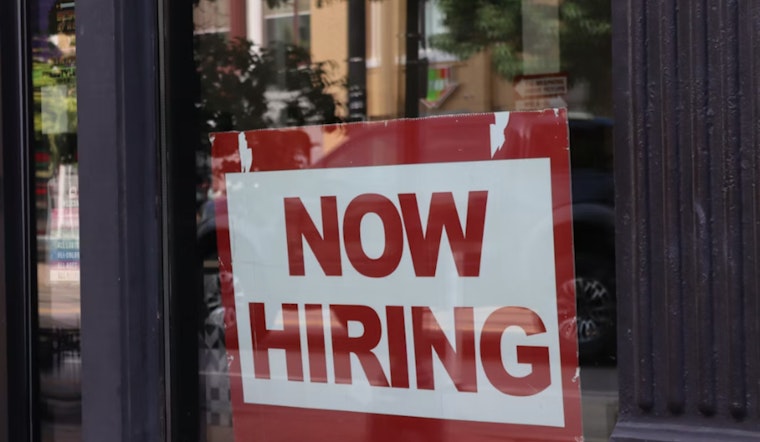
Massachusetts employers tacked on another 8,500 payroll jobs in April, extending a hiring streak that began in March and giving the state its strongest two-month run since early 2022. March’s gain was revised up to 7,200 jobs, but the unemployment rate held steady at 4.7 percent. At the same time, household survey data show fewer residents working so far this year, creating a split-screen labor picture that could make life harder for employers trying to staff up.
According to a release from the Executive Office of Labor and Workforce Development on Mass.gov, payroll jobs in the commonwealth rose by 8,500 in April and by 15,300 over the past six months, while the seasonally adjusted unemployment rate stayed at 4.7 percent. The biggest job gains came in construction, education and health services, and professional and business services. Financial activities and information shed a small number of jobs. State officials cautioned that monthly payroll figures can swing around and said the real story shows up more clearly over longer stretches of time.
The U.S. Bureau of Labor Statistics put the national unemployment rate at 4.3 percent in April, according to its monthly jobs report from the BLS. The agency’s payroll (establishment) survey and household survey do not always move in lockstep, and in Massachusetts this year the household side has been weaker. Those measures show fewer employed residents even as the payroll survey counts more jobs based in the state.
Payroll Gains, But Fewer Residents Working
Looking past the upbeat headline numbers, Massachusetts added 15,300 payroll jobs over the last six months but lost nearly 14,000 in the prior six months, leaving a modest net gain in employment, as reported by The Boston Globe. The household survey points in a different direction, with the number of employed residents down by more than 44,000 since the start of the year. State officials say the drop is driven largely by retirements, even as workers aged 25 to 54 are jumping in at higher rates. Prime-age labor force participation has climbed to 86.7 percent, the highest level in a decade. Department of Economic Research chief economist Mark Rembert said, “Job postings activity remains strong across sectors,” a sign that employers still want to hire even as the pool of available workers tightens.
What Employers Should Watch
For Massachusetts employers, the equation is straightforward but not exactly comforting: more job openings and fewer residents available to fill them. That combination can drive up recruiting costs or push firms to cast a wider net beyond state lines. The state’s published data release schedule on Mass.gov shows the next statewide jobs update is due in late June, and officials note that monthly estimates can reverse course. Businesses, workforce planners, and policymakers will be watching to see whether April’s strength turns into a sustained hiring trend. In the meantime, workforce programs, targeted training, and outreach are likely to remain at the center of the state’s response.




