

























































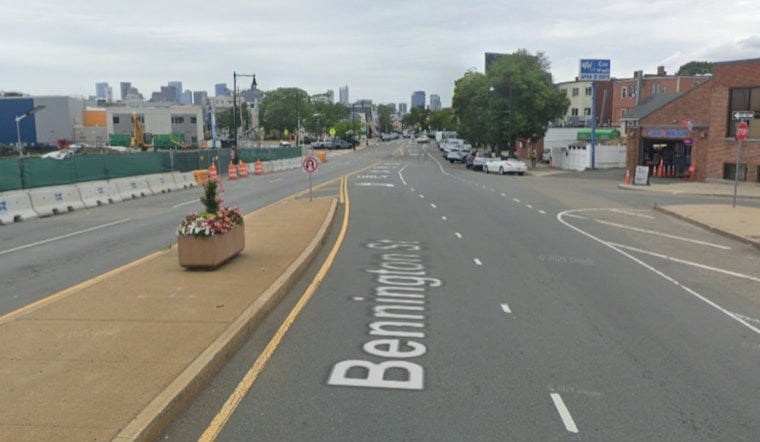
A protected bike lane promised for one of East Boston's most dangerous streets could disappear before it's ever built. City officials are weighing a developer's request to swap out previously approved safety upgrades on a 500-foot stretch of Bennington Street for extra on-street parking instead, a move that has alarmed residents who've watched the roadway claim lives for years.
The proposal centers on the 355 Bennington Street development, a mixed-use project under construction on the southern edge of Day Square, according to Streetsblog Massachusetts. The six-story, 162,296-square-foot building includes 170 rental units, with 24 designated as income-restricted, along with nearly 7,000 square feet of ground-floor retail, according to entity background from Transforming Cities. The Boston Planning Department approved the development in 2022, and it later achieved Phius CORE 2021 Design Certification in March 2025 as an all-electric, net-zero carbon residential building.
Back in December 2023, the Boston Public Improvement Commission approved a plan for Bennington and Bremen Street that included protected bike lanes and widened sidewalks. Those planned improvements were meant to include traffic calming, street trees, and a connection to a path from the Mary Ellen Welch East Boston Greenway, ultimately linking to the transit-oriented development's goal of easy pedestrian access near the MBTA's Wood Island Blue Line station, according to Redgate.
A Reversal at the August Hearing
That plan hit a wall at an August 6 Public Improvement Commission hearing. Molly Kennedy presented a new layout that eliminates many of the previously approved traffic-calming safety features, replacing the former bike lanes with parallel parking and what she described as minimal curb realignment. Kennedy said the additional parking was well received by neighbors, per the same account from Streetsblog Massachusetts.
Not everyone at the hearing agreed. Joey Carlesimo spoke in support of keeping the protected bike lane and opposed moving forward without the safety improvement, while Daniel Schenk said Bennington Street would benefit from a protected lane, describing the road as dangerous for both his bicycle and pickup-truck commutes in East Boston. The commission is set to hear further testimony and potentially vote on the proposal at a meeting on August 20; members of the public who wish to testify on the item are asked to contact [email protected] in advance, and meetings are conducted virtually.
A Street With a Deadly History
Bennington Street's danger isn't theoretical. Crashes on the corridor included three fatalities between 2015 and 2019, the article notes, and Hoodline previously reported that a fatal May 2019 crash on the street left one person dead and another injured, prompting cyclist protests demanding immediate safety upgrades. The road's physical design compounds the risk: Bennington Street runs four to five lanes wide before abruptly bottlenecking into a two-lane street in Day Square, a configuration the city's own PLAN: East Boston report says encourages regional through-traffic, higher travel speeds, and unsafe weaving behavior.
That same city planning document, adopted in 2024 following a 2018 City Council hearing co-sponsored by then-Councilor Michelle Wu, describes Bennington Street as too wide and a major neighborhood safety liability. It specifically maps protected bicycle lanes running continuously along Bennington Street from Day Square to the Revere city line, according to the Boston Planning & Development Agency and reporting from Streetsblog Massachusetts. Just to the north, Revere's 2025 Walk, Bike, and Roll Plan identifies the same Bennington Street and Winthrop Avenue corridor as a primary target for multi-modal safety improvements and Blue Line access, per the City of Revere, underscoring that neighboring officials view the roadway as a shared regional artery rather than a purely local parking concern.
Who Has the Authority to Decide
The Public Improvement Commission holds sole municipal authority over altering or widening public rights-of-way and sidewalks across Boston, a power established in 1954 and codified under City Code Ordinance § 9-71. City procedure requires developers seeking changes to public rights-of-way to secure the commission's approval before final execution of their Transportation Access Plan Agreement, the formal document that locks in transportation commitments between developers and the city.
The commission is typically chaired by the city's chief of streets, and the article reports that Nick Gove, identified as deputy chief of streets, chaired the August 6 hearing. The Boston city press office did not respond to inquiries about Gove's current role on the commission or about the new Bennington Street proposal, per Streetsblog Massachusetts.
The dispute leaves an open question that city officials have not yet answered: why transportation officials on the commission appear willing to reverse safety commitments that were built into both the development's original approvals and the city's own adopted neighborhood master plan. For now, the fate of the bike lane rests with the commission's upcoming vote, and with whichever residents show up on August 20 to make their case.





