

























































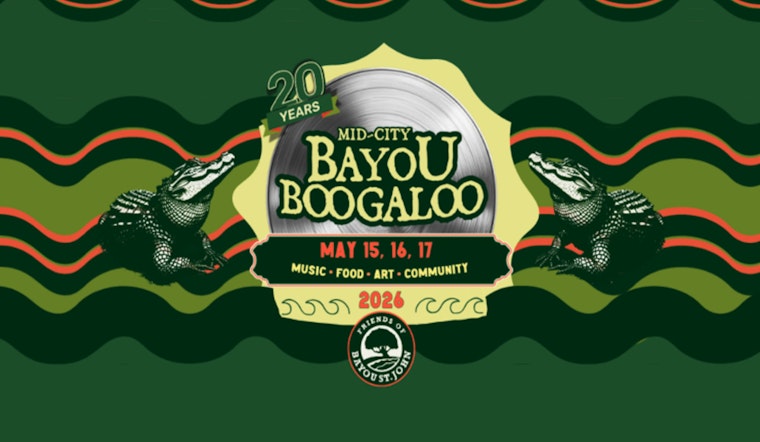
Bayou Boogaloo, the Mid-City music-and-food weekend that has long turned Bayou St. John into a floating block party, is spending its 20th anniversary firmly on dry ground. Organizers say this weekend (May 15–17) the three-day festival will set up at The Broadside and the Historic Pitot House, shifting to ticketed music stages, a free outdoor market and a paid "Canopy Club" VIP experience.
The Broadside is set to host three days of music with both indoor and outdoor stages, plus a weekend craft-and-food market. The Pitot House will handle daytime Canopy Club VIP sessions along with intimate acoustic sets, according to the festival schedule on The Bayou Boogaloo.
New footprint, familiar mission
Producer Jared Zeller has framed the shakeup as a "right-size" reset designed to keep the festival’s core mission intact: raising money and attention for Bayou St. John. As reported by New Orleans CityBusiness, the event will continue to benefit Friends of Bayou St. John while tightening its physical footprint and cutting back on the number of vendors.
Why organizers pulled it from the bayou
Zeller told Axios that soaring costs, a tougher sponsorship climate and ongoing permitting headaches made the full-scale, on-the-water version "super risky" and that "we can't continue to be in the red." Those financial and logistical strains pushed organizers to pivot to a smaller, ticketed model for 2026.
What to expect this weekend
Tickets start with a $50 advanced weekend pass for programming at The Broadside, while the roughly $200 Canopy Club VIP package includes daytime access at the Pitot House plus added perks at The Broadside. The Broadside’s outdoor market remains free to the public, according to The Bayou Boogaloo. The weekend schedule leans heavily on local acts and pop-up performances across multiple stages. Attendees can expect a tighter overall footprint, a mix of indoor and outdoor viewing options and fewer vendors than in previous years.
Neighbors, permits and the future of floating
In recent years, neighborhood complaints about parking, fencing and trash, along with earlier permit delays, have put added pressure on organizers, according to city and festival officials. Local coverage has noted that those tensions, combined with budget shortfalls, helped drive the move away from the traditional raft-and-float scene this year, though organizers have indicated the water-based tradition could return in some future, more sustainable format. For more on permitting issues and community response, see reporting from WVUE/FOX8 and Where Y'at.





