

























































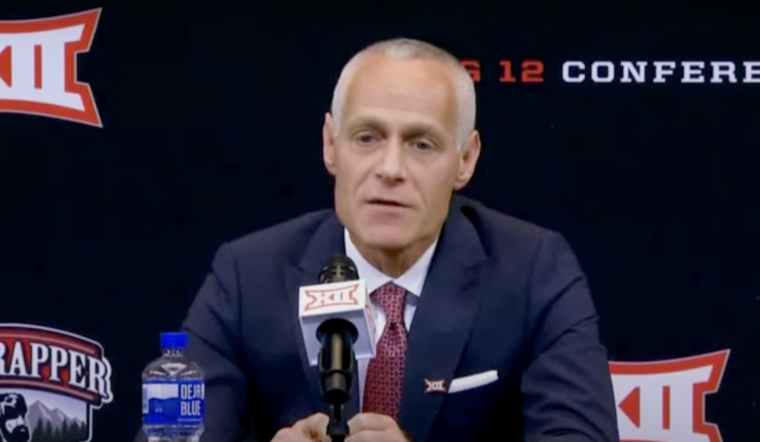
At spring meetings in Frisco yesterday, the Big 12 put its cards on the table: the league is throwing full support behind a 24-team College Football Playoff, and its members have signed the College Sports Commission’s University Participant Agreement. Commissioner Brett Yormark told league leaders that coaches unanimously backed the expansion and argued the larger format would have put multiple Big 12 teams into last season’s postseason. Taken together, the moves make the Big 12 the first league to publicly pair a push for playoff expansion with a commitment to the CSC’s centralized enforcement plan, but everything still depends on similar buy-in from the other power conferences.
Yormark said, “We like 24,” and added that “if we had a 24-team format last year, we would have had five schools in,” noting that BYU narrowly missed the CFP after an 11‑2 regular season, as reported by the Fort Worth Star-Telegram. The commissioner also told attendees the Big 12 had signed the CSC participation agreement and said he hoped being first to do so would send a message about wanting rules and enforcement.
What the CSC agreement would demand
The University Participant Agreement circulated by the College Sports Commission asks signatory schools to submit to the CSC’s enforcement process, accept penalties, and, critically, waive their ability to sue the commission over enforcement of the NIL clearinghouse, according to reporting and the document itself. The Associated Press reviewed a copy of the 11‑page pact, and the agreement is publicly available in full. The University Participant Agreement (PDF) shows that the document also ties compliance to the arbitration process created under the House settlement and states it will not become binding until the Power Four conferences and Notre Dame have all signed.
Coaches, conferences and the split over expansion
Big 12 head coaches voted unanimously to back a 24‑team field at the Frisco meetings, according to Front Office Sports, with the conference arguing that more access would help its middle‑class programs. The Big Ten and ACC have signaled support for a larger bracket, while the SEC has publicly favored a 16‑team model, a split that leaves the ultimate decision in the hands of a small group of commissioners and the CFP management committee. Reporting in Eleven Warriors and CBS Sports details the Big Ten and ACC positions, and SEC commissioner Greg Sankey’s public support for 16 teams has been reported by Fox Sports.
Money and logistics still loom
Yormark acknowledged the practical hurdles, saying a 24‑team field likely would require conferences to give up lucrative championship games and that league offices need to model the economics before moving forward, per Sports Business Journal. Broadcasters and league leaders have warned that revenue lost from title games would have to be replaced, a point raised in coverage of conference meetings. That makes the business modeling every bit as important as the on‑field debates over access and seeding.
Legal and political backlash
The participation agreement has already drawn pushback from state officials and legal observers who warn that the litigation waiver and broad enforcement powers could chill universities’ ability to challenge CSC actions, according to reporting and legal analysis. Tennessee Attorney General Jonathan Skrmetti joined other state officials criticizing the pact, saying it could leave schools vulnerable to losing revenue or postseason eligibility if litigation follows, WSMV reports. Lawyers writing about the agreement have flagged the arbitration clauses and enforcement language as significant civil‑law risks, and BakerHostetler (JDSupra) explains the legal issues in detail.
For now, the Big 12’s dual push, a louder public case for a 24‑team CFP and a firm embrace of the CSC’s participation agreement, puts pressure on the SEC and the CFP management committee to reach a deal. What comes next will be a mix of economics modeling, legal review, and behind‑the‑scenes bargaining, with commissioners saying the ball is now in other leagues’ courts. Fans and administrators should watch the SEC spring governance meetings and the CFP management committee’s timeline toward a final decision.



