

























































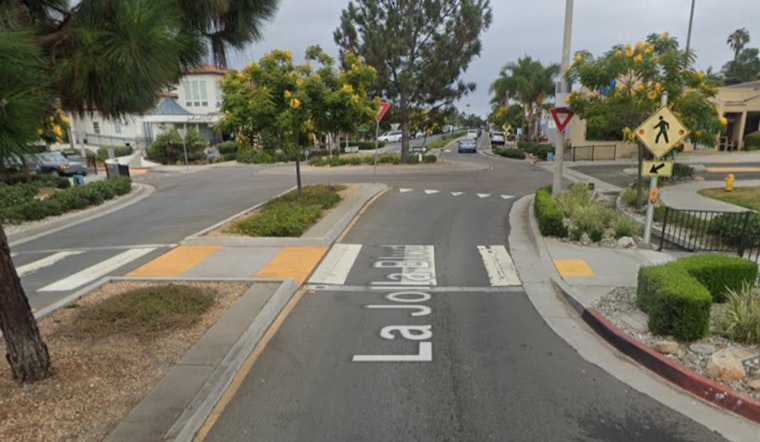
La Jolla’s Bird Rock has a fresh legal fight on its hands, as residents ask a court to halt a planned 13-unit townhome project at a prominent corner of the neighborhood. The lawsuit, filed on behalf of the La Jolla Village Residents Association, targets the Murfey-linked Adelante development at 5575 La Jolla Boulevard and asks a judge to overturn the city’s approval. Developers frame the project as a way to add housing and some retail to a long-discussed site, while neighbors say the design flouts local rules on height and ground-floor shops and would alter the character of the boulevard.
According to the City of San Diego litigation log, the residents association filed a petition for a writ of mandate that challenges the City Council’s decision to affirm the Planning Commission’s earlier approval. The court filing names Pelican Venture LP, a real party in interest linked to the Murfey team, and argues the city must follow the La Jolla community plan and local coastal regulations.
The development proposal calls for demolition of an existing office building and construction of 13 for-sale townhomes wrapped around a small ground-floor commercial space, with roof decks and below-grade parking. Community materials prepared for local review boards describe roughly 1,100 square feet of street-level retail and note that one of the homes would be reserved for a very-low-income buyer, and they say the design would replace a vacant lot at the corner of La Jolla Boulevard and Forward Street.
What the Suit Says
The petitioners’ core argument is that the project breaks La Jolla’s two-story community plan limit. They contend that the partially subterranean parking garage pushes the building’s main floor above sidewalk grade, which they say effectively creates a third story. The complaint also goes after the amount of ground-floor retail, asserting that the proposal falls short of the La Jolla Planned District Ordinance’s expectations for street-front commercial space. On top of that, the filing notes that the developer leaned on density bonus waivers to secure approval, with those technical details laid out in the city’s planning records and permit documents.
Developer Pushback and Legal Maneuvers
Developer Russ Murfey has publicly defended the design, saying it "is really conforming to that two-story height limit that’s really important to Bird Rock and that we really respect," and emphasizing that the team added retail after hearing from community groups. Murfey’s side and the city have filed a demurrer that argues the lawsuit does not state a sufficient legal basis to block construction, and a hearing on that challenge is scheduled for September, according to Times of San Diego. The development team has also cited local vacancy and market data to argue that new residents will help support surrounding businesses.
Bird Rock’s Commercial Corridor at Stake
Project opponents counter that swapping most street-level storefronts for townhomes, even with a modest commercial bay, would chip away at Bird Rock’s walkable retail strip. Background materials from the Bird Rock Community Council describe how the La Jolla Planned District typically expects around half of a building’s ground-floor frontage in this area to be retail. Those documents also outline how the project team has floated design tweaks and ground-floor retail at sidewalk level in an attempt to answer those concerns. Supporters of the project argue that more people living on the corridor will increase foot traffic and help existing merchants stay in business.
Legal Stakes and Context
The lawsuit takes the form of a petition for writ of mandate focused on whether the project is consistent with the Local Coastal Program and the La Jolla community plan. If the court sides with the defendants on their demurrer, the case could be thrown out before any discovery or deeper fact-finding. If the judge lets it proceed, the dispute would move into building a record and full legal briefing.
The residents association’s attorney, Julie Hamilton, previously won a 2010 challenge involving a nearby project, and local coverage has noted that recent state-level changes to CEQA and density bonus laws have reshaped the legal terrain for fights like this, a trend highlighted by CalMatters alongside neighborhood reporting.
The September hearing on the city and developer’s demurrer will be an early turning point. If the judge grants their request, the case could end there. If not, the clash is likely to widen into a test of how far state housing incentives can stretch when they run headlong into neighborhood retail expectations, all on a Bird Rock corner that residents have been unusually determined to protect.





