

























































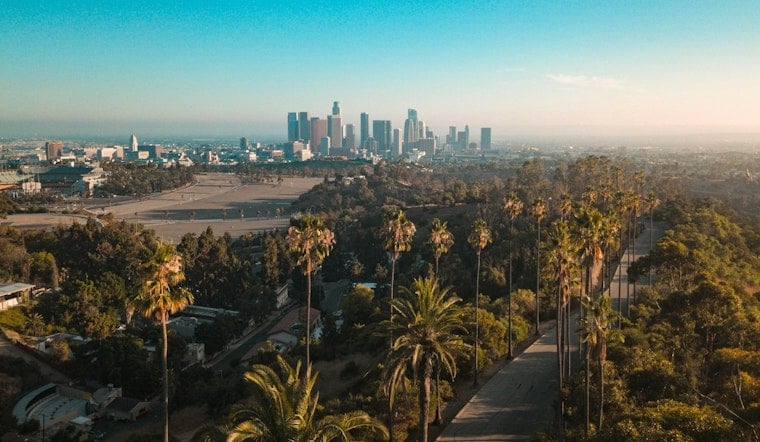
Los Angeles could soon have more room for street trees after Councilman John Lee asked the city to rethink spacing rules that may be keeping new plantings out of otherwise suitable locations. The proposal is not a planting order yet, but it starts a 90-day process that could reshape how shade is added across the city.
Lee’s motion directs the Bureau of Street Services’ Urban Forestry Division and other relevant departments to review the existing standards and return with recommendations, according to MyNewsLA.com. His office says many of the spacing requirements are internal department policies rather than rules written into city ordinances. The review is expected to consider policy, design and infrastructure changes while still protecting sidewalks, utilities, streetlights, traffic visibility and public safety.
USC Research Says L.A.’s Tree Rules Are Among The Strictest
The push follows research from USC Dornsife’s Spatial Sciences Institute and Public Exchange, which found that Los Angeles has some of the nation’s most restrictive street-tree placement standards, as detailed by USC Dornsife. Researchers concluded that many changes could be made through updated guidelines rather than a rewrite of municipal law, although coordination among city departments would still be necessary. The study also found that relaxing the rules could expand planting opportunities without clear evidence that the current restrictions produce better safety or liability outcomes.
The equity argument is especially sharp in Boyle Heights, where researchers modeled a potential 26% increase in available tree space under looser guidelines. The study compared Boyle Heights with Studio City and found that narrower sidewalks, denser development and more infrastructure leave lower-income neighborhoods with fewer opportunities for large shade trees. It also reported that roughly half of street trees in Boyle Heights and nearly 40% in Studio City do not currently comply with the city’s guidelines.
The Heat Argument Is Bigger Than The Tree Count
The proposal arrives as Los Angeles faces a broader push to make overheated neighborhoods more livable. Urbanized areas of Los Angeles County average about 21% shade at noon, below the 27% national average, according to UCLA. That same report says shaded areas can reduce feels-like temperatures by roughly 35 to 70 degrees Fahrenheit, making tree placement a public-health and transit issue as much as an aesthetic one.
Under Lee’s motion, city departments have 90 days to evaluate the old standards and suggest updates, according to the report. A research brief from the USC Urban Trees Initiative says wider parkways and curb bulb-outs may also be needed to create space for larger canopy trees, particularly in neighborhoods with narrow sidewalks. In other words, changing the paperwork could help, but the city may eventually need to change the street itself.
No new trees will appear overnight, and the motion does not guarantee that every recommendation will become policy. But it could force Los Angeles to confront an awkward mismatch: a city that says it wants more shade while maintaining rules that researchers say may be leaving perfectly usable planting spots empty.





