

























































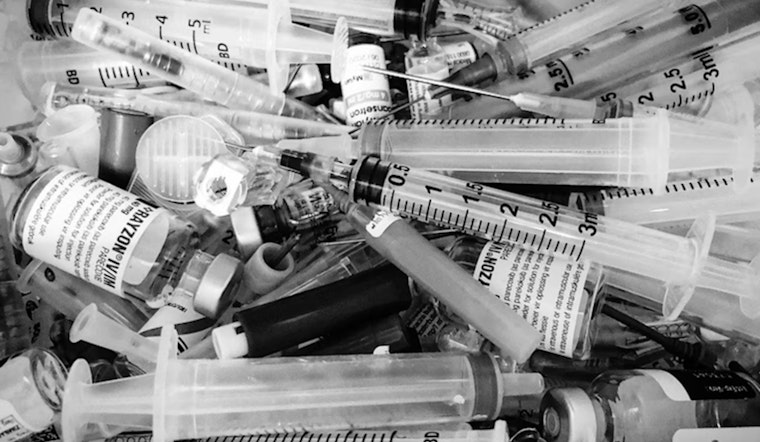
State lawmakers are fast-tracking a bill toward a House vote after workers at the Ramsey/Washington Recycling & Energy Center in Newport reported finding syringes, blood-soaked materials and what staff described as possible human body parts mixed into recent trash deliveries. The discoveries have repeatedly halted operations and drawn scrutiny from regulators and county officials, with workers and local leaders calling the situation both a serious safety risk and a traumatic burden for staff who are not trained to handle infectious or pathological waste.
According to FOX 9, investigators and R&E staff documented body parts, blood and syringes in loads that were supposed to be regular trash, along with a bag labeled "monkeypox." The station's reporting helped push the proposal back into the spotlight at the Capitol, where lawmakers say the recent incidents have reignited debate over how Minnesota polices medical waste in the solid-waste stream.
What HF4017 Originally Proposed
The first-engrossment of House File 4017 set out tough new enforcement tools and steep penalties for generators that shipped infectious or pathological waste to nonapproved solid-waste facilities. The version posted March 18 at the Office of the Revisor of Statutes would have allowed unannounced inspections and fines starting at $200,000 for a first violation, climbing to between $1 million and $2 million for repeat offenses.
Committee Changes And A Study
Those sharp teeth did not survive the House Ways and Means Committee. Lawmakers there substantially rewrote HF4017, stripping out the proposed penalties and instead ordering the Minnesota Pollution Control Agency to study how infectious and pathological waste is ending up in the trash stream. As explained by House Session Daily, the amended bill tells the PCA to examine whether fines or unannounced inspections would actually cut down on unlawful transfers.
A separate omnibus bill later set aside $75,000 to pay for that work. The appropriation for the PCA study appears in the HF 2433 summary.
Workers And The R&E Center
Inside the facility, staff say the problem is not abstract. They report that medical waste is clogging equipment and that employees are sometimes forced to pull out contaminated items by hand, a practice managers describe as dangerous and emotionally draining.
"I need it to stop because I need to protect my staff, and their families quite frankly," Trista Martinson, the center's executive director, told CBS Minnesota. She said the facility has been working with the Minnesota Pollution Control Agency and the Department of Health to respond to the influx of medical waste.
Inspections And Safety Checks
Federal and state safety agencies have taken notice. OSHA records show an inspection of the Newport facility opened March 17 and closed April 14.
The R&E Center handles large volumes of municipal waste, and local coverage has documented shutdowns when contaminated loads come in, causing operations to pause until the problem material is removed. Those disruptions were highlighted by reporting from KSTP.
Hospitals Push Back
Hospitals and clinics have bristled at the idea of the original, high-dollar penalties. The Minnesota Hospital Association told lawmakers that the proposed fines could be "dramatic and unprecedented" and warned they might end up punishing busy rural providers for honest mistakes, according to FOX 9.
Legal And Policy Background
Lawmakers note that Minnesota rules requiring the separation and labeling of infectious waste have been on the books for decades. Rep. Wayne Johnson told colleagues that the separation requirement dates back to 1989, and supporters say enforcement has not always kept pace.
The amendments and the PCA study are intended to clarify how existing statutes tied to HF4017 can be enforced, according to the bill language at the Office of the Revisor of Statutes.
What's Next At The Capitol
With the committee amendment in place, supporters say the measure is headed for a House floor vote, where lawmakers will have to decide whether to stick with the PCA study approach or try to bring back tougher enforcement language.
The House schedule documents the committee action moving HF4017 forward, while the related omnibus appropriation for the PCA study is reflected in the HF 2433 summary, both now part of the public legislative record as lawmakers weigh their next move.


