

























































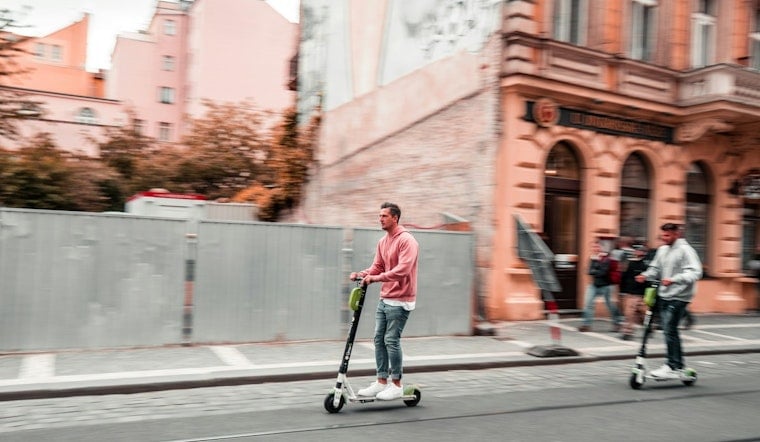
An organizer who expected maybe 20 scooters to show up for a late-night meetup in downtown Minneapolis instead watched the gathering balloon to an estimated 500 riders, a crowd so large that troopers eventually watched hundreds of scooters roll onto Interstate 35W and chose not to intervene. Footage from the chaotic Saturday night scene showed groups converging near U.S. Bank Stadium around 9 p.m. before the ride spilled into downtown streets and, later, onto the freeway itself.
The organizer's own estimate of a 20-person turnout, shared with WCCO, underscores just how far the event outran expectations once word spread. What began as a modest plan turned into hundreds of scooters and bikes roaming through downtown Minneapolis, according to online videos cited by FOX 9. Minnesota State Patrol troopers responded around 10:40 p.m. to a report of 200 to 300 Lime scooters entering I-35W, per the station's report.
Troopers Held Back as Hundreds Reached the Freeway
Despite the scale of the incursion onto a controlled-access highway, state troopers made no contact with the scooters and took no enforcement action, the outlet reported. Minneapolis police, who monitored hundreds of scooter riders traveling through downtown and southeast Minneapolis, issued no citations and made no arrests connected to the night's events, per the same account.
Videos reviewed by police showed officers attempting to corral the scooters as the group blocked traffic in downtown Minneapolis. Minneapolis police described the group as reckless and disruptive to traffic, according to the station's report, even as the sheer size of the crowd appears to have limited what officers on the ground could realistically do in the moment.
State Patrol Renews Push for Geofencing
Minnesota State Patrol said staying off freeways is required by law and protects roadway users, warning that taking a scooter onto a highway is extremely dangerous and puts the rider's life at risk. Entering the freeway could also result in a serious or fatal crash involving other motorists, the agency said, according to the same FOX 9 report.
State Patrol is urging Minneapolis leaders and scooter companies to implement a geofencing plan that would keep scooters off freeways entirely. Geofencing technology, which uses GPS-based virtual boundaries to automatically throttle or shut down e-scooter motors in restricted zones, is already used by some operators and municipalities to enforce no-ride areas, according to Transportation For America. Whether vendors can build a geofence precise enough to block freeway ramps without disrupting scooter access on adjacent city streets remains an open question, per that research.
The legal footing for the state's warning is clear. Under Minnesota Statute § 169.305, MnDOT and local road authorities have the power to prohibit pedestrians, bicycles, and motorized foot scooters from controlled-access highways such as I-35W. Separately, Minnesota Statute § 169.225 caps motorized foot scooters at 15 mph on level ground, bars riders from sidewalks, requires helmets for riders under 18, and sets a minimum riding age of 12.
Why Private Scooters Filled the Late-Night Gap
Both Lime scooters and bikes, along with privately owned e-scooters and e-bikes, took part in the takeover. That mix likely reflects a quirk of the city's own rules: Minneapolis requires rental companies to automatically disable their shared scooter fleets between midnight and 4 a.m., meaning any takeover activity stretching past that window would have to rely on privately owned devices once the commercial fleet went dark, according to the City of Minneapolis.
The city also caps the total number of licensed shared scooters citywide at 3,000 devices, holds all shared vehicles to a 15 mph system-wide speed limit, and requires vendors to place at least 38% of their fleets in equity distribution areas in North and South Minneapolis while capping downtown deployment at no more than 34%. Those rules are meant to prevent scooters from clustering downtown, though Saturday night's turnout suggests riders converged there regardless.
The scale of Saturday's crowd tracks with how popular scooter riding has become in the city. Lime alone reported 1.5 million rides in Minneapolis during 2024, a 59% jump over the prior year and the company's highest-volume season in the city since it launched there in 2018, according to a report from FOX 9. That surge in ridership helps explain how a casually organized meetup could snowball into a 500-person street takeover within hours.
City Warns of Tighter Rules Ahead
Minneapolis police warned that if similar activity continues, the department will work with city resources and scooter companies to regulate where and how scooters can be operated going forward. It is not yet clear what specific measures officials might pursue, or whether the geofencing fix State Patrol wants could be deployed without also restricting everyday scooter use on downtown streets.
Hoodline has previously reported on Minneapolis officials' efforts to enforce scooter rules and address safety concerns tied to the devices' rapid growth, part of a broader pattern of ongoing scooter safety concerns across the city. Saturday's takeover, and the hundreds of un-geofenced private devices that helped fuel it, leaves city leaders and state troopers facing the same unresolved question: how to police a crowd that can outgrow its own organizer's expectations twenty-five times over before anyone can react.





