

























































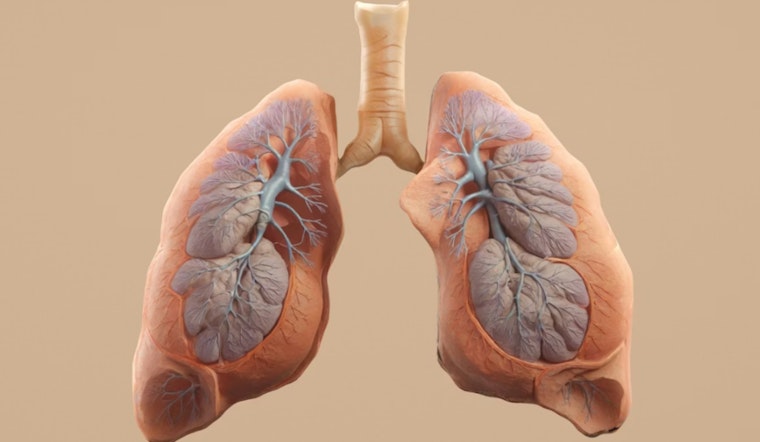
In Boston, researchers at Mass General Brigham and engineers at MIT have teamed up on an artificial-intelligence tool called Sybil that looks at a single low-dose chest CT and spits out a personalized risk score for lung cancer. In some cases, the tool flags elevated risk years before any tumor is visible on the scan. The developers say the algorithm can project risk up to six years from one image, although clinicians emphasize it is an early decision aid, not a definitive diagnostic test. Hospitals and research teams are now wrestling with how, and when, those risk scores should be folded into screening programs and clinical trials.
How Sybil reads a scan
Under the hood, Sybil uses a 3-D deep-learning architecture to scan the entire low-dose CT volume and pick up imaging patterns that have been linked to later cancer. It does that without leaning on clinical data or detailed radiologist annotations. According to the MIT Jameel Clinic, the team has published the model and released tools that let outside centers run Sybil on their own data and workflows. The idea is to let hospitals road-test the algorithm in real-world conditions and generate independent results.
What the study found
The developers validated Sybil in a multi-site study published in the Journal of Clinical Oncology, reporting one-year area-under-the-curve values of roughly 0.86 to 0.94 across external cohorts and a six-year C-index near 0.75. The paper evaluated the model on held-out scans from the National Lung Screening Trial, Massachusetts General Hospital and a large Taiwanese dataset, and found that the tool could distinguish higher-risk patients from lower-risk ones. To spur more work, the authors also made the algorithm and certain annotations available to other researchers.
Not cleared for routine use, but rolling into studies
Sybil is not yet cleared for routine clinical use, and teams are limiting it to research settings while they study what to do with its risk scores in day-to-day practice. As reported by WCVB, the tool has already shown up in research projects at U.S. hospitals and in studies overseas while investigators test how to integrate it into existing clinical pathways. The MIT Jameel Clinic also notes a participating hospital network and a Sybil consortium that are coordinating independent evaluations and early deployments.
Screening rules and a big gap
Right now, U.S. lung-cancer screening guidelines are tightly focused on older, heavier smokers. In 2021, the U.S. Preventive Services Task Force recommended annual low-dose CT scans for adults 50-80 with a 20 pack-year smoking history who either still smoke or quit within the past 15 years. Even with those criteria, screening uptake has remained low, and randomized trial data and program reports have found that fewer than 20% of eligible Americans complete screening in a given year, leaving many at-risk people untested. That gap is a key reason researchers are probing whether AI risk tools like Sybil could help broaden and better target who gets scanned.
Limits and next steps
Researchers stress that a high Sybil score is not, on its own, a green light for invasive testing. Prospective trials are still needed to show that acting on those scores actually cuts down advanced disease and deaths without creating new harms. Mass General Brigham and other authors have also flagged limits in the original datasets, noting, for example, that U.S. participants in early work were heavily white. They say broader, prospective validation across more diverse populations is essential. Regulators and professional societies are expected to insist on clear clinical pathways and solid outcomes evidence before Sybil or similar tools become part of standard lung-cancer screening.




