

























































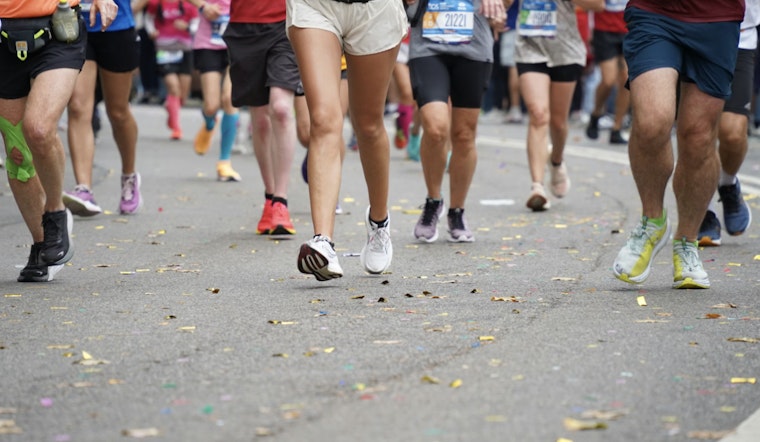
The New York Road Runners will have an extracorporeal membrane oxygenation (ECMO) resuscitation machine and a specialized ECMO team waiting in the finish-line medical tent on the Coney Island boardwalk this Saturday for the RBC Brooklyn Half. Organizers describe the unit as a “last‑ditch” lifesaving option for runners who suffer cardiac arrest and do not respond to standard CPR and defibrillation, a move aimed at tightening on-course emergency capabilities for an event that pulls in tens of thousands of runners and spectators.
According to Brooklyn Paper, the ECMO machine and a five-person team are on loan from Maimonides Medical Center and will be based inside NYRR’s finish-line medical tent. Dr. Matt Friedman, NYRR’s medical director and an emergency physician at Maimonides, told the outlet that “ECMO is sort of a last-ditch effort for a person in cardiac arrest who does not respond to normal resuscitative measures.” Brooklyn Paper also reports that Maimonides will keep a second ECMO machine on standby at the hospital in case the finish-line unit is used.
Maimonides Medical Center confirms its ECMO specialists, led by cardiothoracic surgeon Dr. Paul Saunders, were on standby at the TCS New York City Marathon last year and that the program holds regional recognition as an ECMO center. Hospital materials note that the team can cannulate patients on site, circulate and oxygenate blood outside the body, and then transfer stabilized patients to the hospital’s ICU for ongoing care. That proximity between the finish area and an ICU-ready hospital is a key piece of the protocol if the unit is activated.
The decision to bring ECMO to the boardwalk follows two recent fatalities linked to the Brooklyn Half. Former college football player Charles “Ace” Rogers, 31, collapsed on the course and later died in 2025, according to the Star Tribune. A 32-year-old runner, David Reichman, collapsed at the finish and was pronounced dead in 2022, as 1010 WINS reported. Organizers and medical directors say those deaths triggered a fresh review of on-course resources and helped drive the choice to add ECMO capability at the finish line.
New York Road Runners lay out the finish at the Coney Island boardwalk and a web of medical support, including a finish medical tent in the Maimonides Park parking lot and multiple fluid stations and aid points along the route. The guide also lists an emergency race-day hotline (866-705-6626) and a family information line for post-race updates. Race director Ted Metellus told Brooklyn Paper that medical crews on bikes and ATV-style stretchers will back up the stationary medical tents and AED coverage throughout the course.
How ECMO Works
ECMO is a form of extracorporeal life support that temporarily takes over the job of the heart and lungs by pumping a patient’s blood through an external oxygenation circuit. Johns Hopkins Medicine notes that ECMO is used when conventional resuscitation and ventilation can no longer maintain oxygenation and circulation, and that it requires specialized staff and continuous ICU-level monitoring. That level of complexity is why organizers are pairing the finish-line unit with trained cannulation staff and a nearby receiving hospital. A Paris registry study also found that sudden cardiac arrests during half-marathon events often cluster near the end of the race, which reinforces the strategy of staging advanced support at the finish.
What Runners Should Know
Runners are urged to keep the emergency contact printed on the back of their bibs up to date and to note NYRR’s race-day medical hotline, 866-705-6626, along with the family information line at 855-697-7786 for updates on participants. The event guide lists the locations of ten fluid stations, the HSS Runner Recovery Zone at the finish, and the finish medical tent where the ECMO team will be stationed. Organizers emphasize that the finish-line ECMO unit is a precaution for the very small number of catastrophic events that do not respond to standard resuscitation.
Officials stress that adding an ECMO station is an extra layer of emergency preparedness rather than a change in how most on-course medical issues are handled. For the vast majority of runners, the usual aid stations, misting tents, and roaming medical crews will continue to handle cramps, heat-related problems, and minor injuries the old-fashioned way.





