

























































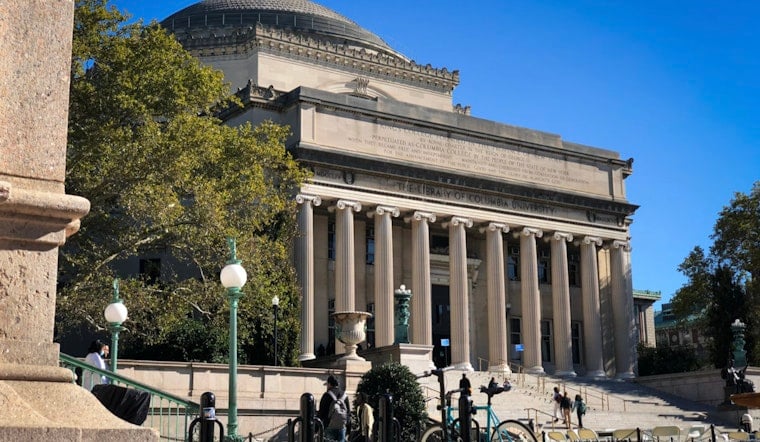
A group of current and former Palestinian students and lecturers has filed a lawsuit accusing Columbia University of discriminating against them and allowing a hostile, unsafe campus environment to fester in the aftermath of Hamas's October 7, 2023 attack on Israel and the ensuing war in Gaza. The complaint, filed in New York state court, alleges that university officials did not merely fail to protect Palestinian students and staff from harm but actively encouraged their mistreatment.
The lawsuit, first reported by Gothamist, names plaintiffs including Maryam Alwan, who graduated from Columbia in 2025 with an undergraduate degree in comparative literature and society; Layla Saliba, who earned a social work degree the same year; Mahdi Sabbagh, a Ph.D. student in the university's architecture and planning school; Haddel Assali, a former anthropology student; and Bahia Munem, a former lecturer at Columbia's Center for the Study of Ethnicity and Race. The plaintiffs are seeking monetary damages under the New York City Human Rights Law, which prohibits discrimination or harassment based on actual or perceived race, creed, national origin, immigration status, or citizenship status.
According to the complaint, Columbia subjected Palestinian students to unfair and biased disciplinary hearings, surveilled a pro-Palestinian teach-in, and suspended several students who attended it. The filing also alleges that discriminatory and racist statements were made by Columbia Medical Center employees and senior administrators, and that the university failed to take appropriate action against such statements when they targeted Palestinian students.
Chemical Spray and Ripped Keffiyehs Cited in Complaint
The lawsuit alleges that Palestinian and pro-Palestinian students were physically assaulted at protests, and that several students were attacked with a foul-smelling chemical substance. It further claims Columbia failed to respond to repeated incidents in which keffiyehs were ripped off Palestinian students on campus. Under Title 8, Section 8-107 of the New York City Administrative Code — the statute underlying the human rights law — educational institutions and providers of public accommodations are barred from discriminating against or harassing people based on actual or perceived race, creed, national origin, or citizenship status, according to the New York City Commission on Human Rights.
Columbia officials did not immediately respond to a request for comment, Gothamist reported. The new filing arrives against a backdrop of years of formal complaints from some of the same plaintiffs: in April 2024, the advocacy group Palestine Legal filed a Title VI civil rights complaint with the U.S. Department of Education's Office for Civil Rights on behalf of four students — including Alwan and Saliba — alleging Columbia created a hostile anti-Palestinian environment, according to the Columbia Spectator.
Courts Have Already Faulted Columbia's Discipline Process
The lawsuit lands amid ongoing judicial scrutiny of how Columbia handled protest discipline. In March, New York State Supreme Court Justice Gerald Lebovits vacated the university's disciplinary sanctions against 22 students involved in the April 2024 occupation of Hamilton Hall, ruling that Columbia acted arbitrarily and capriciously by relying on sealed NYPD arrest records that are barred under state criminal procedure law as the sole evidence placing students at the occupied building, per the Columbia Spectator's account of the ruling. Faculty groups have separately alleged that university leadership breached Section 444.f of the University Statutes — which requires presidential consultation with a Senate committee before inviting police onto campus — after the executive committee of Columbia's University Senate declined in April 2024 to authorize calling the NYPD onto campus to clear encampments, according to The Nation.
Not every recent legal challenge against Columbia over its protest response has succeeded. On July 3, a New York court dismissed a discrimination lawsuit brought under the state human rights law by student activist Khymani James, finding the complaint failed to show that similarly situated non-protesting students were treated more favorably, the Spectator reported. That ruling underscores the legal bar the new plaintiffs will need to clear to prevail on their own discrimination claims.
A University Facing Legal Exposure From Multiple Directions
Columbia has also faced significant legal and financial pressure over its treatment of Jewish students. In July 2025, the university agreed to pay $200 million over three years to settle federal civil rights investigations after the Trump administration froze $400 million in federal grants over claims Columbia failed to protect Jewish students from antisemitic harassment, according to CBS News. In June 2024, the university settled a separate federal class-action lawsuit filed by a Jewish student by agreeing to appoint a dedicated Safe Passage Liaison and maintain a 24/7 security escort program for students concerned about their safety amid the Gaza war protests, the Associated Press reported at the time.
Columbia also paid a $395,000 settlement in November 2024 to a pro-Israel student who was suspended after pro-Palestinian protesters were sprayed with a foul-smelling substance in January 2024; that student had alleged the substance was a non-toxic novelty spray rather than military-grade skunk spray, though pro-Palestinian students maintained they suffered physical symptoms from the spraying. The new complaint's reference to students being attacked with a foul-smelling chemical substance appears tied to that same incident, though the filing frames it from the perspective of those sprayed rather than those who were disciplined afterward.
The new lawsuit is not the first time Palestinian students have accused Columbia of bypassing its own rules to punish them. In February 2025, three Columbia graduate students sued the university in state court alleging more than 30 instances in which administrators bypassed established disciplinary protocols and state landlord-tenant laws when issuing suspensions and 24-hour housing eviction notices, according to The Nation. And in July, former Columbia graduate student Mahmoud Khalil filed a federal suit alleging a coordinated crackdown by conservative organizations and government officials against pro-Palestinian student leaders, after he was detained by ICE for 104 days before a judge ordered his release.





