

























































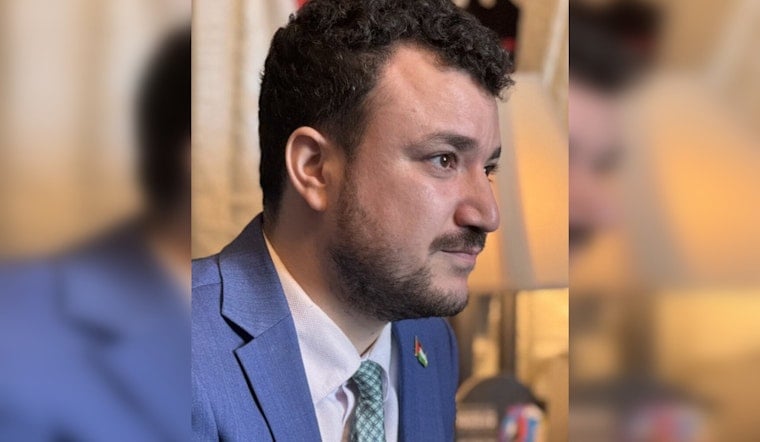
Mahmoud Khalil, a former Columbia University graduate student who shot to national prominence as a face of pro-Palestinian campus protests, has taken his fight from the quad to federal court. On Tuesday, he filed a lawsuit accusing senior Trump administration officials and several conservative-aligned groups of running what he calls a coordinated “public-private” campaign to shut down critics of Israel. His attorneys say the complaint lays out a pattern of doxing, detention and deportation attempts that, in their view, trampled constitutional limits.
What the lawsuit alleges
The federal complaint names the Heritage Foundation, Canary Mission and Betar and accuses their leaders of working hand in glove with government officials to identify, track and penalize protesters. That alleged coordination, Khalil’s legal team says, could amount to an unlawful partnership between state power and private actors, according to The Associated Press. Khalil’s lawyers say the pattern was first brought to light in a separate trial last year and may violate Reconstruction-era civil-rights law. The suit asks for damages and for a court ruling that the alleged government-private coordination crossed constitutional lines.
Detained, freed and still fighting
Khalil, a lawful permanent resident, was arrested by Immigration and Customs Enforcement in March 2025 at his Columbia campus apartment and sent to a Louisiana immigration facility, where he spent 104 days before a federal judge in New Jersey ordered his release, as reported by The Washington Post. During that stretch in custody, he missed the birth of his first child, and judges have openly questioned the government’s justification for detaining student activists. His deportation case is still moving on its own track in immigration court and could continue even as the new civil lawsuit grinds forward.
How this fits a broader playbook
Advocates and independent researchers say Khalil’s complaint slots neatly into a larger enforcement strategy that had already been sketched out in a Heritage Foundation paper known as Project Esther. That memo urged closer public-private coordination, stepped-up legal pressure and use of immigration tools to address what its authors labeled campus antisemitism. Reporting and analysis pulled together by Factually describe how watchlists, investigations and funding threats have figured into more recent campus enforcement drives. Critics warn that this approach risks chilling protected speech and blurring the line between unpopular or dissident views and genuinely actionable misconduct.
Legal implications and next steps
Khalil’s attorneys say the suit is expected to rely on the Ku Klux Klan Act (42 U.S.C. § 1985), a Reconstruction-era statute that allows civil claims over conspiracies to deprive people of constitutional rights, citing the statute’s text as published by the Legal Information Institute. To make that claim stick, they would have to show that government officials and private organizations worked together to strip Khalil of those rights. If the case clears early procedural hurdles, it could open the door to discovery and internal communications that might illuminate how much coordination actually occurred. The Associated Press noted that, depending on how the legal questions shake out, the dispute could ultimately land before the U.S. Supreme Court.
What to watch
For now, the action will center on the defendants’ initial responses and any early motions that aim to narrow discovery or toss parts of the complaint. For Manhattan and Columbia readers, the case pulls a high-stakes constitutional fight straight into local debates over campus protest, free speech and where the line should be drawn when federal agencies interact with private watchdog groups.





_(cropped).jpg)