

























































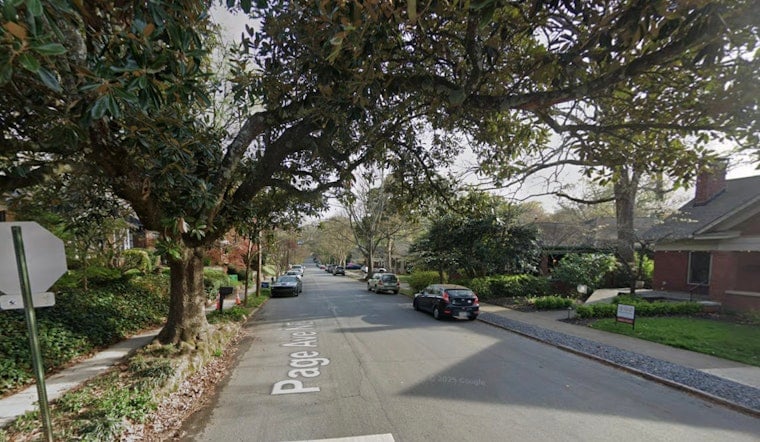
A massive water oak came crashing through the roof of a home on Page Avenue in Candler Park on Thursday, splitting the house roughly in two and leaving the backyard choked with limbs and ruined plantings. Homeowners Steven Renner and his wife were inside when the tree fell but escaped without serious injuries. The collapse also destroyed much of the couple’s longtime garden.
Renner told Atlanta News First that the impact “was deafening” and “thunderous,” and that he only realized he and his wife were okay after the house and the ground stopped shaking. He said an arborist had inspected the tree just days earlier and did not believe it would uproot, but the trunk split at the base and the oak collapsed. Crews responded to the scene to remove the massive trunk and assess structural damage to the home, according to the outlet.
Under the city’s rules, most trees on developed lots require permits for removal, but emergency work to protect life and property can move forward immediately under the ordinance as long as it is documented afterward. Property owners and contractors are urged to coordinate with the city arborist and to retain inspection reports, photos and any emergency work records. For details on permitting and emergency provisions, see the City of Atlanta code.
Why water oaks can fail
Water oak (Quercus nigra) is a fast growing, relatively short lived oak known for weaker wood, poor branch attachments and a tendency toward internal decay. According to UF/IFAS, water oaks “can split from the tree in wind storms” and are often poor compartmentalizers of decay. The Missouri Botanical Garden also notes the species is susceptible to limb breakage. Those characteristics help explain how a tree can fail suddenly even after a recent inspection.
What homeowners should do
Homeowners are advised to hire an ISA or TRAQ qualified arborist for formal risk assessments and to keep written reports and photos of any inspection or emergency work for insurance and permitting purposes. Local guidance on removals recommends working with certified tree professionals and keeping documentation when emergency removals occur so the work can be properly permitted or justified. For information on permitting, inspection and replacement requirements, see Georgia Tree Authority and the city’s tree rules in the City of Atlanta code.
The collapse followed a weekend of pop up storms and flash flood watches across metro Atlanta that left downed trees and other storm damage in several areas, according to WSB Radio. The Renner family and their neighbors are now facing cleanup and repairs while crews and arborists continue working at the site.





