

























































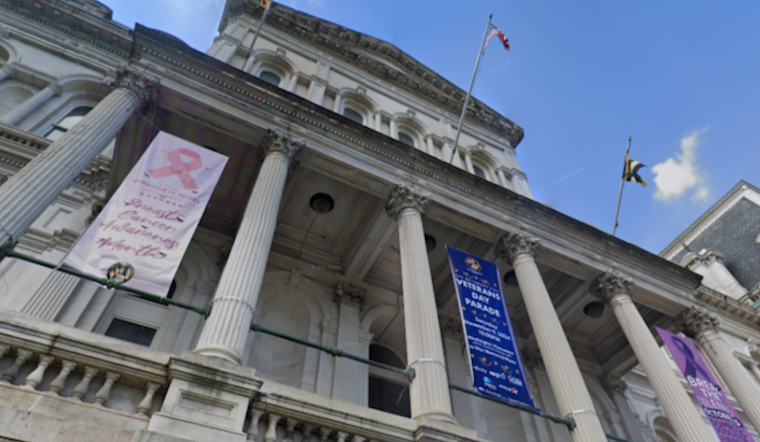
Baltimore is getting a fresh shot of federal cash for its flagship anti-violence experiment, with city officials saying Monday that members of Maryland’s congressional delegation have lined up nearly $1.2 million to bolster local violence-reduction work.
The money is earmarked to back programs tied to the mayor’s Group Violence Reduction Strategy, or GVRS, and is meant to scale up outreach, life coaching, and enforcement coordination in neighborhoods that have shouldered the worst of the city’s gun violence. City leaders are selling the award as a timely backup for a strategy they say is helping keep shootings and homicides down as GVRS pushes into new police districts.
Members of Maryland’s congressional delegation awarded nearly $1.2 million to Baltimore City, according to WBAL-TV. The station reports that the funds will support violence-reduction initiatives, including GVRS. “GVRS is ultimately about making sure that Baltimoreans can live safe, alive and free. It's about balancing accountability with opportunity,” Mayor Brandon Scott told the outlet, as his administration signaled a continued expansion of the strategy into additional neighborhoods.
Where the money came from
On paper, the cash shows up as a congressionally directed spending line of $1,184,000 for “Group Violence Reduction Strategy Expansion” in Baltimore, according to House Appropriations. Rep. Kweisi Mfume’s FY26 appropriations page also lists a $1,184,000 request for GVRS expansion and names the City of Baltimore as the project sponsor, according to Rep. Kweisi Mfume.
Those entries indicate the award is slated to flow through the Department of Justice’s OJP-Byrne account as community project funding for FY26, ultimately landing in the city's hands for on-the-ground work.
What GVRS does
The Group Violence Reduction Strategy is Baltimore’s current big bet on “focused deterrence” policing paired with intensive social support. According to the Mayor’s Office of Neighborhood Safety and Engagement, the model combines strategic enforcement with one-on-one life coaching and a network of community partners to reach people at the highest risk of being involved in shootings, either as perpetrators or victims. MONSE and the city’s press materials lay out GVRS’s core components and early outcome data.
City documents showed GVRS active in five police districts as of July 2025, with local reporting noting that the program has since moved into the Northern District as part of a phased citywide rollout.
How the appropriation was secured
The GVRS line appears in FY26 community project funding tables compiled during the congressional appropriations process, listing Maryland lawmakers as requestors and conferees on the grant entries. Sen. Chris Van Hollen’s office notes the GVRS expansion among Maryland projects included in the broader FY26 spending package.
Lawmakers say the congressionally directed funding is expected to move to the city for local implementation through MONSE and its network of partner service providers, essentially underwriting more coaching, outreach, and coordination for the highest-risk cases.
Why this matters now
Officials are quick to point to the timing. City leaders have highlighted steep year-over-year drops in homicides while arguing that sustained investment is critical if Baltimore wants to keep that trend from snapping back.
WBAL-TV reported that Baltimore recorded just four homicides in April, the lowest single-month tally in decades, and carried Mayor Scott’s comments as the new GVRS funding was rolled out.
Advocates, though, have long warned that federal grant dollars can be here today and gone tomorrow, with real consequences on the street when programs suddenly lose funding. WYPR documented last year’s Department of Justice grant terminations under the Trump administration that cut into some local violence-prevention efforts.
The new $1.2 million is no guarantee of permanent stability, but city leaders argue that predictable, multi-year support is exactly what is needed if Baltimore hopes to keep building out services designed to steer people away from gunfire and keep the recent homicide numbers from becoming just a brief dip in a long, painful trend line.





