

























































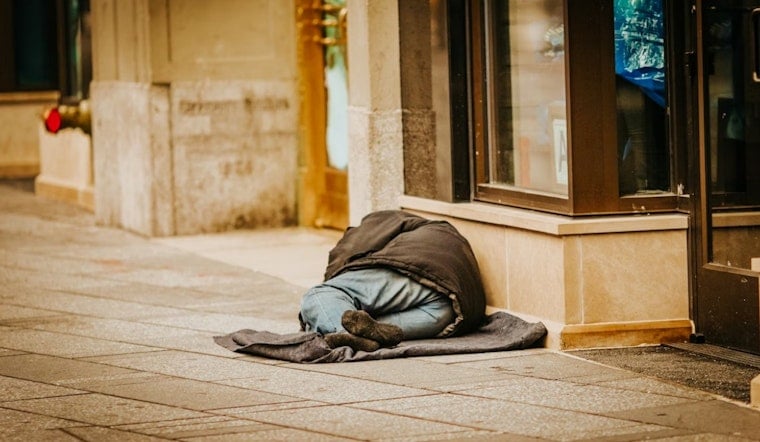
Columbus is seeing a clear shift in how people experience homelessness, with far more residents sleeping outside even as the overall number of unhoused people ticks up only slightly. Local officials say the trend points to longer shelter stays, rising behavioral health needs and a stubborn shortage of deeply affordable housing.
The Community Shelter Board’s January point-in-time census counted 2,587 people experiencing homelessness in Columbus and Franklin County on the survey night, a 1.2% increase from 2025. Within that total, the number of people living outside jumped from 455 in 2025 to 651 in 2026, a 43% spike, while the number using emergency shelters dropped from 2,101 to 1,936, an 8% decline. Those figures come from the board’s 2026 summary, according to Community Shelter Board.
Speaking at a press event at the Columbus Metropolitan Library, Community Shelter Board President and CEO Shannon Isom said, “it still makes you pause when you see an almost 50% increase in unsheltered homelessness from the year before,” and pressed the community to look beyond simply adding shelter beds and focus on actual housing. Columbus City Councilmember Tiara Ross, who chairs the council’s housing committee, cautioned that without significantly more investment, “that is not enough.” Both leaders’ remarks were reported by WOSU Public Media.
Behavioral Health And Other Trends
The latest report also flags a sharp rise in complex needs among people counted. Cases of severe mental illness climbed 42% to 612, chronic substance use increased 53% to 329, and chronic homelessness rose 16.4% to 256. At the same time, family homelessness fell by 3.8%, a shift the board links in part to targeted prevention work, diversion strategies, and direct cash transfer programs. The report warns that, taken together with the lack of deeply affordable units, these pressures could send even more people outside unless new investments materialize, according to Community Shelter Board.
Officials Propose Hotels And Note Funding Gaps
To relieve the squeeze on traditional shelters, Isom said the Community Shelter Board plans to purchase three hotels and convert them into flexible interim housing, aimed at moving people more quickly out of emergency settings. Columbus City Council has put an additional $7.2 million into the city’s 2026 operating budget for shelter services, but council members and advocates acknowledge that extra cash will not solve the longer term shortage of affordable homes. Those moves were detailed by WOSU Public Media.
Why The Point-In-Time Count Matters
The point-in-time count is a HUD-guided snapshot that helps decide how federal dollars flow and how local programs get shaped. In January, more than 300 volunteers fanned out to shelters, warming centers, and known encampments to complete the overnight census. That volunteer-powered headcount lets officials spot shifts such as a growing unsheltered population and longer shelter stays, then recalibrate toward prevention, rapid rehousing, and supportive housing strategies, as explained by Axios Columbus.
Shelter leaders say the path forward has to work on two tracks at once: expand short term capacity for people currently sleeping outside while also pushing hard for more deeply affordable and supportive housing. With the number of unsheltered residents climbing so quickly, advocates argue that upcoming public budgets and private investment choices will heavily influence whether the trend turns around or keeps getting worse.



