

























































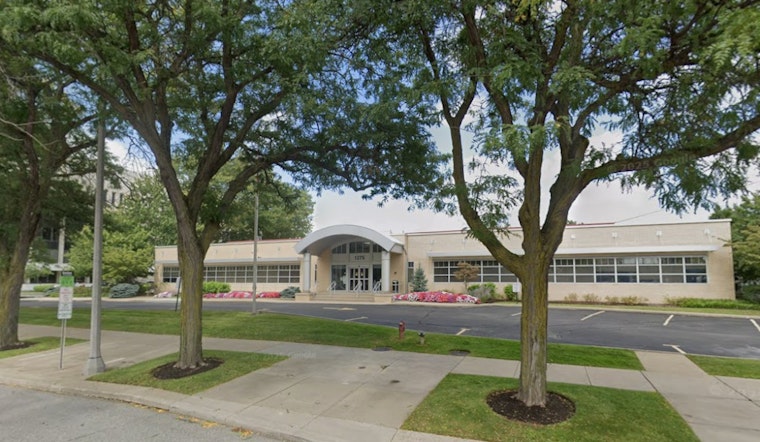
Cuyahoga County’s Board of Developmental Disabilities is putting a new set of eyes on juvenile court, hoping to catch disability needs long before a kid spends months behind bars.
At its April 23 board meeting, the agency spotlighted its new juvenile-court forensic liaison, a position meant to steer eligible young people toward services instead of prolonged detention. Board members pointed to one recent case in which the liaison’s work helped get charges against a 14-year-old dropped after court officials raised competency concerns and the youth was later diagnosed with ADHD and a traumatic brain injury. The teen had already spent 192 days in detention, a stretch that is a lifetime in middle school years, and is now living with a foster family in Shaker Heights while attending school and therapy.
Board introduces juvenile-court forensic liaison
The board formally introduced Aveion Fields as Cuyahoga DD’s juvenile-court forensic liaison, a role designed to work directly with Juvenile Court staff to flag young people who may qualify for developmental-disability services. Fields will advise judges and attorneys when disability issues could be influencing behavior or competency. The introduction and case example were detailed by Signal Cleveland.
How the liaison will work in court
The forensic-liaison unit is set up to “identify individuals early in the process,” support them during court proceedings, and coordinate with judges, attorneys, and probation officers to connect youth with community-based services, according to the Cuyahoga County Board of Developmental Disabilities. The idea is to cut down on inappropriate or extended detention stays and to build better plans for release and re-entry when a young person can safely return to the community.
Assessment change, new house and levy
Board members also heard an update on Ohio’s statewide shift to the interRAI assessment tool, which the Ohio Department of Developmental Disabilities says will replace the Ohio Developmental Disabilities Profile and the Acuity Assessment Instrument. The change is intended to better match the level of support a person receives to the level of need.
According to Signal Cleveland, Cuyahoga DD is piloting interRAI locally while juggling several other initiatives. The agency accepted seven equipment donations for physical and occupational therapy and reported that it purchased a roughly 3,000-square-foot respite house in Walton Hills at the end of 2025. As part of longer-term planning, Superintendent Amber Gibbs and Chief Program Officer Melanie Rak also toured San Francisco’s Kelsey Civic Center.
The board voted to request that the county council place a 2.25-mill, 10-year levy on the November 2026 ballot. It also accepted the agency’s financial report, which showed residential services running under budget and administrative and technology costs coming in higher than expected.
What comes next
Staff members said the agency will closely monitor both the interRAI pilot and the new forensic-liaison caseload to decide whether to expand the model or add more liaisons. Advocates, court officials and families will be watching to see if all this work actually shortens detention stays and speeds up connections to school, therapy and stable housing for some of the county’s most vulnerable kids.



