

























































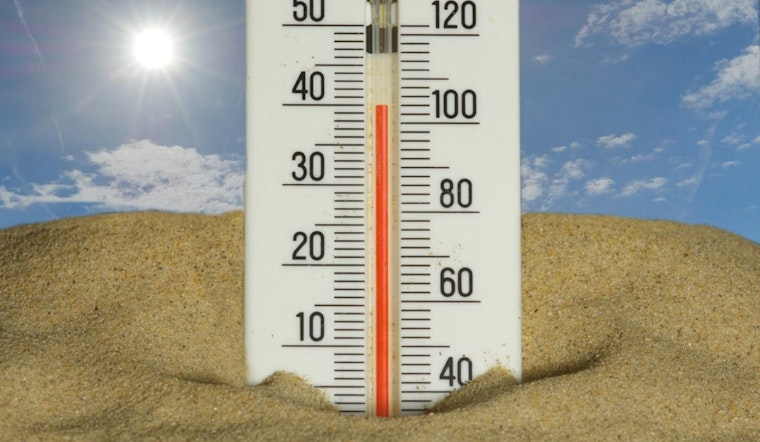
Dallas is treating summer like the public-health emergency it is, rolling out its first-ever Extreme Heat Intervention Guidebook to help city agencies, nonprofits, and residents cope with dangerously rising temperatures. The new manual reads like a playbook for surviving hotter days and nights, with neighborhood-level strategies that city staff say will evolve as more data and pilot projects come online.
“This is an issue that everyone should be able to agree on,” Angela Hodges, director and chief resiliency officer for the Office of Environmental Quality and Sustainability, said as the city debuted the guide. The manual warns that under a “business as usual” emissions path, average summertime highs could jump nearly 5 degrees by 2050 and more than 12 degrees by 2100, and it flags that overnight temperatures are climbing too. According to The Dallas Morning News, the guidebook is meant to be a living resource, not a binding policy.
What the guidebook recommends
The manual lays out a suite of fixes that range from straightforward to ambitious. On the physical side of the city, it calls for expanding and protecting the tree canopy, adding shade structures at bus stops and playgrounds, and installing “smart surfaces” like reflective roofs, cool pavement, and green roofs to cut down on heat absorption.
On the public-health front, the guidebook urges officials to beef up cooling centers, send emergency heat alerts in multiple languages, provide free transit to cooling sites, and distribute fans, cooling kits, and portable air conditioners during extreme heat events. These strategies, along with household-level tips, are detailed in the full guidebook available on the city’s Dallas Climate Action site.
Maps point to concentrated hot spots
Dallas’ urban heat mapping, carried out with the National Oceanic and Atmospheric Administration and consultants, shows that some neighborhoods can run about 10 to 12 degrees hotter than leafier parts of the city. The guidebook and accompanying maps highlight West Dallas, downtown, South Dallas, the Medical District, and South Oak Cliff as chronic hot spots.
The analysis also notes that Dallas has about a 32 percent tree canopy overall, with nearly one quarter of census block groups below 20 percent coverage. According to a mapping campaign detailed by the City of Dallas, these findings are intended to steer where new trees, cooling centers, and other interventions will have the biggest impact.
Implementation and data gaps
City officials are quick to point out that many recommendations come with a price tag, require ongoing maintenance, and depend on multiple departments working in sync. Recent commission materials show the guidebook circulated as a draft this spring, a reminder that budgets and policy still need to catch up before every idea in the manual can move into action.
The guide also flags a crucial information gap. Dallas does not yet have comprehensive local counts of heat-related deaths and hospitalizations, especially among people experiencing homelessness, which makes it harder to prioritize resources and emergency responses. That challenge is outlined in city meeting documents from the City of Dallas.
Why it matters now
The timing is not accidental. Dallas is set to host World Cup fan festivals and matches this summer, and city officials say FIFA plans to use the new guidebook as a reference while crafting an event-specific heat manual that will include medical protocols for both players and fans. The Dallas Morning News reports that FIFA’s medical leadership is expected to publish that manual in the coming weeks.
Local leaders say the city’s guide is meant to shape not only big-event planning but also long-term investments in neighborhoods that feel the heat most intensely. Residents and organizations can download the guidebook and explore interactive heat maps through the city’s Dallas Climate Action site.





