

























































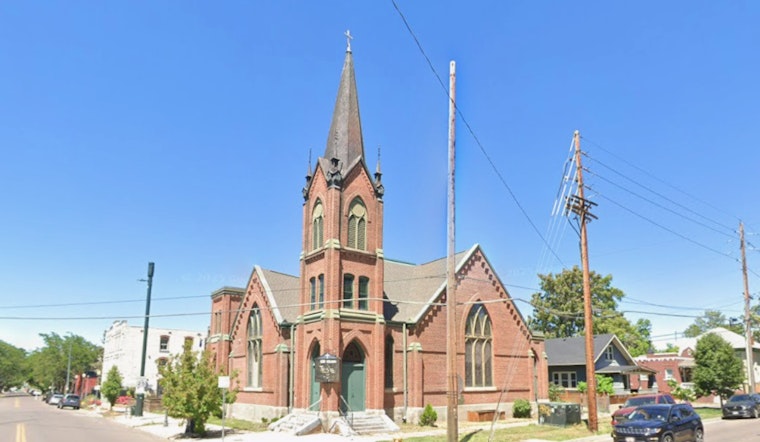
Denver nightlife fixture Regas Christou is taking on what might be his most dramatic venue yet: a long-vacant Five Points church at 701 East 23rd Avenue that is literally falling in on itself. Christou says he wants to turn the battered brick building into an events center for weddings and weekend live jazz, but he is promising to check in with neighbors first - and to walk away if the community is firmly against it.
What Christou Bought
Christou says he paid just $60,000 for the old church, a price he openly called a steal in an interview with Westword. The bargain came with a brutal surprise. After the sale closed, the ceiling gave way, sending beams crashing down and crushing many of the pews. Photos published by Westword show the sanctuary littered with broken wood and debris.
Christou, who sold his better-known Church nightclub in 2024 and is still working to launch a new listening-lounge concept called Parea, says the damage did not scare him off. Instead, it raised the stakes for what he describes as a lengthy and expensive restoration that will have to respect both the structure and the neighbors who live around it.
Historic Protections and Repairs
Local construction records indicate the brick church dates to 1890 and sits on a roughly 9,275-square-foot corner lot, with an interior of about 4,800 square feet, according to Construction Reporter. That compact footprint means any future crowds will be squeezed into a relatively small, historically sensitive space.
A commercial listing notes that a Historic Preservation Easement administered through Historic Denver is attached to the property. The easement prohibits demolition or any alterations that would damage the building’s historic character, per the listing on LoopNet. Those protections will shape everything from structural repairs to cosmetic upgrades and are almost certain to add time and cost to any renovation plan.
What Comes Next
Christou told Westword he hopes to start renovations in roughly five or six months, assuming a structural assessment does not reveal deeper issues than he already expects. He says he has already reached out to a stained-glass restoration specialist and is picturing a mix of private events and weekend jazz nights that nod to the building’s past while giving it a paying future.
Still, Christou has been clear that the neighborhood will have a say. He plans a community meeting to lay out his vision and hear concerns. If residents strongly object, he says he would rather sell the property than push through a project that does not have local backing. For nearby neighbors, that meeting will likely be the moment when a decaying church either starts to look like a promising new venue or a fight in the making.
Neighborhood Context
Five Points has a long history as Denver’s jazz corridor, and recent arts investments have tried to build on that legacy. The expansion of the Cleo Parker Robinson Dance Center in the neighborhood is one prominent example of that cultural momentum, as reported by the Denver Gazette. An events-focused venue in a historic church fits neatly into that narrative on paper.
In practice, neighbors across central Denver have not been shy about flexing their power over nightlife projects. LoDo residents, for instance, recently rejected a Good Neighbor Agreement for a proposed music venue earlier this year after a string of violent incidents tied to other clubs, as detailed in Hoodline coverage of how LoDo neighbors pulled the plug on Beta X. Christou’s outreach in Five Points will be an early, telling test of whether residents are in the mood for another high-capacity event space or whether the old church stays quiet a little longer.
For now, the building sits in limbo, caught between its crumbling present and a possible future of live jazz, wedding toasts, and restored stained glass. What ultimately happens will depend on whether historic rules, construction realities, and neighborhood sentiment can be brought into the same choir.



