

























































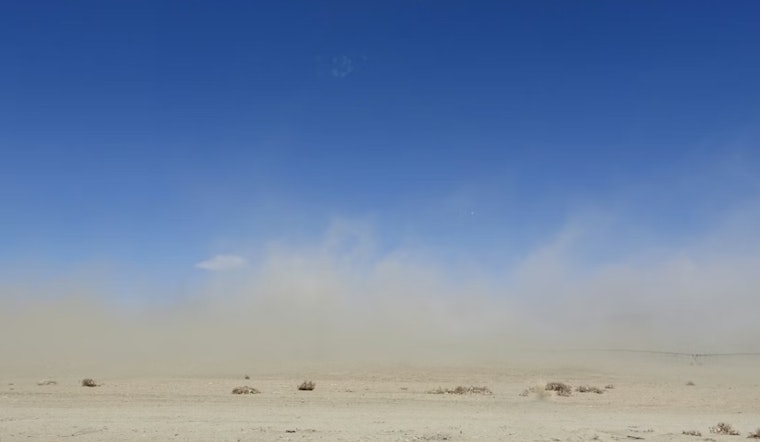
When the wind howls and the mercury spikes in El Paso, it is not just tumbleweeds on the move. A new analysis from University of Texas at El Paso researchers finds that reported Valley fever cases in the city more than tripled between 2013 and 2022. The team links that jump not to everyday dusty conditions, but to the kind of extreme episodes locals know all too well: blistering heat, violent wind gusts, and intense dust storms that can loft the soil-dwelling fungus into the air. The findings raise fresh concerns that hotter, drier conditions and local land disturbance may be amplifying exposure in the borderland.
What the study examined
The peer-reviewed paper, published in the International Journal of Biometeorology, pulled together El Paso's notifiable-conditions reports from 2013 to 2022 and paired them with National Weather Service data and Texas Commission on Environmental Quality air-monitoring records. The authors report 246 recorded cases over that decade and used generalized additive models to look for links between disease incidence and weather and particle pollution. Their analysis finds a clear upward trend in cases and pinpoints the environmental signals that tend to show up before those increases.
UTEP: Anticipating risk
Lead researcher Gabriel Ibarra-Mejia at UTEP said the work gives public health officials and clinicians a tool to look ahead instead of just reacting. "Our work shows that Valley fever risk can be anticipated based on environmental signals," he told KVIA.
Weather thresholds tied to higher cases
The models in the paper linked higher Valley fever incidence to several specific conditions. Reported cases tended to increase after one month before maximum temperatures above about 102 °F, after peak wind gusts above roughly 28.6 m/s (about 64 mph) several months earlier, and following one-month prior spikes in PM10 concentrations on the order of 2,000 µg/m3. The authors also found that reported cases were highest in midsummer, especially July and August, pointing to a seasonal amplification of risk.
Dust season and local drivers
El Paso has been dealing with unusually active and hazardous dust seasons in recent years, driven by extended drought and rising temperatures, as reported by Inside Climate News. Local coverage and research also highlight closer-to-home sources such as construction sites, dirt roads, and other unpaved areas that can add locally generated dust and kick up spores during storms, according to El Paso Matters.
Public-health takeaways
Coccidioidomycosis is not spread person to person and is nationally notifiable in many states. CDC surveillance notes that reporting practices vary and that in Texas, the disease is specifically reportable in the city of El Paso. Federal health officials and local researchers warn that Valley fever is likely underdiagnosed because its symptoms look a lot like other respiratory infections, so clinicians are urged to test for it when pneumonia does not improve as expected or when patients show up after extreme dust events. The CDC also recommends steps to reduce dust exposure and outlines testing and protective measures for workers, including using NIOSH-approved respirators when dust cannot be avoided.
UTEP researchers say the environmental signals identified in the paper could help health officials position testing and public information campaigns around heat waves, strong wind events, and dusty spikes. Local reporters have noted that as El Paso faces hotter summers and persistent drought, staying ahead of those signals may become a basic part of protecting the borderland's health.



