

























































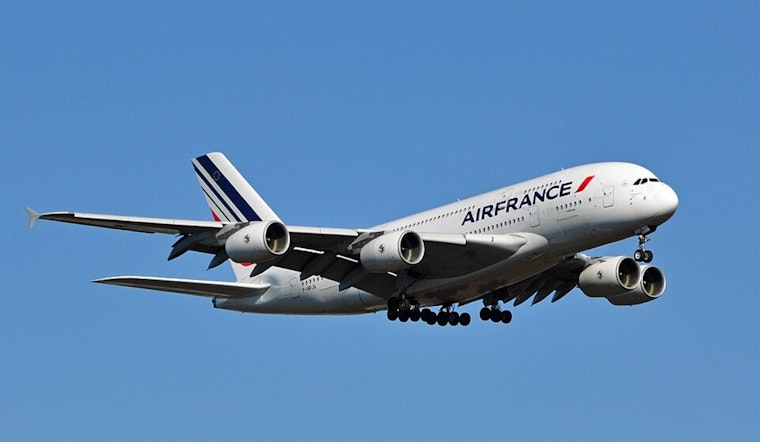
What was supposed to be a routine hop from Paris to Detroit turned into an unexpected international detour yesterday, when a Detroit-bound Air France flight was ordered to stop in Montréal after U.S. officials flagged a passenger with recent travel to an Ebola-affected country.
Passengers stayed on the plane at Montréal–Trudeau while officials sorted out the next steps. After the checks and coordination wrapped up, the aircraft continued on to Detroit Metropolitan Airport later that evening.
How the Flight Was Rerouted
Air France flight AF378, running the Paris–DTW route, was diverted to Montréal–Trudeau after federal authorities determined that a traveler on board had recently been in the Democratic Republic of the Congo, according to the Detroit Free Press. Flight-tracking data shows the jet landing first in Montréal before being marked as diverted and then arriving at DTW later on; those movements appear in the history logs on Flightradar24 and were mirrored on the arrivals board at Detroit Metro Airport.
Why U.S. Officials Stepped In
On Monday, federal public-health authorities rolled out targeted measures, including enhanced screening, traveler monitoring, and temporary entry restrictions for non-U.S. passport holders who had been in the Democratic Republic of the Congo, Uganda, or South Sudan within the previous 21 days, according to the CDC. The rules are part of a broader interagency push to spot and manage travelers who may have been exposed to Ebola and connect them with public-health follow-up.
Flights Funneled to Dulles for Screening
A Department of Homeland Security memo obtained by news outlets instructs that commercial flights carrying people who recently traveled in the outbreak countries should be directed to Washington-Dulles International Airport for ramped-up screenings, according to CBS News Chicago. Officials argue that funneling passengers through a limited number of gateway airports conserves staff and resources and makes it easier to track and monitor travelers than trying to screen at dozens of different hubs.
International Context and Evacuations
The World Health Organization declared the outbreak in the Democratic Republic of the Congo and Uganda a public-health emergency of international concern on Sunday; details on the epidemic are laid out by the World Health Organization. Reporting from The Washington Post notes that one American who tested positive was flown to Germany for treatment and that several high-risk contacts have been transported to Europe for monitoring.
What Travelers and Detroiters Should Know
Federal officials continue to stress that the risk to the broader U.S. public remains low. Still, anyone who has been in the affected regions within the last 21 days should be ready for added screening and monitoring at airports and other ports of entry. Travelers returning from those countries are urged to keep an eye out for symptoms for up to 21 days and follow instructions from public-health agencies and their airline regarding routing, screening, and any follow-up.
Airport and Airline Logistics
Passengers on AF378 reported delays and said they saw crew members in masks while the airline and federal authorities coordinated the response. Official statements have framed the diversion as enforcement of entry rules rather than a mid-air medical emergency, according to the Detroit Free Press and flight records. Airport and federal teams say they are ready to carry out targeted screening, contact tracing, and any needed follow-up for passengers who meet exposure criteria.
Bottom Line
The midair detour is a reminder of how fast travel rules can change during an international outbreak and how closely airlines must track evolving U.S. entry restrictions. Local health departments are expected to work with federal partners to monitor any passengers who need follow-up, while travelers are urged to check official guidance and their airline for the latest information before they fly.



