

























































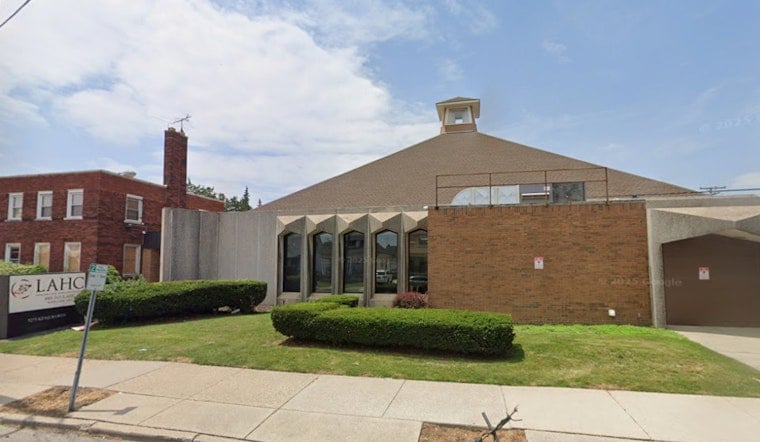
A 6,500-square-foot addition to a Dearborn nonprofit's headquarters is now open, bringing therapy, job training, English literacy classes, and food assistance under one roof for a region where nearly one in five residents report struggling with chronic poor mental health. Leaders Advancing and Helping Communities, known as LAHC, built the Behavioral Health, Education and Workforce Development Hub onto its existing campus at 5275 Kenilworth Street, and organization leaders say it will let them reach roughly 20,000 additional clients a year across Southeast Michigan.
The expansion comes after a period of rapid growth for the nonprofit. According to CBS News Detroit, LAHC served 80,497 individuals across Southeast Michigan in 2025, up from approximately 56,000 in 2023, and the new facility is designed to keep pace with that demand. The station's report describes the hub as a single space where educational opportunities, behavioral health support, family services, and workforce development programs are now co-located rather than scattered across separate offices.
A Local Health Crisis Behind the Building's Design
The timing lines up with troubling local health data. A citywide health assessment released by the City of Dearborn in July 2025 found that nearly 20% of residents reported suffering poor mental health for 14 or more days in a month, with two-thirds of respondents identifying social stigma as a major barrier to seeking care. That stigma finding helps explain why LAHC chose to fold clinical therapy into the same building as job training and English classes, services residents may already visit without the same hesitation attached to a stand-alone mental health clinic.
The strain has also shown up in emergency response numbers. Dearborn Police Department data showed a 62% increase in mental health crisis calls between 2020 and 2022, according to CBS News Detroit, part of a broader regional trend of rising emergency behavioral health demand. That surge has fed local debate over how police, social workers, and nonprofits should divide responsibility for responding to residents in crisis, an issue Hoodline has previously reported on in the context of a fatal 2021 Dearborn welfare check that led to a civil rights lawsuit.
Government Funding Stitched the Project Together
Building the hub took $3.5 million in capital funding assembled from multiple layers of government; per Leaders Advancing and Helping Communities: Wayne County, a Michigan Department of Labor and Economic Opportunity Community Center Grant, federal HUD funds, and congressional appropriations all contributed. That patchwork funding model extends beyond construction. A February 2026 Michigan Senate appropriations request sought an additional $6.5 million in state funding for LAHC, aimed at strengthening its Public, Mental, and Behavioral Health Department and expanding youth initiatives such as PATHWAYS and Blooming Minds, according to the Michigan Senate.
LAHC's clinical credibility got a formal boost in December 2025, when the Detroit Wayne Integrated Health Network board credentialed the organization to provide skill-building and behavioral health services for adults with serious mental illness, developmental disabilities, and co-occurring disorders across Wayne County, according to meeting documents from the Detroit Wayne Integrated Health Network. That credentialing places LAHC within Wayne County's official public health safety net, alongside its long-running social service work.
From a Soccer League to a Regional Safety Net
LAHC's reach today looks nothing like its origins. The organization was established in Dearborn in 1982 as the Lebanese American Heritage Center, a youth athletic initiative centered on soccer for Middle Eastern immigrants, before evolving into the broad social service organization it is today, according to the Flinn Foundation. Since expanding its educational mission in the 1980s and 1990s, LAHC has distributed more than $2 million in college scholarships to Metro Detroit high school students.
The nonprofit's work now extends well beyond mental health and education. In 2025, LAHC distributed 147,622 pounds of food to low-income families across Metro Detroit through a regional partnership with Forgotten Harvest, as reported by The Arab American News. LAHC operates in a Dearborn nonprofit landscape that also includes ACCESS, the city's other major Arab American social service and health network, which Hoodline covered earlier this year as it underwent a leadership transition after 35 years under the same executive.
With the new Kenilworth Street hub now open, LAHC's stated goal is straightforward: reach the roughly 20,000 additional Southeast Michigan residents its leaders project will need behavioral health, education, and workforce services in the coming year, building on a client base that has already grown by tens of thousands since 2023.





