

























































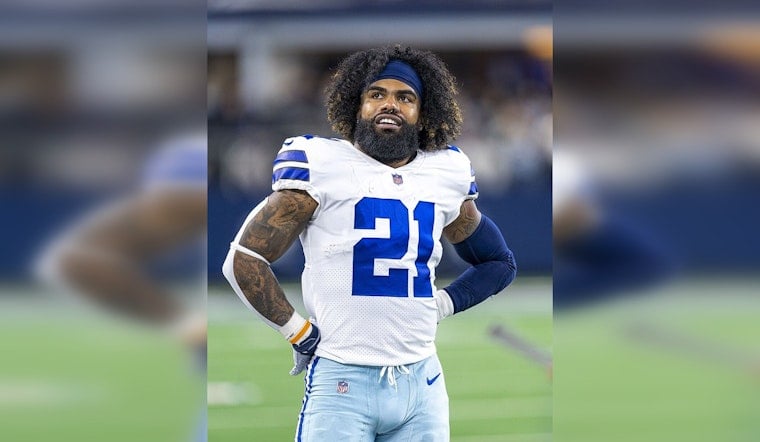
Ezekiel Elliott is taking his old college bosses to court, accusing the NCAA and the Big Ten of cashing in on his Ohio State fame without cutting him in.
The former Cowboys running back has filed a lawsuit in Los Angeles County that targets how his Buckeyes-era likeness has been used, from No. 15 jersey sales to highlight reels. He is asking the court to block enforcement of rules and agreements that he says limited his right to be compensated and is seeking damages.
Elliott’s case lands in the middle of a growing pile of lawsuits from former college stars who say their names and images kept making money long after they left campus, while they saw nothing. Detroit Lions receiver Jameson Williams, for instance, filed a similar suit late last month that accuses the NCAA and major conferences of using his name and image without fair pay, as reported by Law360.
What the Lawsuit Alleges
According to court documents obtained by the New York Post, Elliott says he does not receive any share of revenue from sales of the No. 15 Ohio State jersey. The complaint also claims highlights from his college career are still used on NCAA-associated platforms, which he characterizes as ongoing commercial exploitation without compensation.
The filing, submitted in Los Angeles County Superior Court, asks for an injunction that would stop those practices and seeks monetary damages. Elliott played at Ohio State from 2013 to 2015 and was part of the 2014 College Football Playoff national championship team, according to Ohio State records cited in the complaint.
Money and the Marketplace
Elliott’s attorneys position his claims against the backdrop of a college sports economy that has never been bigger. Conference disclosures show the Big Ten generated and distributed record amounts in the 2024–25 fiscal year, with a total of $1.37 billion disbursed to member schools and Ohio State among the top beneficiaries, per Eleven Warriors.
Those numbers help explain why former players are increasingly willing to test the courts. Their argument is basically that if everyone else is profiting from their past performances, they should not be left stuck at zero.
Legal Stakes and What’s Next
Attorneys who follow these cases say plaintiffs are likely to lean heavily on right-of-publicity claims and “continuing harm” theories. The core idea is that every fresh use of a player’s image or highlights creates a current injury that can be litigated, not just something that happened years ago.
Observers tracking the growing wave of complaints say what started as a niche issue has quickly turned into a steady stream of mainstream cases, a trend documented by the College Sports Litigation Tracker.
The NCAA and the Big Ten did not immediately respond to requests for comment in initial reporting. The suit is expected to draw formal responses and motions in the coming weeks. The next turns in the fight will show up first in Los Angeles County court filings and docket entries, and we will be watching how Elliott’s challenge moves through the system.





.jpg)