

























































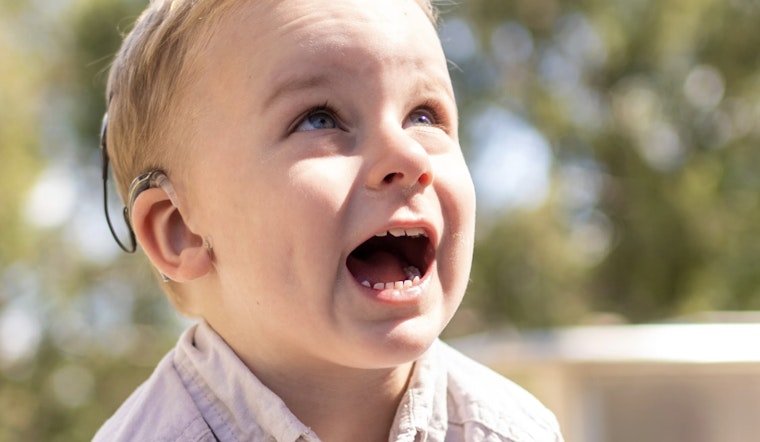
At a packed World Congress on Audiology in Seoul this week, researchers rolled out new data on an inner-ear gene therapy now sold as Otarmeni, showing that most children in the CHORD trial gained meaningful hearing after treatment. The update follows the U.S. Food and Drug Administration's recent green light for the therapy and adds more individual patient results to those already published in peer-reviewed journals.
What Researchers Just Reported in Seoul
Presenting in Seoul, Regeneron clinical sciences director Tera Quigley walked through outcomes for 24 children in CHORD and reported that about 92 percent hit a clinically meaningful improvement in hearing by week 48. Around 42 percent reached hearing in the normal range and 83 percent could detect conversational or soft speech, according to Liam O'Dell.
Quigley also noted that most treatment-emergent side effects were mild or moderate. Two serious adverse events occurred but were resolved without lasting problems, and the untreated ears in the trial largely stayed in the range of profound deafness.
How It Lines Up With Earlier Peer-Reviewed Data
The Seoul numbers build on an October report in the New England Journal of Medicine, which detailed early CHORD outcomes in the first group of children treated. That paper showed objective gains on standard hearing tests, including pure-tone audiometry and auditory-brainstem responses, after administration of the experimental therapy then known as DB-OTO.
As described in the journal, those initial data offered the first controlled evidence that delivering a working OTOF gene directly into the cochlea can restore natural acoustic hearing in at least some patients born with otoferlin-related deafness.
Who Can Get Otarmeni, and On What Terms
Now rebranded as Otarmeni, the therapy won FDA approval on April 23, 2026. Regeneron has said it will provide the product at no cost to eligible U.S. patients, according to Regeneron.
The formal indication, laid out in company materials and regulatory documents, specifies that Otarmeni is authorized for patients with severe-to-profound sensorineural hearing loss caused by confirmed biallelic OTOF variants, who still have functioning outer hair cells and have not received a cochlear implant in the same ear. Treatment requires an intracochlear infusion performed under general anaesthesia, according to the FDA.
What Families and Clinicians Are Watching Next
For clinicians and parents, the next set of questions goes beyond the audiogram. They are watching to see how durable the hearing gains prove to be, how those gains translate into speech and language development, and how best to track vestibular issues such as the transient nystagmus reported in some children.
Earlier coverage of the DB-OTO program has spotlighted both early language milestones among the youngest treated children and the need for longer follow-up, as noted by STAT. The CHORD trial itself is still enrolling participants at international sites, according to Liam O'Dell.
For families living with otoferlin-related deafness, the convergence of peer-reviewed evidence, a regulatory green light and growing trial data marks a major shift in what is even possible. Experts stress that only long-term results and careful clinical follow-up will show how widely Otarmeni can reshape outcomes over an entire lifetime.





