

























































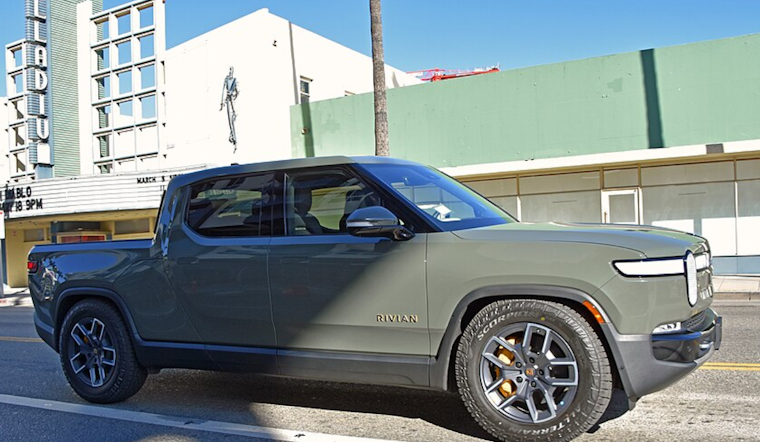
A Rivian owner in Denver turned his electric pickup into a rolling billboard, covering the R1T in fluorescent stencil paint that reads “Don’t Buy Junk” and parking it directly across from Rivian’s downtown showroom in RiNo. The truck, loud in both color and message, quickly flooded local social feeds and neighborhood forums, channeling a familiar frustration among some EV owners: high-tech hardware can feel a lot less futuristic when the service experience goes sideways.
How the protest played out
Photos of the spray-painted truck show orange and green lettering plastered across multiple body panels, with the pickup positioned squarely across the street from Rivian’s Denver space, according to Torque News. A commenter who identified himself as the owner wrote on Reddit that Rivian asked him to pay roughly $1,000 to replace a 12-volt battery after the truck sat unplugged for about 15 days. That account could not be independently verified from service orders or a company statement at the time of publication.
Why a 12-volt battery fight matters
In an EV, the small 12-volt battery does unglamorous but critical work. It powers door locks, security systems, displays, and the electronics that wake up the main traction pack, so if it dies, the vehicle can be effectively inoperable even if the big battery is fine. Rivian’s warranty guide states that original-equipment 12-volt batteries are covered for three years or 36,000 miles, but the same manual also warns that batteries damaged or drained after a vehicle is left unplugged may be excluded from coverage. That bit of fine print is where disputes like this tend to live. See Rivian for the exact language.
Owner says this was the last straw
The Denver owner has publicly chronicled what he describes as nearly two years of trouble with the truck, posting photos, videos, and long write-ups of repeated malfunctions. Torque News reviewed those posts and frames the spray-painted R1T as the endpoint of a long-running service dispute rather than a one-off flare-up. Public owner threads show both satisfied customers and lengthy troubleshooting sagas, which helps explain how one frustrated driver ended up turning his six-figure truck into a sidewalk-sized warning label.
Regulatory context: another headache for the brand
The protest also lands at an awkward time for Rivian. Federal regulators have opened a preliminary evaluation into roughly 114,922 R1T and R1S vehicles over concerns that a rear toe-link could separate while driving, according to the National Highway Traffic Safety Administration’s Office of Defects Investigation, which lists the inquiry as PE26004 and cites two vehicle owner questionnaires that prompted the review. NHTSA provides the agency’s account and scope of the preliminary evaluation, while Reuters has reported on the probe for investors and the broader public.
Rivian says it is expanding service capacity
Rivian, for its part, points to a rapid build-out of its service network and staffing as the way out of these kinds of headaches. The company says it plans more than 50 new service centers through next year and is targeting 150-plus by the end of 2027. It also says it has added over 1,000 service specialists while cutting scheduling wait times by roughly 35 percent, with a particular emphasis on mobile service and app-based scheduling tools. Those figures appear on Rivian, which outlines the company’s service strategy.
What owners and shoppers should keep in mind
For current owners, the practical move is to document everything. Save screenshots from the app, keep service-chat transcripts, request written diagnostic reports, and ask for the specific warranty clause the company is relying on if coverage is denied. For shoppers, local service access and a brand’s track record on handling disputes should factor into any buying decision alongside range, performance, and design. If a repair bill looks out of line, owners can raise the issue through formal complaints or consumer protection channels.
The spray-painted R1T has not resolved the underlying technical dispute, but it has made that dispute highly visible to Rivian employees, RiNo shoppers, and online communities. Whether this stays a one-off act of protest or becomes a broader warning sign about service will hinge on whether Rivian’s investment in capacity turns into clearer warranty guidance and smoother outcomes for the next owner who finds himself staring at an unexpected invoice.



