

























































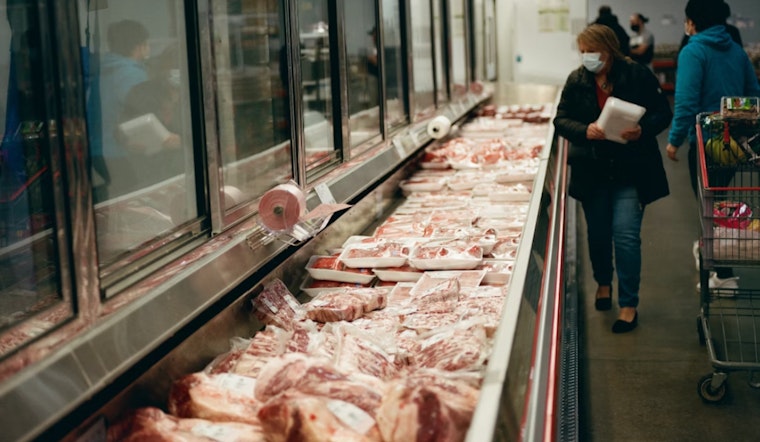
The Justice Department on May 7 rolled out a proposed settlement that would clamp down on secret data sharing in the meat business and push most processing information into the hands of U.S. buyers. Federal officials say the move is meant to crank up real competition in chicken, turkey and pork, with the long-term goal of easing what shoppers pay at the meat counter. Agri Stats, the Indiana data firm at the center of the case, is pushing back a bit, saying it will keep serving subscribers under the new ground rules.
The Antitrust Division's filing asks a federal judge to ban Agri Stats from providing nonpublic sales reports and detailed, facility-level breakdowns of production, costs and labor. It would also cap how current the shared information can be and require that most of the data be offered on reasonable, non‑discriminatory terms, according to the Justice Department. The proposal would add a court-approved monitor and an antitrust compliance program to keep tabs on Agri Stats' future data practices. A subsidiary that issues more generalized price summaries would be allowed to keep operating, the department said.
"A stable and affordable food supply is critical to our country's well‑being," Acting Attorney General Todd Blanche said, with the Antitrust Division adding that the settlement "delivers immediate relief in the meat section of grocery stores." The filing landed in the U.S. District Court for the District of Minnesota with support from six state attorneys general. According to the Justice Department, the remedies are designed to wipe out the one-sided access to granular processor data that, in its view, dulled competitive discipline.
Agri Stats' president said the company was "pleased to put this case with the Department of Justice and six states behind us," while defending its contribution to industry efficiency. As reported by The Associated Press, the Justice Department is also running separate probes into potential antitrust issues in the beef processing business. The AP notes that the Agri Stats settlement wraps up civil claims filed in 2023 and marks a major enforcement push deeper into the food‑supply chain.
How Prosecutors Say the Data Pipeline Worked
Court filings describe Agri Stats as collecting raw, nonpublic information straight from processors' accounting systems, cleaning and standardizing it, then sending back highly granular reports that often zeroed in on individual plants or companies. Prosecutors argue that those reports allowed competitors to spot when and where they could raise prices or scale back output. The government's complaint and related motions outline near‑current snapshots of sales, production and labor metrics that rival processors could use to align their decisions. Those allegations are the factual spine of the Antitrust Division's case. For the details, see the filings on Justia.
Prices, Drought and a Tight Herd
The case is landing at a tense moment for meat prices. Retail ground‑beef costs were already elevated, with the Bureau of Labor Statistics city‑average for 100% ground beef around $6.70 a pound in March. On the supply side, things are not exactly loosening up. The national cattle herd stood at 86.2 million head on Jan. 1, 2026, the smallest count in decades, and drought has pinched forage and hay in key grazing regions.
Maps that layer the U.S. Drought Monitor over USDA production data show roughly 61% of the nation's cattle inventory in counties currently experiencing drought. Economists say that combination keeps steady upward pressure on retail beef prices. The underlying data are available from FRED/BLS, USDA NASS and U.S. Agricultural Commodities in Drought.
What Comes Next
The proposed consent decree is not a done deal. Federal law requires that it be published for public comment and that a judge find the settlement is in the public interest before entering final judgment. That Tunney Act process gives buyers, competitors and anyone else with skin in the game a formal window to weigh in, and it lets the court decide whether the deal really fixes the harms the government alleges.
Legal analysts say the settlement could shut down one channel processors allegedly used to coordinate with one another, but it will not erase broader supply problems built on herd size, drought and recent import restrictions. For background on the Tunney Act and public‑comment requirements, see the overview in the Federal Register and legal coverage from MLex.
If the court signs off and the monitoring system works as advertised, grocery chains and food‑service buyers could gain access to more robust pricing and production data, giving them more leverage at the negotiating table. Officials and analysts caution, though, that shoppers should not expect meat prices to suddenly crater. For now, structural supply limits and weather are still doing most of the talking on the price tag.




