

























































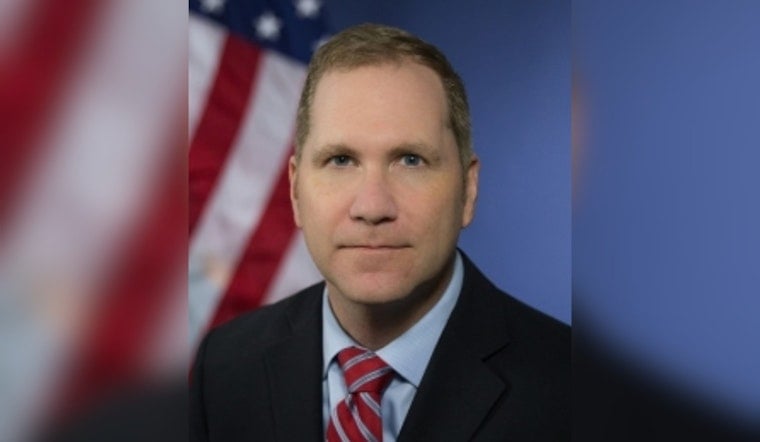
A newly unsealed federal case in Detroit accuses a 51-year-old Lincoln Park man of unleashing a 38-day barrage of threatening and harassing messages at former U.S. Attorney Matthew Schneider, flooding him with hundreds of emails, voicemails, and other communications over a little more than a month.
The criminal complaint, unsealed today in federal court, identifies the Lincoln Park resident as the defendant in a cyberstalking case that prosecutors say centered on Schneider, who once served as the region’s top federal prosecutor.
Federal court records described by The Detroit News outline the alleged 38-day pattern and detail the volume and types of messages sent to Schneider. According to that account, the records were unsealed today and describe a mix of written messages and recorded voicemails.
Schneider served as U.S. Attorney for the Eastern District of Michigan from 2018 through 2021, handling a series of high-profile federal prosecutions during his tenure, according to his professional biography. His current practice at Honigman focuses on crisis management, investigations, and high-stakes litigation.
What The Court Filings Say
The newly public filings describe what prosecutors characterize as a sustained series of targeted communications directed at Schneider. They catalogue dates, message types, and repeated contacts over the 38-day span, and assert that the pattern of outreach caused substantial distress to the intended target.
Those documents, now part of the public docket, form the foundation of the federal cyberstalking case in Detroit. As with many online-harassment cases, the paper trail is central to the government’s theory of the crime.
Federal Enforcement And Penalties
Prosecutors in the Eastern District of Michigan have recently increased their focus on cyberstalking and online harassment cases, including matters that involve new technology. In a Jan. 27 press release, the U.S. Attorney's Office, Eastern District of Michigan described a guilty plea in a separate cyberstalking case that relied on AI-generated images and underscored that federal cyberstalking charges can carry a maximum prison sentence of five years.
The office highlighted how modern online tools can magnify the reach and impact of stalking, turning what might start as digital harassment into conduct that lands in federal court.
Legal Context
Federal cyberstalking provisions grow out of amendments to federal stalking law that expanded jurisdiction to cover electronic communications that cross state lines and cause substantial emotional distress or a reasonable fear of harm. Congressional reports and later legislation explain how online harassment can qualify as federal stalking when it travels through interstate channels or threatens safety, according to legislative history summarized on Congress.gov.
In this Detroit case, the filings were unsealed today. Any next steps, including arraignment, detention hearings, or scheduling orders, will appear on the public federal docket as the case progresses. Local readers can track those records for updates as prosecutors file motions and courts set future appearances in the days and weeks ahead.





