

























































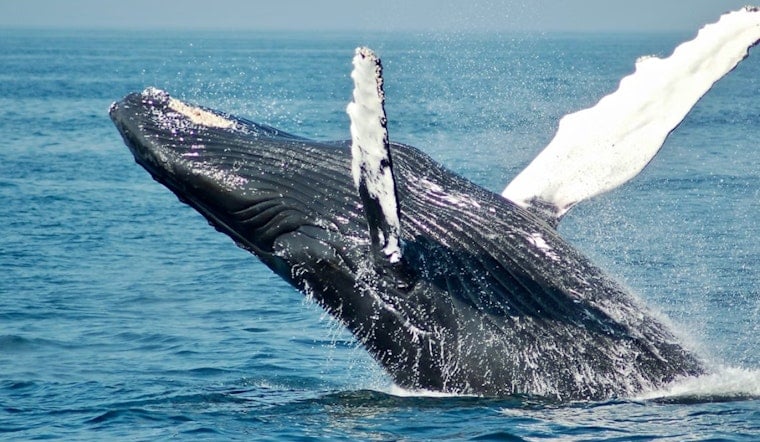
A gray whale that washed ashore near Virgin Creek in Fort Bragg on Wednesday morning has turned a quiet Mendocino County beach into an impromptu science lab. Volunteers and researchers quickly converged on the sand after the body of the subadult female was spotted, and staff with the Noyo Center for Marine Science began taking initial samples. The whale is the first recorded cetacean death in Mendocino County this year and arrives at a time when gray whale strandings along the Northern California coast have been climbing.
In a social media update, the Noyo Center said it is coordinating with teams from the California Academy of Sciences and The Marine Mammal Center and plans to perform a necropsy to see whether injuries or poor body condition played a role in the animal’s death, according to CBS San Francisco. Samples already collected on the beach are expected to help pathologists look for signs of trauma, infection or nutritional stress.
Necropsy Teams On Site
Bay City News Service, reporting for SFGATE, said scientists from the California Academy of Sciences and The Marine Mammal Center arrived Thursday to carry out a field necropsy. Volunteers told reporters the whale appeared to be a subadult female and said an informational display had been set up so curious beachgoers could learn what was happening without getting in the way.
Bay Area Strandings Have Climbed
The Marine Mammal Center’s public stranding log shows a troubling pattern. The organization has already documented seven gray whale deaths in the Bay so far in 2026, compared with 21 in 2025, and notes that one carcass found in March was likely killed in a vessel strike. Those numbers follow an Unusual Mortality Event that began in 2019, and researchers say they are increasingly worried about stress on the population across the species’ range.
What Scientists Suspect
Researchers point to a mix of problems that seem to be hitting gray whales from both ends. Blunt trauma from ship strikes is one clear threat, and many stranded whales have also shown signs of poor body condition that scientists suspect is linked to shifting Arctic feeding grounds and reduced prey. Federal surveys summarized by NOAA Fisheries found that calf production dropped to an estimated 85 calves in 2025, while reporting by KQED notes that statewide ship speed reduction programs are intended to cut collision risks as whales move through heavily trafficked shipping lanes.
Next Steps And How Locals Can Help
If the Fort Bragg carcass remains reachable, scientists plan to complete the field necropsy and ship tissue samples to laboratories for more detailed analysis. Those test results can take anywhere from several days to a few weeks and are shared with partner agencies to help track broader trends in gray whale health, the Marine Mammal Center says.
Officials are asking visitors to give the whale and responders plenty of space so scientists can work safely. Locals who spot stranded or distressed marine mammals are urged to report them through official hotlines and online reporting tools, which help researchers map whale movements and respond more quickly when animals are in trouble.





