

























































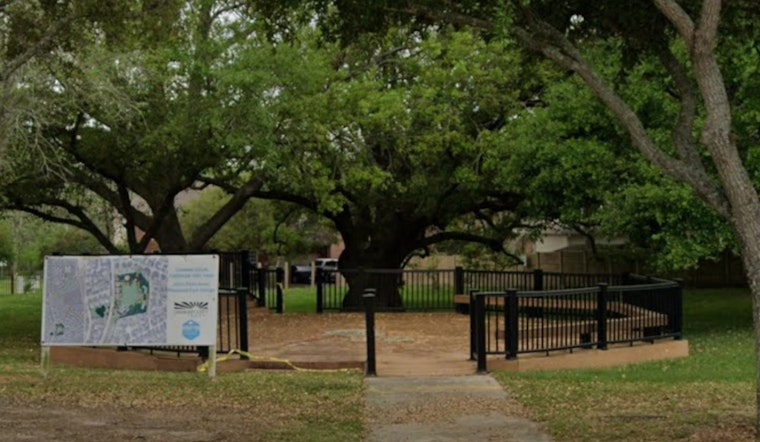
Missouri City is trying to pull off a rare trick: build a new, walkable downtown without erasing the history under its feet. Under the sprawling canopy of the Freedom Tree, a live oak long revered by neighborhood families, planners are sketching out a park and centerpiece sculpture while the city advances a 20-acre mixed-use project next door. The tug-of-war between growth and memory is unfolding along Texas Parkway, just a few blocks from City Hall.
Freedom Tree Park Is the City's New Centerpiece
The Freedom Tree has become the human-scale measure of Missouri City's redevelopment. It is widely described as being more than 150 years old and is listed on the National Registry of Historic Trees. As reported by the Houston Chronicle, the planned Freedom Tree Park will cover about five acres and include a plaza, playground, meditation labyrinth, trails and a commissioned sculpture, a package the paper described as roughly a $4 million investment. Supporters say the park is meant to honor the Black families who stayed after the plantation era and to make that story visible to future residents.
How The City Wants The Art To Fit
The Missouri City Arts & Culture Commission has put out a formal Call to Artists for the sculpture that will anchor the park. The city is asking for renderings, timelines and maintenance plans as part of the selection process. The solicitation explains that the selected artist will be responsible for construction and installation, and it spells out how the piece should sit within the larger park design, according to the City of Missouri City. That cultural layer is intended to lock in the site as both a neighborhood green and a place for civic education.
What 'Downtown Missouri City' Will Contain
In March the city approved the first phase of a plan to transform roughly 20 acres along Texas Parkway, near City Hall and the Houston Community College campus, into a mixed-use "Downtown Missouri City" with retail, restaurants, mid-rise housing, a public park and a parking structure. As reported by Community Impact, county and city planning materials show officials are coordinating corridor improvements and a catalyst-site master plan to support private investment. Fort Bend County project lists and mobility documents show Texas Parkway has been identified as a priority corridor, a designation leaders say will help fund the infrastructure the downtown concept needs.
Only So Much Land Left To Build On
City planning materials note that Missouri City has roughly 1,658 acres, about 9%, of undeveloped land remaining within its limits, a figure planners are using to argue for smarter infill and corridor redevelopment. According to the U.S. Census Bureau, the city now has roughly 78,582 residents, and local leaders worry that many of them leave town for work. Mayor Yolanda Ford has warned that keeping jobs and spending inside the city is essential, a point she reiterated in interviews recounted by the Houston Chronicle, and the downtown project is being pitched as one way to close that gap.
Names Changed, Memory Preserved
The drive to reshape place names has run alongside the redevelopment push. Residents and council votes over the last several years have removed plantation and Confederate references from subdivisions and streets. Local reporting and city records show Sienna moved away from the word "Plantation" in 2019, homeowners changed Confederate Drive to Prosperity Drive in 2021, Bedford Forrest Drive was renamed to Liberty Way in 2023, and the Watts Plantation Road name was updated earlier this year. Those steps, covered in local outlet ABC13, illustrate how residents and officials are trying to square local memory with a new civic brand.
Local Businesses Watch Closely
Longtime mom-and-pop owners say they want the new development to bring steady customers without pricing out the people who kept these corridors alive. Leslie Nash of Leslie's Furniture has run her store in Missouri City for more than two decades, a tenure reflected in business listings and local directories, according to the Better Business Bureau. Small proprietors say downtown will need to deliver consistent weekday and weekend traffic if they are to survive the next wave of redevelopment.
City leaders say the projects will take years of design, public engagement and private investment, and what ultimately lands on the ground will depend on the choices neighbors, councils and developers make next. With limited vacant land and an insistence by many residents that history not be erased, Missouri City's experiment is likely to be watched closely across the region as suburbs try to build modern downtowns while preserving the stories that made them.





