

























































Black elected officials across Georgia are raising the volume after a recent U.S. Supreme Court decision trimmed back one of the main enforcement tools of the Voting Rights Act. They say a June special session, followed by new political maps, could give state lawmakers a chance to redraw districts in ways that undercut decades of hard-won Black political power.
State Sen. Ed Harbison, who told reporters that the Voting Rights Act "made it possible" for Black Georgians to win elected office, called the ruling "a wake-up call" for his generation and the next, according to The Atlanta Journal-Constitution. The paper reports that members of the Georgia Legislative Black Caucus fear mid-decade line-drawing could cost them seats and slow the rise of younger Black leaders across the state.
What the Court Changed
On April 29 the Supreme Court, in Louisiana v. Callais, narrowed how Section 2 of the Voting Rights Act can be used to require race-based majority-minority districts. The justices raised the bar for proving vote dilution and insisted on stronger evidence of intentional discrimination, as outlined in the Court’s opinion. The ruling also changes how courts view illustrative maps and when partisan explanations can override claims that race drove line-drawing. Legal analysts say those technical shifts are likely to make it harder for voters of color to win challenges to maps that split or pack their communities, and the decision is already reshaping mapmaking debates in Southern statehouses.
Special Session And The Map Timeline
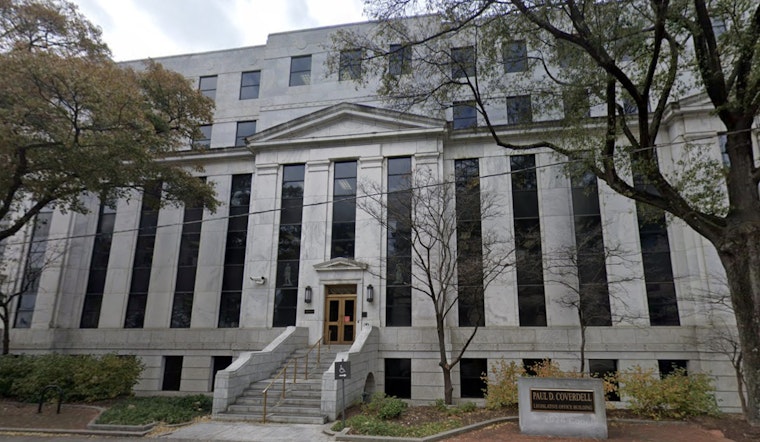
Gov. Brian Kemp has called the General Assembly into a special session beginning June 17 to revisit congressional and legislative district lines and to tackle election-law housekeeping ahead of a July deadline, according to Axios. Kemp’s proclamation states that any changes would take effect for the 2028 cycle, but advocates warn that the process still gives mapmakers an opening to redraw districts in ways that could dilute Black voting strength across southwest Georgia and parts of metro Atlanta.
Local Leaders Say "We Can Expect The Worst"
Georgia’s Black lawmakers are not sugarcoating their concerns. "We can expect the worst," Georgia Legislative Black Caucus Chair Nikki Merritt told reporters, and other leaders warned that lines could be "drawn to silence us," as reported by The Atlanta Journal-Constitution. The AJC profiles long-serving Sen. Ed Harbison and younger organizers who say a mid-decade rewrite, even one aimed at 2028, could rob rising Black candidates of stepping-stone offices such as school boards and state House seats.
Advocates warn the fallout will not stop at Georgia’s borders. Analysts and caucus leaders say Congressional Black Caucus membership is at risk in several states after the Callais decision, and some outlets report that nearly a third of CBC seats could be jeopardized by aggressive redistricting. Civil-rights groups and many lawmakers are mobilizing to counter what they describe as coordinated efforts to redraw Black-majority districts in Republican-controlled legislatures, per coverage by ABC News.
Legal Fights And Organizing Ahead
Legal analysts at the Brennan Center for Justice say the Callais opinion reworks key parts of the Thornburg v. Gingles framework and will make Section 2 challenges harder to win by tightening plaintiffs’ proof burdens and elevating partisan explanations in court, according to the Brennan Center’s analysis. Civil-rights organizations in Georgia, including the ACLU of Georgia, have issued statements and pledged litigation and public pressure to protect minority districts and to test the limits of the new ruling.
What to watch next: the June 17 special session, the draft maps that lawmakers release afterward, and whether lawsuits follow. The outcomes will test how far the Callais ruling reshapes state redistricting and whether Georgia’s Black officials can hold ground as mapmakers redraw the political geography ahead of the 2028 cycle, per reporting by Axios.



