

























































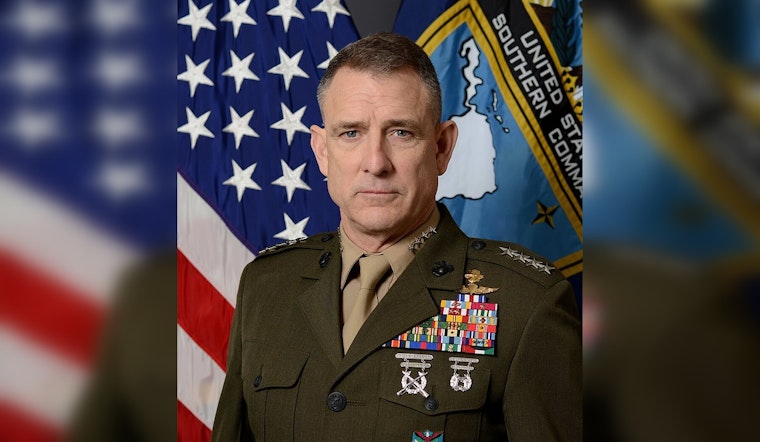
In a rare bit of fence-line diplomacy at one of the most sensitive spots on the map, Gen. Francis L. Donovan, commander of U.S. Southern Command, met Friday with senior Cuban military officials along the perimeter of Naval Station Guantanamo Bay. Donovan walked the base's fence line and held a brief, tightly focused discussion with his Cuban counterparts on operational issues, as Washington continues to ratchet up pressure on Havana. The encounter, unusually high-level for the two militaries, unfolded while U.S. deployments and diplomatic moves have been intensifying around the island, and local as well as regional officials are watching for any shift that could quickly ripple into South Florida.
U.S. Southern Command later described the meeting as “a brief exchange on operational security matters” and said Donovan “led a perimeter security assessment” and discussed “force protection, safety of service members and their families, and operational readiness” with base officials, according to AP. Cuba’s armed forces cast the talks in a similarly positive light, saying both sides agreed to maintain communication along the dividing perimeter. Officials from both governments kept a tight lid on specifics, declining to elaborate on operational details or any follow-up meetings. Photos released by the commands showed a small cluster of senior officers gathered along the fence rather than inside the installation.
Why the visit matters
Reuters reported that the sit-down is the first in recent memory between a SOUTHCOM commander and senior Cuban military leaders, and it comes against the backdrop of a broader U.S. pressure campaign. That campaign has included what Washington describes as efforts to choke off fuel supplies to the island and a strengthened U.S. naval presence in the Caribbean. The contact follows a run of recent U.S. engagements with Havana, ranging from diplomatic visits to intelligence-level talks, that has sharpened both sides’ worries about miscalculation.
U.S. force posture in the Caribbean
The U.S. military still has a handful of warships operating in the Caribbean, including at least one amphibious assault ship, and the Pentagon has set up a specialized group of roughly 1,300 sailors and Marines to relieve the 22nd Marine Expeditionary Unit as it returns home, according to USNI News. Those rotations underscore the brisk operational tempo in SOUTHCOM’s area of responsibility, as commanders juggle deterrence, maritime interdiction and base protection. SOUTHCOM framed Donovan’s fence-line inspection as part of routine force-protection work, while also saying the contact helped keep military lines of communication open.
Local stakes for South Florida
In South Florida, where Cuba policy is never just background noise, officials have been quietly updating reception and shelter plans in recent weeks in case instability on the island triggers a migration surge, a planning posture reported as Miami quietly gears up. City and county leaders say recent exercises and federal coordination have zeroed in on logistics, medical screening and family-reunification procedures. For residents with deep family ties across the Florida Straits, any sign of rising tension off Cuba’s coast lands close to home.
Cuban military outlets characterized the exchange as constructive and said both sides agreed to maintain communications along the perimeter, according to translations of MINFAR posts reported by CiberCuba. Analysts say the fence-line talks likely reflect a shared interest in reducing the risk of accidental clashes, even as policy-level pressure continues between Washington and Havana. U.S. and Cuban officials have not offered a timetable for any further meetings, leaving observers to watch whether this contact turns into a recurring channel or remains a one-off de-escalation move.




