

























































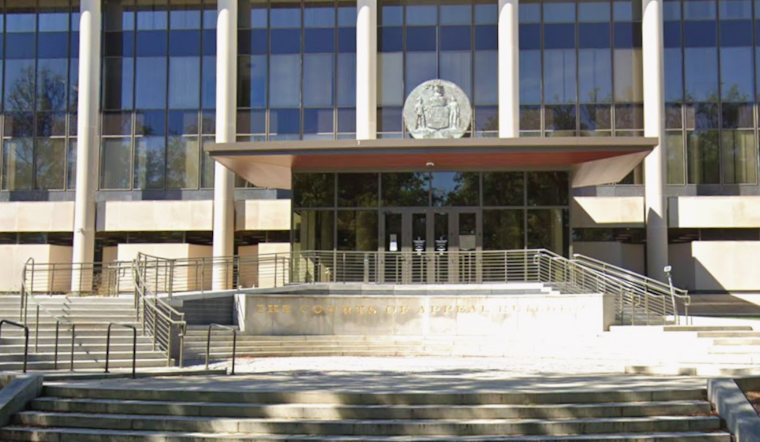
An appellate court on Wednesday shut down former Harford County Councilman Dion Guthrie’s attempt to get his council seat back, ruling that his no-contest plea to a felony theft charge still triggered automatic removal from office. The decision keeps in place the vacancy created after Guthrie’s plea last year and backs the council’s move to replace him. Guthrie’s attorney, former Maryland Attorney General Doug Gansler, says he is not done fighting and will seek further review.
Appellate Court Backs Removal
The Appellate Court of Maryland made it clear it was not buying Guthrie’s central argument about his plea. “We are unpersuaded by Mr. Guthrie’s argument that he did not enter a nolo contendere plea,” the court wrote, as detailed by The Baltimore Sun, concluding that the Maryland Constitution’s removal provision is triggered by the plea itself, not by whatever sentence a judge later imposes.
The opinion, filed May 6, walks through the transcript of Guthrie’s plea hearing and the surrounding record and rejects his claim that the plea was effectively wiped out later at sentencing. The court held that, for removal purposes, the key event was that he entered the no-contest plea in the first place. The full opinion is posted at Leagle.
How The Plea Landed Guthrie Out
At a November 2024 hearing in Baltimore County, Judge Dennis Robinson took Guthrie through the requirements for a nolo contendere plea, then moved into sentencing. During that phase, the judge imposed probation before judgment, commonly referred to as PBJ, and said on the record, “I’m going to strike the plea,” while placing Guthrie on one year of unsupervised probation.
A Harford County circuit court memorandum that reviews the transcript recounts the judge’s colloquy with Guthrie, the reading of a statement of facts, and Guthrie’s acceptance of the PBJ. That PBJ included a waiver of certain appellate rights. The filing lays out the full sequence of what happened in court and how the case was handled procedurally. The memorandum and transcript are available from Harford County.
The Constitutional Hook
All of this turned on a 2012 amendment to the Maryland Constitution that voters approved, adding Article XV, Section 2. That provision says an elected official who enters a guilty plea or a nolo contendere plea to a felony, or to certain related misdemeanors, “shall be removed from the elective office by operation of law.”
Relying on that language, the Harford County Council concluded that Guthrie’s plea instantly created a vacancy in his seat. The plea resolved a charge alleging that Guthrie took more than $23,000 from the International Brotherhood of Electrical Workers Local 1501, according to reporting from Maryland Matters.
Gansler Says He Will Appeal
Guthrie’s lawyer, Doug Gansler, has already signaled that he intends to take the fight to Maryland’s highest court. He told reporters he will ask the Supreme Court of Maryland to hear the case and will keep pressing his view that the PBJ effectively set the plea aside for purposes of the constitutional removal rule.
Gansler argues that once the sentencing judge decides to strike the plea as part of granting PBJ, Article XV, Section 2 should no longer apply. The Appellate Court flatly rejected that reading, but Gansler is looking for a different answer from the state’s top bench. Coverage of the ruling and Gansler’s comments appeared in The Baltimore Sun.
Local Fallout
Back in Harford County, the political fallout started as soon as Guthrie entered his plea. Council President Patrick Vincenti issued a letter declaring that the plea had automatically vacated the seat, and a formal Notice of Vacancy was filed in mid-November 2024, triggering the appointment process laid out in the county charter.
The council then followed its 60-day timetable to fill the seat. With the appellate ruling now in place, that appointment no longer sits under a legal cloud. The county’s court filings detail the timeline and the notice that kicked off the process, as reflected in documents from Harford County.
Legal Implications
The Appellate Court’s decision clarifies, at least at the intermediate appellate level, that the act of entering a guilty or nolo contendere plea is what triggers Article XV, Section 2’s mandatory removal rule, even if the sentencing judge later grants probation before judgment. In other words, the plea itself is what counts for constitutional purposes.
Because Gansler has said he will petition the state’s high court, the Supreme Court of Maryland may now be asked to decide whether PBJ operates as a practical erasure of a plea when it comes to elected officials keeping their jobs. The case appeared on the Appellate Court’s oral-argument docket earlier this year, as noted in the Maryland Courts oral-argument archive.





