

























































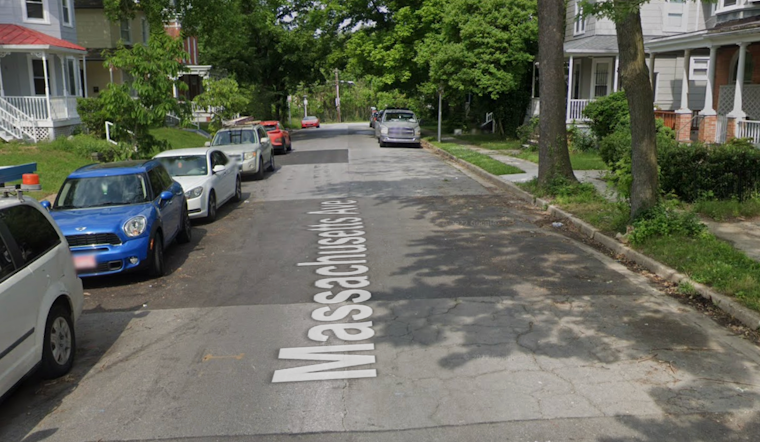
Kendric Player still remembers the bad feeling that hit him before anyone confirmed his sister was dead. Kaylia Player, 19, was found unresponsive inside a vacant rowhouse in the 4200 block of Massachusetts Avenue in Baltimore's Irvington neighborhood on May 1, 2021, and medics pronounced her dead at the scene from upper body trauma. Five years later, her brother is still trying to understand why, and he is turning that unanswered question into a public push for justice.
Kaylia was always on her phone, Kendric recalled, so when she stopped answering that morning, he knew something was wrong, according to WMAR2 News. Police pronounced her death a homicide, and the case remains open. Officers with the Baltimore Police Southwestern District located her that morning, and Baltimore Witness reported that homicide detectives launched an active investigation shortly after she was found inside the abandoned property.
Kendric, who attended Forest Park High School while Kaylia attended Francis M. Wood High School, told the station he does not fully understand why his sister was killed. He described her as joyful no matter what, and said he had pictured her working someday as a nurse or with children. He now carries a tattoo commemorating her on his right forearm, a permanent reminder of the sister he lost.
A Brother's Organization Grows From Grief
Kendric has channeled his grief into Kaylia's Opportunity, an organization he founded that partnered with the Baltimore Peace Movement for its August 2026 Peace Promise Weekend, according to a Baltimore Peace Movement post. The partnership includes a community cleanup along Wilkens Avenue and a memorial walk stretching from Martin Luther King Boulevard to City Hall, set to begin at 6 p.m. Saturday. Kendric also plans to build a broader program offering GED support, housing assistance, trades training, and job placement in his sister's name.
Organizers promoting the Saturday event have gone further than police in characterizing the killing, explicitly citing domestic violence as the cause of Kaylia's death and framing the walk as a way to raise awareness about intimate partner violence affecting young Black women, per the same Baltimore Peace Movement posts. The organizers noted that intimate partner violence represents a leading cause of death for young Black women between 15 and 35. Baltimore Police, however, have not publicly confirmed a motive or named a suspect, and the department says only that the investigation into Kaylia's death remains active.
That gap between community belief and official confirmation reflects a broader pattern in Maryland. The Maryland Network Against Domestic Violence recorded 58 domestic violence-related fatalities statewide in 2021, the year Kaylia was killed, with Black female victims disproportionately affected relative to their share of the state's population, according to the network's own Maryland Network Against Domestic Violence data. Intimate partner homicides across the state that year frequently involved firearms, strangulation, or blunt force trauma.
Vacant Homes and an Overwhelmed Homicide Unit
The abandoned rowhouse where Kaylia was found was one of roughly 15,000 to 16,000 officially registered vacant properties across Baltimore in 2020 and 2021, according to the Abell Foundation. Those vacancies generated more than $100 million in annual municipal costs and often functioned as unsafe, unmonitored spaces in residential neighborhoods. City and state leaders have since launched a multibillion-dollar initiative aiming to eliminate residential vacancies entirely by 2035.
Southwest Baltimore, which includes Irvington, recorded a violent crime rate of 38.1 incidents per 1,000 residents in 2021, among the highest of any community statistical area in the city, per the Baltimore Neighborhood Indicators Alliance's ArcGIS StoryMaps analysis. The same area also led the city in 2021 gun homicides, with 2.8 deaths per 1,000 residents. Baltimore recorded more than 300 homicides that year, and the department's clearance rate hovered between roughly 42% and 47%, according to CBS News. The city had logged over 300 annual homicides every year from 2015 through 2022, straining detectives' ability to close cases like Kaylia's.
A City With a Different Story in 2026
Five years on, Baltimore's public safety picture looks markedly different. The city recorded 50 homicides in the first six months of 2026, a 23% drop from the same period in 2025, while the police department's homicide clearance rate climbed to 60%, per CBS News' more recent reporting. City officials have credited expanded community violence intervention programs and improved detective work for the decline.
That progress earned Baltimore national recognition this month. The city ranked second in the country on the Community Justice Action Fund's Violence Prevention Index, scoring 85 out of 100 among the 100 U.S. cities with the highest historical rates of gun violence, according to the City of Baltimore Mayor's Office. Kaylia's case, however, remains one of the older ones from a far more violent era that has yet to be closed.
Baltimore Police continue to seek information about Kaylia's death, and anyone with tips can contact Metro Crime Stoppers of Maryland at 1-866-7-LOCKUP. Tipsters are eligible for cash rewards ranging from $2,000 up to $8,000 if their information leads to an arrest and indictment, according to CBS News, and the nonprofit uses a secure coding system so callers' identities are never revealed to police. Hoodline has previously reported on gun violence in Irvington and on the Southwestern District's ongoing investigations into shootings involving young victims in the same part of the city.
For now, Kendric is left carrying both his sister's memory and the unanswered questions surrounding her death. Saturday's walk from Martin Luther King Boulevard to City Hall will not solve the case on its own, but for a brother who still does not fully understand why Kaylia was killed, it is another step toward making sure she is not forgotten.





