

























































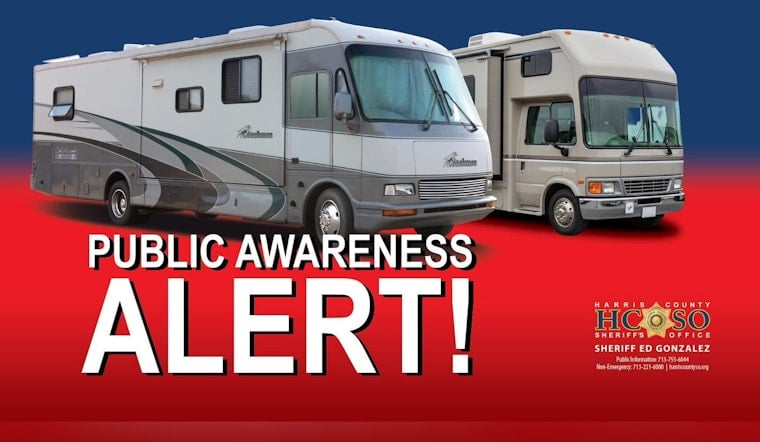
The Harris County Sheriff’s Office has launched a criminal investigation into alleged fraudulent business practices tied to a company operating as Texas Housing and RV, after a trail of messy paperwork and missing titles raised red flags for investigators.
The case centers on RV consignments and sales and whether titles and loan approvals were pushed through using bogus paperwork. At issue is whether recreational vehicles were financed and moved on paper without properly transferring legal ownership to or from the people who thought they owned them.
In a public awareness alert posted on social media, Sheriff Ed Gonzalez said investigators allege the company accepted RVs on consignment, then sold those units without completing the legally required title transfers for the original owners. According to the alert, investigators also say the business arranged financing for new buyers using what the office described as fraudulent title documents. The post urges anyone who consigned or purchased an RV through Texas Housing and RV to contact the HCSO Auto Theft Division at 832-927-2800, and notes that detectives are actively reviewing paperwork and lender communications as part of the probe, and are asking anyone with information to come forward, per Facebook.
What investigators say
“Investigators identified use of fraudulent title documents during loan approvals,” the alert states, according to Facebook. The notice does not list any suspect names or a business address for Texas Housing and RV, and the agency says its Auto Theft Division is handling victim intake and all investigative leads.
Anyone who believes they were affected is being asked to keep every scrap of paperwork, from consignment agreements to loan documents, and to contact investigators as directed. That documentation could end up being key evidence in sorting out who legally owns what.
How to check titles and protect yourself
Before buying an RV from either a dealer or a private seller, the Texas Department of Motor Vehicles recommends running a title check through an approved National Motor Vehicle Title Information System (NMVTIS) provider to review the vehicle’s title history, according to TxDMV. The agency also outlines a bonded-title option for buyers who receive incomplete paperwork or no title at all; that process has eligibility rules and requires specific documentation and a surety bond, as explained by TxDMV.
How to report and next steps
The sheriff’s office is asking potential victims tied to Texas Housing and RV to call the Auto Theft Division at 832-927-2800. HCSO’s general website also lists non-emergency and media numbers for follow-up questions.
Before you pick up the phone, gather any bills of sale, consignment or financing contracts, emails, text messages and photos related to your RV transaction. That kind of paper trail not only helps detectives, it can speed up any title-correction work with your lender or tax office. Authorities suggest that you may also want to alert your lender and your county tax office if a title transfer seems to be missing or incomplete, and to keep copies of everything you provide to investigators. For more on how to reach the agency, see the Harris County Sheriff’s Office.
Legal implications
Using forged or fraudulent title documents to move vehicles or secure loans can trigger criminal charges as well as civil lawsuits, and it often leaves buyers stuck between lenders and people claiming to be the rightful owners. It is the kind of legal limbo that can turn a dream RV purchase into a long, expensive headache.
Federal regulators have recently turned up the heat on deceptive auto-sale practices, pointing to patterns of misleading or incomplete information in vehicle deals. For broader context, see the Federal Trade Commission’s CARS rule via the Federal Trade Commission. If you believe you were wronged in a transaction involving Texas Housing and RV, officials say you should report the incident to HCSO and consider consulting an attorney about recovering funds and protecting your rights.





