

























































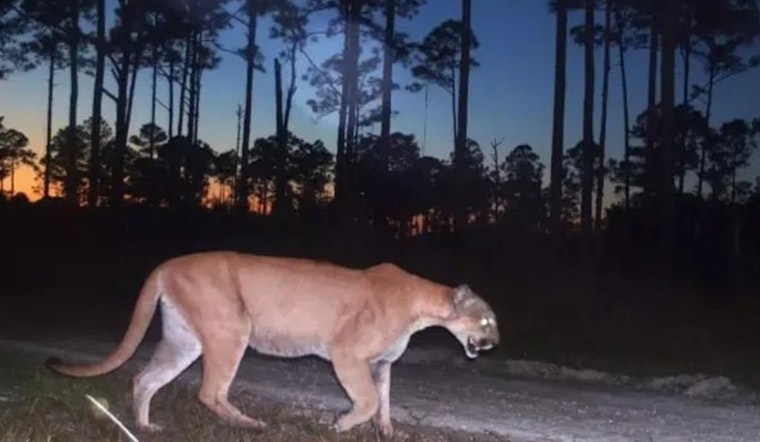
It was a brutal Saturday for Florida panther watchers in Hendry County, where two young cats turned up dead along quiet rural roads in what biologists suspect were vehicle strikes. The animals were identified as UCFP503, a roughly 1.75-year-old male, and UCFP504, a roughly 2.5-year-old female. Both carcasses were collected the same day, a double loss that conservationists say underscores how traffic and development are colliding with panther habitat. Officials added that quick reports from the public help researchers track where these big cats are moving and where crashes are clustering.
According to the Florida Fish and Wildlife Conservation Commission's Panther Pulse webpage, biologists logged both recoveries on Saturday and listed "Vehicle" as the suspected cause for each animal. The Panther Pulse entries lay out the ID, age, sex and approximate discovery location for every documented panther death, forming a kind of grim map of the species' struggles.
Where the animals were found
As reported by the Tampa Free Press, UCFP503 was recovered on State Road 80 roughly 146 yards west of the Townsend Canal Bridge, and UCFP504 was found on Fort Denaud Road about 360 yards west of the intersection with Huggetts Road. FWC biologists collected the remains for necropsy and to record information that will be used to map movement corridors and collision hotspots, trying to squeeze as much science as possible from a bad day in the field.
Why each death matters
Per the Florida Fish and Wildlife Conservation Commission, Florida panthers are listed as endangered, with a statewide population estimated at roughly 120–230 adult animals. With numbers that tight, every documented mortality is a big deal. The agency notes that research and management are funded in part through the "Protect the Panther" specialty license plate, and that data gathered from mortalities help determine where to prioritize wildlife crossings, speed zones and other mitigation measures meant to keep future cats from meeting the same fate.
How drivers can help
The agency asks anyone who spots an injured, sick or dead panther to report it immediately. The Wildlife Alert Hotline is 888-404-FWCC (3922), as the Tampa Free Press notes. Drivers moving through known panther corridors are urged to slow down at dawn and dusk and keep a close eye on the shoulders of rural roads, where most collisions tend to happen. No one can undo what happened to UCFP503 and UCFP504, but a little extra attention behind the wheel might keep the next cat out of the Panther Pulse log.





