

























































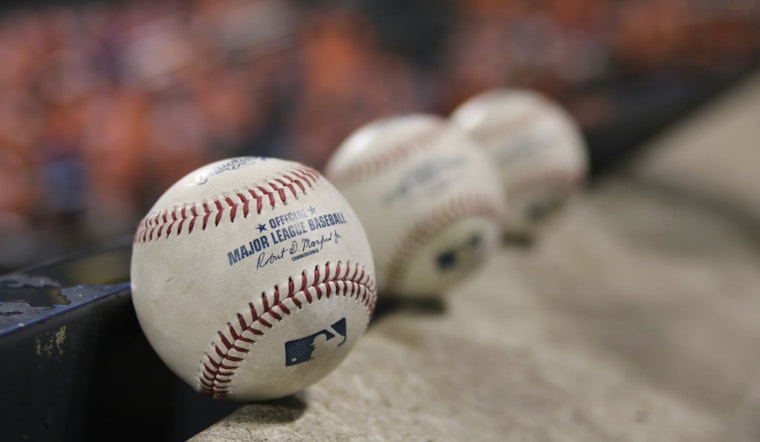
Major League Baseball's big money fight just went from theoretical to very real in Midtown, as negotiators for the players and the owners sat down Tuesday at the players' union office in Manhattan to formally kick off talks on a new collective bargaining agreement. The current deal expires on Dec. 1, 2026, and this opening round was a two-hour walk-through of priorities and grievances, not a trading session for concrete proposals, setting the stage for what many around the game expect will be a tense march into next winter. Owners are talking about reining in costs, while players are in no mood to give back hard-won gains.
As reported by the Associated Press, the opening meeting unfolded at the Major League Baseball Players Association's Manhattan office, roughly a five-minute walk from MLB's headquarters at Rockefeller Center. Player reps including Marcus Semien, Clay Holmes and Austin Slater were in the room, with other players patched in by video. Across about two hours, no formal proposals were traded; instead, both sides laid out their view of the sport and its economics.
Owners Likely To Push For A Salary Cap
On the owners' side, the expectation is clear: management is preparing a full-court press for a salary-cap system, a structural shift the union has consistently rejected, as owners point to widening gaps in payrolls and local media revenue. Commissioner Rob Manfred has tried to frame the discussion around competitive balance and ongoing local media problems. "When I talk to the players, I don't try to convince them that a salary cap system would be a good thing," he said, in comments reported by FOX Sports.
Union's Leverage And The Money
On the labor side of the table, Bruce Meyer, elevated to interim executive director in February, is leading the MLBPA's negotiating team as players brace to fend off any cap talk. The union has built up a sizable financial cushion, with a potential war chest of cash and investments of about $415 million heading into 2026. At the same time, Major League Baseball has been holding back roughly $75 million per club in central fund distributions in advance of this bargaining cycle, according to the Associated Press.
What Could Derail Talks
Baseball has managed to avoid losing regular-season games to labor strife since the 7 1/2-month players' strike of 1994-95 that wiped out the World Series, but things have come close. The two sides slogged through a 99-day lockout in 2021-22 that finally ended in March 2022 and still preserved a full 162-game schedule. A drawn-out showdown this time could put the 2027 season at risk if there is no new deal in place by the Dec. 1, 2026 expiration, a timeline and history outlined by NBC Sports.
What To Watch Next
From here, expect the back-and-forth over a potential salary cap, changes to revenue sharing, playoff expansion and an international draft to dominate the agenda, with detailed written proposals likely to follow once both sides are done with these broad presentations. Owners have indicated that if a deal is not in place by the Dec. 1, 2026 deadline, a player lockout would be likely, so the calendar and the political math among player reps will loom over every session. For a refresher on the union leadership shakeup that came just before these talks, check out Hoodline's coverage of Tampa turmoil, and for a run-down of the major bargaining items on the table see CBS Sports.





