

























































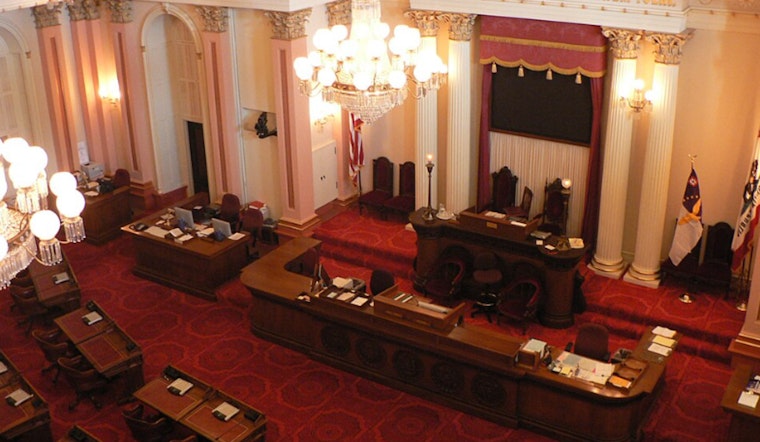
With the June 2 primary less than a month away, a cluster of state Senate races from Los Angeles to Orange County is suddenly carrying outsized weight. A handful of open and purple districts could decide whether Democrats hang on to their two‑thirds supermajority in Sacramento or are forced to start bargaining with Republicans. For local voters, the stakes are simple: a few races could change what the Legislature can pass without a single GOP vote.
The State Senate currently lists 30 Democrats and 10 Republicans, a split that gives Democrats the two‑thirds margin they rely on for major fiscal and constitutional actions. Each senator represents roughly 988,000 Californians, so control of even one seat affects a large slice of the state. This composition and district size are detailed by California State Senate.
If Republicans flip at least four seats, Democrats lose that two‑thirds threshold, changing the Legislature’s ability to approve tax increases or place constitutional amendments on the ballot without GOP support. That possibility is one big reason party organizations and outside groups are zeroing in on parts of L.A. and Orange counties this spring. As reported by LAist, those contests are the ones to watch on June 2.
Races to watch in L.A. and Orange counties
Voter‑registration numbers show exactly where the battlegrounds are. SD20 in the San Fernando Valley sits at roughly 50.2% Democratic and 18.5% Republican. SD24 and SD26 lean solidly Democratic. SD36 along the coast carries a Republican plurality, about 37.1% Republican to 33.4% Democratic, and SD38 is close enough that both parties see a shot. Those district breakdowns come from the Secretary of State’s April 3 Report of Registration. California Secretary of State provides the official numbers that campaigns and analysts are poring over.
How the top‑two primary reshapes the math
California’s top‑two, “voter‑nominated” primary sends the two highest vote‑getters to November regardless of party, which scrambles strategy in crowded fields and open seats. In practice, that can produce November runoffs between two Democrats in deep‑blue districts or shut Republicans out of the fall ballot when the GOP vote splinters. LAist outlines how that rule is shaping where both parties pour money and field operations this spring.
Who’s on the ballot and where it’s tight
The Secretary of State’s certified candidate roster shows a mix of incumbents and challengers across these hot districts. Caroline Menjivar (SD20) and Lola Smallwood‑Cuevas (SD28) are among the sitting senators on the ballot. SD26 is an open, heavily contested Democratic seat that now features Maebe Pudlo alongside several local officials. On the more competitive coast‑to‑border stretch, SD36 is held by Republican Tony Strickland, while SD38 is represented by Democrat Catherine Blakespear, who flipped that seat in 2022. These lineups are listed in the official June 2, 2026 primary documents from the California Secretary of State.
In the final weeks, the drama comes down to turnout and where vote shares pile up. A few thousand ballots in tight precincts, and the way Democratic voters split among multiple contenders in open seats, could decide whether Republicans pick off enough ground to chip away at the supermajority. Both parties are expected to treat early mail‑ballot returns and precision get‑out‑the‑vote pushes as make‑or‑break in these Senate fights.





