

























































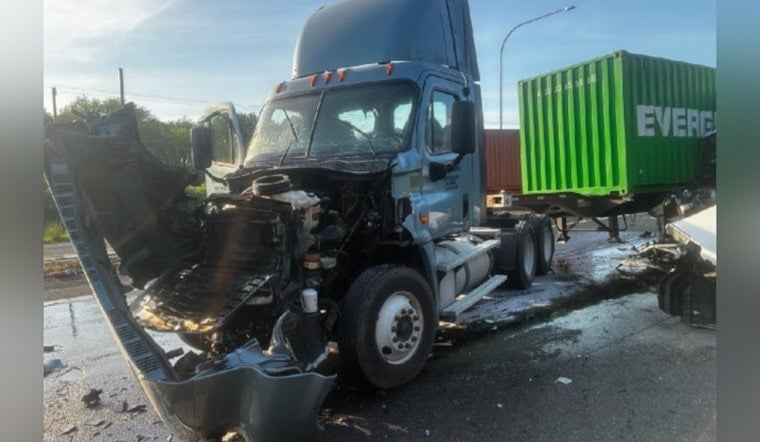
Northbound Interstate 5 turned into a long parking lot near Winlock on Monday after two separate crashes shut down traffic for hours and triggered a diesel-fuel cleanup. A three-semi collision near milepost 60 and another crash near milepost 63, where a car struck a Washington State Department of Transportation (WSDOT) vehicle, left at least one WSDOT worker injured and sent crews racing to contain a fuel leak.
WSDOT's on-scene report
In a post, WSDOT reported that the three-semi collision at milepost 60 near Winlock shut all northbound lanes while crews dealt with a diesel leak. The same update noted a separate crash at milepost 63 in which a car struck a WSDOT vehicle. A WSDOT worker was injured in that collision and taken to a hospital.
While the milepost 60 scene remained fully blocked, northbound traffic at milepost 63 was funneled through a partial closure, with the right lane open and the left lane closed. WSDOT said crews had about 20 bags of absorbent material on the way to soak up spilled diesel, and that a detour at exit 60 was sending traffic off the freeway and then back onto I-5 around the crash site.
Traffic snarls and cleanup
The closures quickly backed up northbound traffic through Lewis County and caught the eye of regional media. KOIN reported the full northbound shutdown and noted that WSDOT called it an “involved cleanup,” warning drivers to expect serious delays or pick another route altogether.
Roads reopened and detours
Later updates from WSDOT said all lanes at both mileposts had been cleared and reopened. Earlier in the response, the agency had cautioned that inspection and cleanup could take some time before traffic could fully resume.
Even after lanes reopened, drivers were urged to keep an eye out for remaining debris, equipment and responders working along the shoulders as the last of the cleanup wrapped up and traffic slowly returned to normal speeds.
Why diesel cleanups can slow reopenings
Diesel leaks from overturned or damaged semis often drag out highway closures because spilled fuel can flow into storm drains and nearby waterways. State guidance indicates that responders use absorbent pads, booms and similar tools to corral and remove fuel, then document and dispose of the contaminated material. Those extra steps keep lanes shut until crews complete cleanup and environmental checks.
The Washington Department of Ecology has highlighted these tactics in recent diesel spill responses, underscoring why a crash that looks like it is cleared can still mean extra time before traffic is fully restored.
Drivers planning to use I-5 through Lewis County should be ready for lingering slowdowns and build in extra time for their trips. Officials are encouraging motorists to check WSDOT travel tools for live updates before getting on the road.





