

























































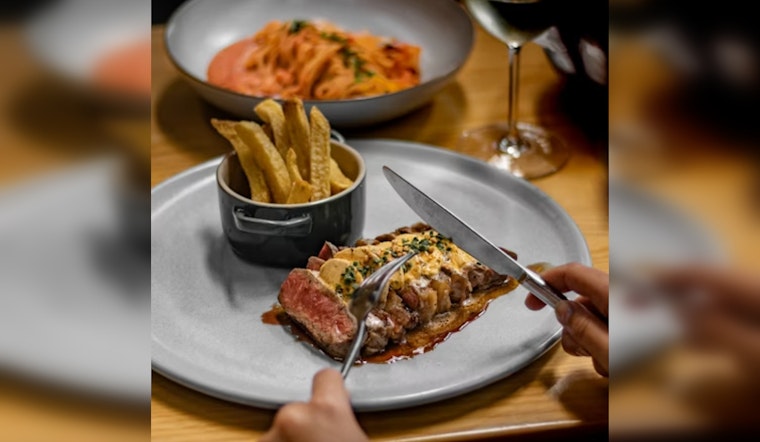
From the Loop to Springfield, Illinois, politicians have quietly turned campaign war chests into reliable tabs at some of the city’s most expensive dining rooms. State and local committees have spent millions on food for “meals,” “meetings,” and splashy fundraisers, covering everything from pizza deliveries to multi-course steak dinners. On paper, it is all campaign activity. In practice, the sheer volume blurs the line between politicking and personal perk.
Sun-Times review: big sums at familiar dining rooms
A review of Illinois State Board of Elections disclosures found that campaign committees have paid more than $1.8 million to Gibsons Bar & Steakhouse, with hundreds of thousands more flowing to other well-known spots across the city and suburbs. The analysis points to hefty tallies at Harry Caray’s, Rosebud, Erie Cafe, and Chicago Cut, and notes that campaigns have already reported roughly $200,000 in “meal” spending this year and about $900,000 in 2025. According to the Chicago Sun-Times, those figures come directly from state disclosure records.
Big tabs across neighborhoods and takeout services
The spending is not limited to white-tablecloth power lunches. Campaign filings reviewed by reporters show more than $170,000 at Lou Malnati’s and roughly $90,000 at Giordano’s, along with more than $60,000 paid to delivery platforms such as Uber Eats. Chain and fast-casual vendors appear repeatedly, while smaller neighborhood restaurants add up as committees log thousands of meals and meeting entries year after year. Transparency tools that compile the records show many campaigns returning to the same spots so often that some individual committees have five-figure totals at a single restaurant across multiple cycles.
Federal filings show the same pattern for national committees
Federal committees tied to Illinois politicians have adopted similar habits. Itemized reports to the Federal Election Commission list disbursements for food, catering, and event services at restaurants, including Chicago Cut Steakhouse and The Capital Grille in Washington, D.C. Those filings spell out line-item payments for event catering and meals. Example reports from the Federal Election Commission and the Federal Election Commission show typical entries for restaurant spending by individual committees.
Who’s in the spotlight
Certain officials stand out in the sea of receipts. Campaign accounts controlled by State Rep. and Calumet City Mayor Thaddeus Jones have logged thousands of dollars at Hooters locations, and federal authorities have sought records connected to his campaign spending as part of a broader investigation. WBBM reported on the subpoena and related legal bills tied to that probe.
In the suburbs, Lyons Mayor Christopher Getty’s committees held a high-dollar February event at Gibsons that disclosure records list as a more-than $50,000 fundraiser. Nearby, Elmwood Park’s Angelo “Skip” Saviano has reported more than $250,000 for meals and entertainment in recent years, according to the same campaign filings and review. The records do not spell out the menu, but the totals speak for themselves.
The legal line
Illinois law prohibits using campaign funds for purely personal expenses, yet officials and courts have repeatedly wrestled with where to draw that line. Disputes have centered on whether certain meals, legal bills, or other costs are legitimate campaign or governmental expenses or simply personal benefits routed through political accounts. The Illinois Supreme Court and lower courts have addressed the issue in several decisions, including the analysis of campaign-fund use in Justia’s summary of Sigcho-Lopez v. Illinois State Board of Elections.
Federal prosecutors have shown what can happen when that line is crossed in extreme cases. A recent release from the U.S. Department of Justice detailing the sentencing of a former state senator for fraudulent use of campaign funds underscores the criminal risk when political accounts are treated like personal wallets.
Why it matters
Campaign veterans argue that food is part of the business: volunteers need to be fed, donors expect decent meals at pricey fundraisers, and strategy sessions rarely happen over tap water. Critics, however, say the pattern highlights loose tracking and creates ample room for private benefit and subtle influence. Many disclosure entries are notoriously bare-bones, labeled only “meals” or “meeting,” which makes it difficult for voters and watchdogs to gauge whether a given tab actually served a political purpose.
Advocates for tougher rules say that more detailed descriptions, cleaner reporting, and stronger enforcement would make it easier to distinguish between legitimate campaign work and improper personal spending. Until that happens, Illinois diners may keep sharing their favorite tables with officials on the campaign dime, with the public left to guess who really picked up the check.




