

























































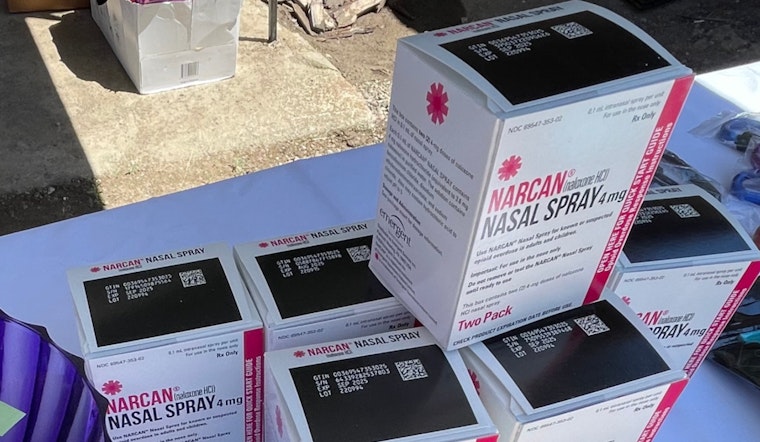
Los Angeles County has turned what started as a modest harm-reduction budget into a multi-million-dollar effort to get naloxone, the opioid-reversal spray often sold as Narcan, into the hands of first responders, outreach workers and regular Angelenos. City and county records say the strategy is paying off: thousands of successful overdose reversals and a steep drop in deaths have followed wider access. At the same time, the push has stoked a familiar fight between public-health officials who call naloxone a lifesaver and critics who argue that free supplies make it easier to keep using.
Overdose deaths fall as county ramps up response
Los Angeles County recorded its sharpest single-year decline in drug-related overdose deaths in 2024, a 22% drop overall and a 37% decline in fentanyl deaths. County analysts link those numbers to expanded investments in prevention, treatment and harm-reduction, including naloxone distribution. The county reports that overdose deaths fell from 3,137 in 2023 to 2,438 in 2024, with a notable decline among people experiencing homelessness. Those findings are detailed in the county's fentanyl data report and press release, according to the Los Angeles County Department of Public Health.
Fire department numbers show Narcan saving lives
City fire records tell a similar story on the ground. Documents obtained by CBS Los Angeles show that of 25,461 patients who received naloxone from Los Angeles City Fire Department crews since 2022, 24,503 survived, roughly a 96% survival rate after administration in the field.
The same reporting, which reviewed county documents, found that annual harm-reduction spending has climbed fast over the last four years, from about $500,000 in FY20-21 to nearly $7 million in FY24-25, with additional allocations in the current fiscal year. For local officials, that price tag is part of the argument: if you are going to invest in overdose prevention, they say, it has to be at scale.
State program pushes free naloxone across California
At the state level, the California Department of Health Care Services runs the Naloxone Distribution Project, which supplies free naloxone and fentanyl test strips to clinics, first responders and community organizations across California. State budget documents and the Legislative Analyst's Office have identified substantial one-time and ongoing appropriations for opioid response in recent years, and DHCS has moved to expand supply, including a rollout of lower-cost generic naloxone, to widen access.
Program details and eligibility are laid out by the state, as described by DHCS and in the LAO budget analysis.
Vending machines, clinics and street outreach
Closer to home, county officials have added another twist: self-service "Community Health Stations" that function as public-health vending machines. These kiosks dispense naloxone, fentanyl test strips and other supplies, with 51 stations already installed and plans for more. County leaders say the machines, placed at pharmacies, shelters and community centers, keep lifesaving tools available seven days a week and are paired with outreach and referrals so people are not just grabbing a kit and disappearing into the crowd. The Community Health Stations program and rollout are described by the Los Angeles County Department of Public Health.
Debate heats up as enforcement sweeps continue
The expansion is not winning over everyone. Property owners and some community advocates argue that free naloxone and related supplies have shown up alongside persistent open-air drug use in parts of the city, a concern they have raised in recent media interviews. At the same time, federal and local authorities this week carried out "Operation Free MacArthur Park," seizing about 19 kilograms of fentanyl and making multiple arrests in a crackdown that officials said targeted trafficking around the park, according to reporting by the AP and other local outlets. Some critics' views of the county's harm-reduction strategy were highlighted in coverage by CBS Los Angeles.
Officials: Narcan is a starting point, not a cure
Public-health officials stress that while naloxone can pull someone back from the brink of death, it does not treat addiction. They argue that every reversal ought to serve as a bridge to something more stable: treatment, housing and other long-term support. County programs aim to connect naloxone distribution with street outreach, treatment referrals and campaigns to reduce stigma, in hopes of turning saved lives into sustained recovery. How Los Angeles balances broader access to naloxone with enforcement pressure around drug markets will shape what the next chapter of the local response looks like.



