

























































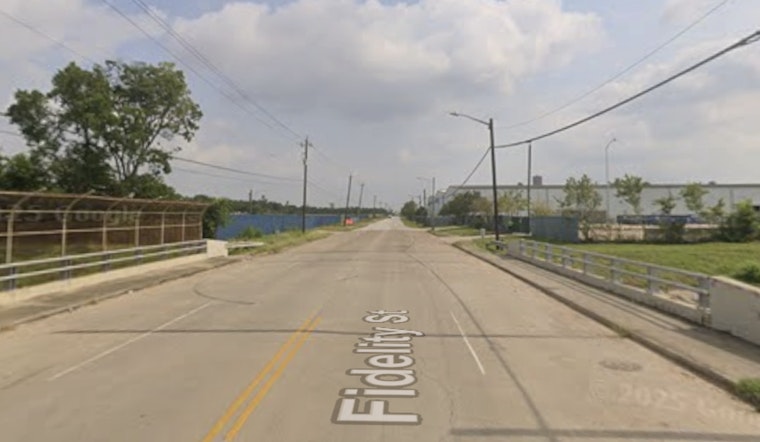
A 30-acre industrial lot on Fidelity Street in Jacinto City is being quietly pitched as a hyperscale, AI-ready data center that could draw as much as 79 megawatts of power, enough electricity to run a small city, and neighbors are already worried that the deal comes with a constant low-frequency hum and heavy new demands on water and electricity. The site sits amid dense, lower-income housing and near a neighborhood elementary school. Marketing materials are circulating to prospective buyers and developers, but so far no operator has publicly stepped up with a concrete buildout plan.
What's Being Marketed
The offering memorandum brands the property as a “Houston Hyperscale” opportunity and spotlights an on-site, property-owned substation fed by dual 138 kV transmission lines, according to Marcus & Millichap. Utility engineering described in the brochure supports 40 megawatts deployable in 2026 with a defined expansion path to 79 megawatts within 24 months. The marketing pitch also leans heavily on carrier-rich fiber access, legacy industrial water infrastructure and on-site natural gas capacity meant to support on-site generation and fast, phased deployment.
Where It Sits And Who Lives Nearby
Public listing pages identify the parcel as 4202 Fidelity St. (Harris County parcel 0401910000029) and describe it as a heavy-industrial site in the Jacinto City / 77029 area, with a 30-acre footprint that directly touches residential blocks and small industrial lots, according to listing information on LoopNet. That tight proximity to homes is exactly why neighbors and community groups are watching the marketing push so closely as the property moves from glossy brochure to potential development proposals.
Noise, Water And Power Worries
Residents and environmental observers are fixated on one big quality-of-life question: the noise. Reporting from local media has documented people living near other data-center projects describing a persistent, low vibrational “hum” and raising alarms about the massive electricity and water needs that come with these facilities, as the Houston Chronicle has reported. Industry noise specialists say most of that low-frequency sound comes from large cooling fans and chillers that run around the clock and can be difficult to fully mitigate without making design tradeoffs, according to the Industrial Noise & Vibration Centre. Those same cooling and backup-power systems, layered on top of heavy power draws, are why communities often demand detailed water-use and resiliency plans before any approvals move forward.
Why Developers Like Houston
Recent academic work finds that cloud providers tend to prize reliable, low-cost power and strong network connectivity more than proximity to big local job pools, a pattern that helps explain why Houston has been marketing itself as a data-center hub, according to research from Rice University. Marketing materials for the Fidelity Street site echo that logic and tout Houston’s transmission capacity, the on-site substation and nearby fiber providers as reasons a hyperscale operator could get to market faster here than on a greenfield rural parcel.
Tax Breaks And The Economics
Incentives can nudge these megaprojects over the finish line. Texas offers a temporary sales-and-use tax exemption for qualifying large data centers, and local jurisdictions often layer on Freeport or other abatements that cut short-term costs. The Texas Comptroller lays out the state data-center sales-and-use exemptions and the rules companies must meet to qualify. The agency’s Freeport forms, including the Freeport exemption application Form 50-113, explain how short-term equipment or inventory that leaves the state within 175 days can be exempt from local property tax. Those incentives can trim upfront bills for big builds, even as they spark recurring debates over long-term utility, community benefit and fiscal tradeoffs.
What Comes Next
For now, the Fidelity Street site is simply being shopped to potential buyers. Any real project would still need utility interconnection agreements, permits and municipal approvals before construction could start. City planners, utility engineers and community advocates are likely to push for specifics on noise mitigation, water management and operating limits if a serious operator steps forward. Property and listing records indicate the parcel is zoned for heavy industrial use, but whether a hyperscale player ultimately signs on, and how any facility is designed if they do, will determine whether neighbors have to adjust to a new background hum or whether the project is reshaped to limit its impact, according to public listings on LoopNet.





