

























































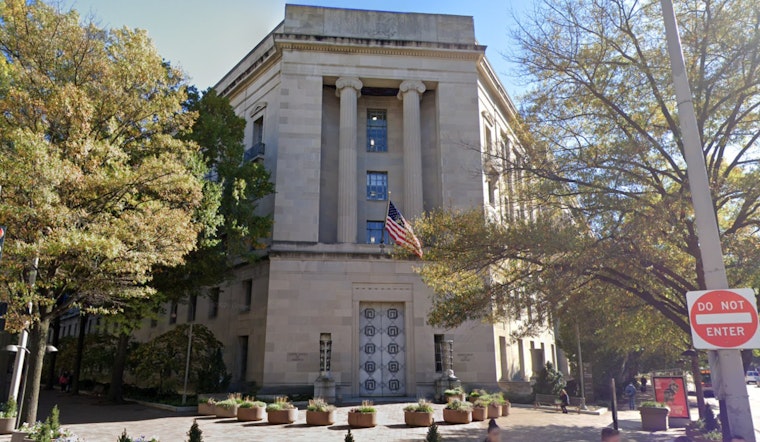
Two police officers who defended the U.S. Capitol on Jan. 6 are asking a federal court to hit pause on the Justice Department’s newly announced $1.776 billion "Anti-Weaponization Fund," arguing the deal is an unlawful giveaway that could send taxpayer cash to some of the very people who attacked them. Their lawsuit, filed Tuesday, asks a judge to stop the fund from being created and to block any payouts while the settlement’s legality is fought out in court. The challenge lands amid rising outrage on Capitol Hill and a separate settlement addendum that critics say helps shut down past IRS probes of the president and his businesses.
Officers sue to stop payouts
Former U.S. Capitol Police Officer Harry Dunn and Metropolitan Police Department Officer Daniel Hodges are the named plaintiffs. Their complaint targets President Donald J. Trump and senior administration officials and accuses the settlement of setting up a taxpayer-funded slush fund for insurrectionists, according to CNBC. The filing seeks an injunction to stop the Justice Department from establishing the designated account and says the agreement was hammered out in a way that cuts courts and Congress out of their usual oversight roles. Lawyers for the officers argue the government is misusing settlement tools to steer public money toward political goals instead of resolving a traditional, adversarial lawsuit.
What the Justice Department says
The Justice Department rolled out the fund as part of a settlement that ended Mr. Trump’s $10 billion lawsuit against the IRS. The department said the $1.776 billion account is meant to provide "a lawful process for victims of lawfare and weaponization to be heard and seek redress," according to a DOJ release. Under that plan, the money would come from the Judgment Fund, be managed by a five-member panel appointed at the attorney general’s direction, and all claims would have to be processed by Dec. 1, 2028. Any leftovers would revert to the federal government, and the department says the fund can be audited if the attorney general orders it, per the same release.
Capitol outrage and a tense Hill hearing
Critics on and off Capitol Hill have blasted the settlement as a conflict of interest and an unprecedented end run around normal judicial scrutiny, as reported by The Washington Post. During a heated Senate hearing, Acting Attorney General Todd Blanche told lawmakers he could not rule out payments to people convicted of assaulting police on Jan. 6 or to other Trump allies, a remark that further inflamed concerns about who might qualify for relief, Reuters reported. Senators from both parties pressed whether the department had gone beyond its authority by structuring the payout system without a judge formally approving how the money would be distributed.
Addendum that bars certain audits
Fueling the political fire, an addendum to the settlement posted by the department appears to bar the IRS from pursuing audits or examinations of tax returns filed before the agreement’s effective date. ABC News reported that the provision would shield Mr. Trump, his family and related businesses from past tax inquiries. That protection has prompted legal and congressional critics to argue that the Justice Department has overstepped by curtailing long-standing audit practices in a way that benefits the main settlement plaintiff. Opponents say that combining the audit waiver with the new compensation fund makes the deal look like self-dealing at taxpayers’ expense.
Legal path and standing questions
The officers are asking the court to declare the settlement invalid and to bar the department from creating or funding the designated account. Legal experts say the case is likely to raise thorny questions about standing and separation of powers that will determine how aggressively the judiciary can intervene. The Justice Department has cited past settlements that created claims funds as precedent, while critics point out that those earlier funds were typically subject to a judge’s direct approval, a distinction highlighted by The Washington Post. If the district judge refuses to block the fund, the officers could appeal quickly while Congress weighs statutory or appropriations moves to rein in or unwind any payments.
About the plaintiffs
Dunn and Hodges have become familiar figures in Washington, both for their roles on Jan. 6 and for prior legal pushes related to the attack, including a 2025 lawsuit seeking a memorial plaque honoring officers, as reported by the Associated Press. In their latest complaint, they argue that the federal government should not be using settlement mechanics to send taxpayer dollars to individuals who violently assaulted law enforcement at the Capitol.
What to watch next
The clock is already ticking. The Justice Department’s order instructs the Treasury Department to set up the designated account within roughly 60 days, and the officers are pushing for swift court action before any transfers occur, according to the department’s announcement. That schedule all but guarantees fast-track briefing, an early hearing on a request for a preliminary injunction and, if that request is denied, potential appeals on a tight timeline, along with possible congressional hearings or legislative efforts aimed at restricting or clawing back any payouts. For now, the lawsuit opens a new, fast-moving front in an already volatile fight over oversight, audits and presidential power.



