

























































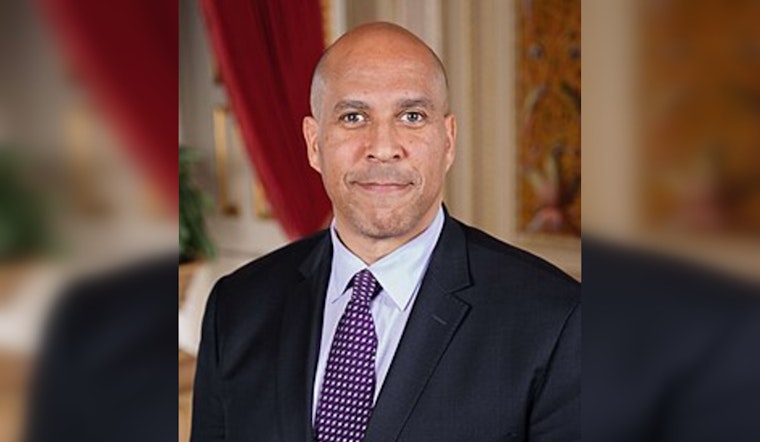
Sen. Cory Booker is sharpening his focus on the Supreme Court, urging Congress to put term limits on justices after the Court’s April 29 ruling in Louisiana v. Callais, a decision critics say sharply narrows protections in the Voting Rights Act. Booker cast term limits as a way to rein in a Court that, in his view, has made it tougher to hold state mapmakers accountable for districts that dilute minority voting power. His comments landed as several Southern states moved quickly to redraw maps or put primaries on ice in the ruling’s wake.
Speaking at the LBJ Presidential Library and in follow up interviews, Booker said staggered but lengthy terms could take some of the political gamesmanship out of Supreme Court nominations by regularizing appointments and blunting strategic retirements. “Make them long terms, nine years, 18 years,” he told attendees, according to KUT. Booker’s office has previously promoted similar reforms and he has co-sponsored legislation to create regularized Supreme Court appointments, per Booker’s Senate office.
In a separate interview on MS NOW, Booker warned that the decision “eviscerates years of progress” and argued that “most Americans agree that Supreme Court justices shouldn’t sit on those benches until they’re so ailing,” comments reported by FOX San Antonio. Those remarks followed the Court’s 6–3 opinion that critics say raises the bar for proving racial vote dilution claims under Section 2 of the Voting Rights Act.
What the ruling changed
In Louisiana v. Callais, the Court’s majority, in an opinion written by Justice Samuel Alito, concluded that Section 2 cannot be used to require a state to draw an additional majority-minority district unless plaintiffs show intentional race-based targeting, as described in the opinion. The majority warned that some forms of remedial mapmaking can “force States to engage in the very race-based discrimination that the Constitution forbids,” according to the Supreme Court. Legal advocates and scholars say the decision will make it harder for communities to win challenges to maps they argue dilute minority votes.
Immediate fallout
States reacted quickly. Louisiana’s governor suspended the May 16 U.S. House primary while lawmakers prepare to redraw the congressional map, with officials arguing that holding elections under a map the Court found unconstitutional would undermine voters’ rights, according to the AP. In Alabama, the governor called a special legislative session to consider new congressional and state Senate lines and to craft contingency primary plans, per Axios. Those moves could reshape a small cluster of Southern seats before November.
What reform would take
Even with louder calls for Supreme Court reform, turning those ideas into law remains a steep climb. Senators including Booker have backed measures to regularize appointments and limit active service, and similar proposals show up in bills and resolutions on Capitol Hill, according to Congress.gov. Some lawmakers have floated a constitutional amendment to cap justices’ terms, a path that would require approval by two-thirds of both chambers of Congress and ratification by three-quarters of the states, per GovInfo. Legal experts remain split on whether term limits could be created through ordinary legislation or would need a constitutional amendment, a debate outlined by the Brennan Center.
Back in Congress and in statehouses, the reform fight is already taking shape. One recent example involves a Maryland lawmaker’s push for an 18-year cap on justices, as term limits move from theory into bill text. Whether Booker and other advocates can turn public anger over the Callais ruling into lasting structural change, or even a constitutional amendment, is likely to be a defining political question in the decision’s long aftermath.





.jpg)