

























































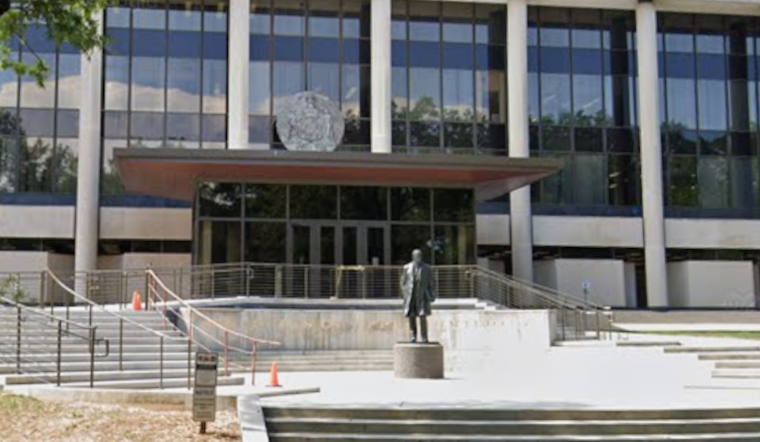
Maryland Rep. Johnny Olszewski is taking direct aim at the U.S. Supreme Court, rolling out a proposed constitutional amendment that would cap justices' service at 18 years in response to fresh controversy over voting rights and judicial ethics.
Unveiled on Monday, the proposal would limit each justice to a single 18-year active term. Olszewski is pitching it as a way to cool down lifetime appointments at a moment when public trust in the Court is already running hot.
“Faith in the Court depends on its legitimacy as a fair and independent institution,” Olszewski said, criticizing what he called ethically dubious behavior, including justices attending a recent White House state dinner and accepting luxury gifts. In a press release from Olszewski's Office, he said the so-called ROBE Act would create 18-year terms and lay out transition rules that would also cover the current justices.
Olszewski tied the move to the Supreme Court’s April 29 ruling that narrowed key protections of the Voting Rights Act, a decision that The Associated Press described as a major weakening of Section 2, and to the optics of a recent state dinner where six conservative justices turned up as guests. Coverage from CBS News underscored how the ruling and the high-profile social outing have helped fuel louder calls for court reform.
What the ROBE Act would do
Under Olszewski’s proposal, the ROBE Act would swap out lifetime tenure for a single 18-year active term, an overhaul designed to create regular, predictable turnover and, in theory, lower the temperature around any one nomination fight. According to the bill text as described by Olszewski's office, the amendment includes a phased transition for the sitting justices.
The concept is simple, even if the politics are not: instead of vacancies arriving on a mix of fate, health, and strategic retirements, presidents would get appointments on a more fixed schedule. Supporters argue that regularized terms would make each nomination matter a little less, and might curb the retirement gamesmanship that has become a recurring subplot in Supreme Court politics.
Legal hurdles
Olszewski is not trying to do this by simple statute. Because he is proposing a constitutional amendment, the plan faces a steep climb that has historically stalled efforts to overhaul the Court’s structure.
The amendment would need two-thirds of both the House and Senate, then ratification by three-quarters of the states. As the National Archives explains, once Congress signs off, amendments are sent to the states and only become part of the Constitution after 38 states ratify. The Archives handles the formal ratification process, which tends to move at a glacial pace even for widely popular changes.
Where this fits in the reform debate
Olszewski’s pitch drops into a crowded field of term limit ideas that have been quietly building momentum for years. Eighteen-year limits in particular have become the go-to model for many reformers.
Democrats in both chambers have previously floated similar term cap plans, including a Senate bill led in 2023 by Sen. Cory Booker that would create regular Supreme Court appointments every two years. Booker's Office touted that proposal as a way to stabilize the confirmation process, while House members, including Rep. Hank Johnson, have pushed their own versions, such as the TERM Act.
Outside Congress, policy groups have backed term limits as a way to cool the Court’s partisan temperature. The Brennan Center has argued that regularized terms could reduce strategic retirements and lower the stakes of each vacancy.
None of that changes the math in the short run. A constitutional amendment remains a long shot, especially with sharp partisan divides over the current conservative majority. But Olszewski’s ROBE Act adds a new congressional voice to a debate that has only grown louder after the latest round of high court rulings, putting 18-year terms back on the national agenda and forcing a fresh conversation about how to rebuild public confidence in the judiciary.





